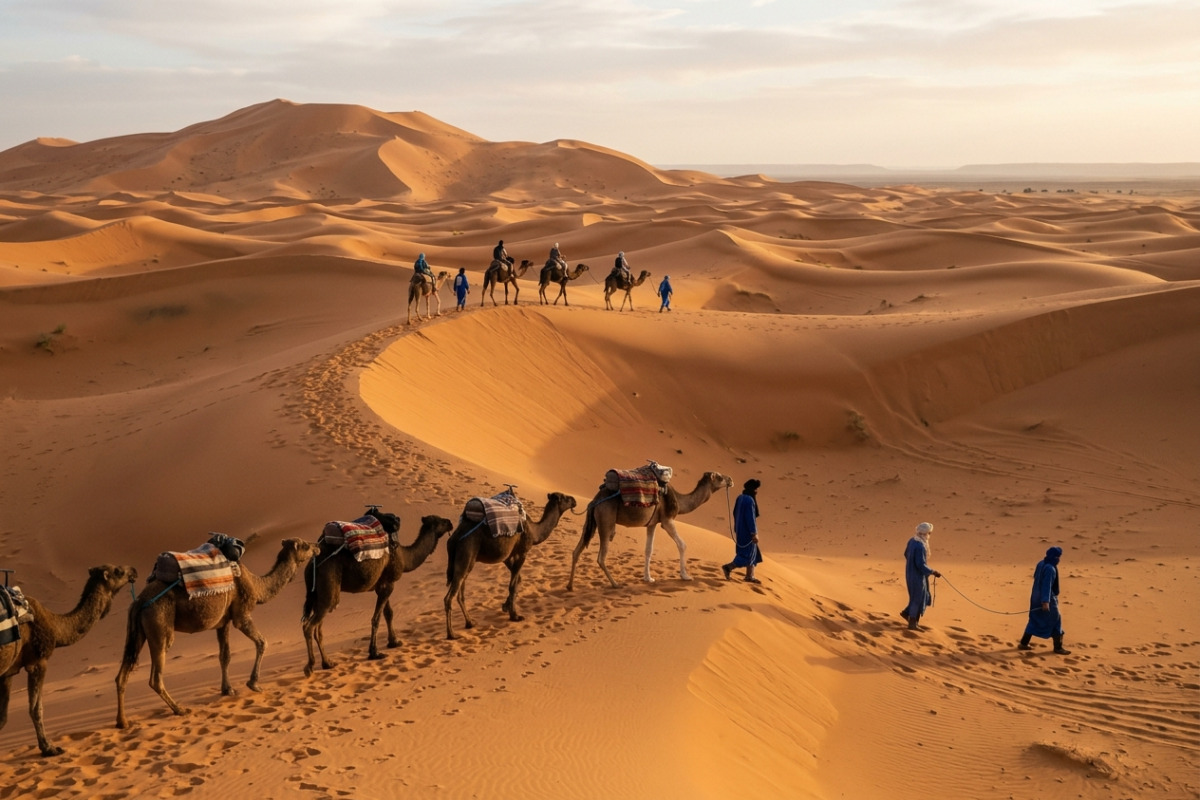
Standing at the edge of the dunes, watching the golden sands stretch infinitely toward the horizon, is a moment that stays with travelers forever. For many, a trip to Morocco is simply incomplete without venturing into the Sahara, and the most authentic way to traverse this landscape is undoubtedly atop a dromedary. However, if you have never ridden a camel or camped in a desert before, the prospect can feel as daunting as it is exciting. Understanding the rhythm of the desert, the mechanics of the ride, and the nature of camp life will transform your anxiety into anticipation, allowing you to fully embrace the silence and majesty of the dunes.
As we navigate the travel landscape of 2026, the desire for genuine, slow-travel experiences has never been higher. A camel trek is the antithesis of the modern rush; it forces you to slow down to the swaying pace of an animal that has walked these sands for centuries. Whether you are planning a short sunset ride or a multi-day expedition, knowing what lies ahead ensures you can focus on the breathtaking scenery rather than logistical surprises. Here is a comprehensive guide on what awaits you on your maiden voyage into the Great Desert.
The Reality of the Ride: Mechanics and Comfort
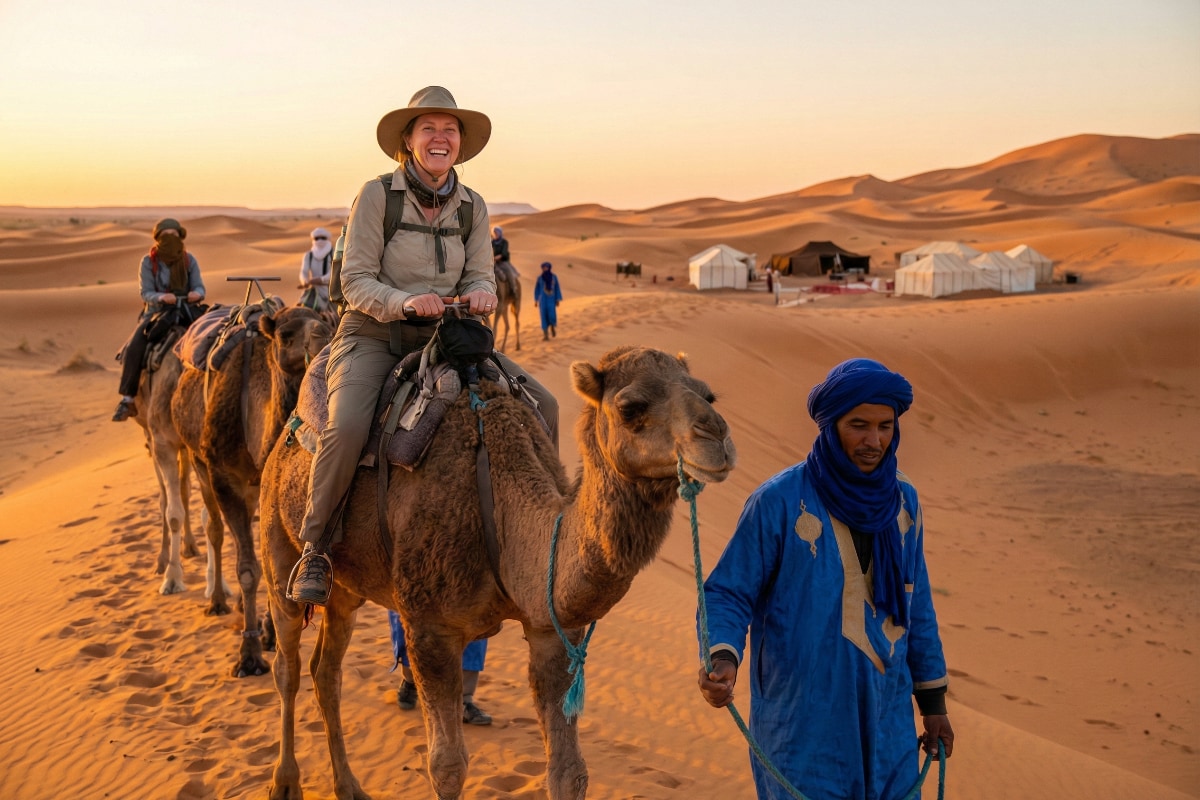
The first thing most travelers realize is that camels are much taller than they appear in photographs. The mounting process is often the most adrenaline-pumping part of the physical journey. You will start with the camel kneeling on the ground. As you settle into the saddle, which is usually padded with thick blankets and a sturdy metal or wood handlebar, your guide will instruct you to lean back. This is crucial because the camel rises with its back legs first, pitching you forward, before snapping its front legs upright. It is a jerky, three-motion process known as the "camel wobble," and holding on tight is mandatory.
Once you are up, the view is spectacular, offering a vantage point well above the dunes. The gait of a camel is rhythmic but can be hard on the hips and inner thighs after prolonged periods. Unlike horse riding, where you might post or grip with your knees, camel riding requires you to relax your body and sway with the animal's movement. Fighting the motion usually leads to stiffness. Most beginner treks are broken into manageable segments—usually one to two hours of riding at a time—to prevent fatigue. If you are worried about comfort, wearing long, loose trousers is essential to prevent chafing against the saddle blankets.
A Typical Day in the Dunes
Life in the Sahara revolves around the sun and the temperature. The daily schedule is dictated by nature, ensuring that you are active during the cooler parts of the day and resting when the sun is at its zenith. While every tour operator has a slightly different itinerary, the flow of time in the desert remains fairly consistent across the region. When you browse different desert experiences, you will notice that the timing is designed to maximize the visual beauty of the landscape while keeping travelers comfortable.
To give you a clearer picture, here is a breakdown of what a standard day on a trek looks like:
| Time of Day | Activity & Atmosphere |
|---|---|
| Early Morning (05:30 - 07:00) | Wake up before dawn. Climb the nearest high dune to watch the sunrise. The sand changes color from grey to pink and gold. Breakfast is served at the camp. |
| Morning Trek (08:30 - 12:00) | Depart camp. This is usually the longest stretch of riding. The desert is quiet, and the sun begins to warm the sands. Stops are made for photos and water breaks. |
| Midday Rest (12:00 - 15:30) | Lunch in a shaded oasis or a nomadic tent. The sun is too harsh for travel, so this time is for napping, reading, or drinking mint tea. |
| Late Afternoon (16:00 - Sunset) | Resume trekking as the heat subsides. Arrive at the night camp. Prepare for the sunset spectacle, which is the highlight of the day. |
| Evening & Night | Traditional dinner, Berber drumming music around a campfire, and stargazing. The lack of light pollution makes the Milky Way incredibly visible. |
Desert Accommodations: What to Expect at Camp
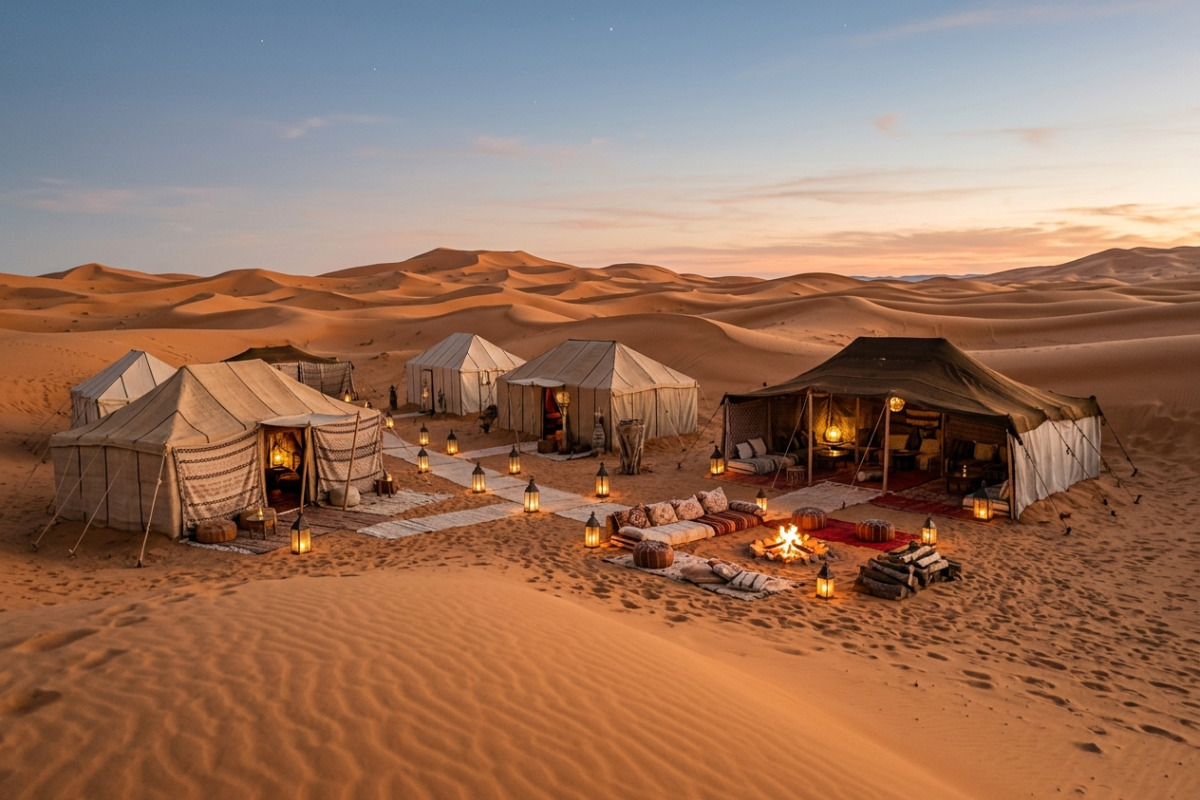
One of the biggest misconceptions about camel trekking is that you will be sleeping rough on the sand. While bivouac camping (sleeping under the stars) is an option for the adventurous, most organized treks lead to established desert camps. These camps can range from simple and rustic to incredibly luxurious "glamping" setups. It is important to research the specific region you are visiting. For instance, you might want to Explore Morocco to decide whether the towering dunes of Merzouga or the remote wilds of Chegaga suit your travel style better.
Regardless of the luxury level, most desert camps share common features designed to protect you from the elements while keeping you connected to nature:
- The Tents: Typically made from thick camel wool or heavy canvas, these tents are surprisingly insulated. In standard camps, you will find raised beds with mattresses, sheets, and heavy blankets (nights can get very cold). Luxury camps often include en-suite bathrooms inside the tent.
- Sanitary Facilities: In standard camps, bathrooms are usually shared blocks with western toilets and showers. Water is a precious resource in the Sahara, so showers might be bucket-style or have low pressure, and hot water is not always guaranteed unless solar heaters are used.
- Communal Areas: Every camp has a central area covered with Berber rugs and low tables where meals are served. This is the social heart of the camp where travelers gather to share stories.
Cultural Immersion and The Berber Connection
A camel trek is more than just transportation; it is a cultural exchange. Your guides will almost certainly be local Berbers (Amazigh), people who have inhabited North Africa for millennia. Their knowledge of the desert is unparalleled, and they are generally warm, hospitable, and eager to share their heritage. The language barrier is rarely an issue, as many guides speak excellent English, French, and Spanish, learned solely through interaction with travelers.
Music, Food, and Tea
The culinary experience in the desert is surprisingly robust. Despite the remote location, cooks manage to prepare piping hot tagines (stews with meat and vegetables), fresh salads, and fruits. Tagines are often cooked in traditional clay pots over open fires, infusing them with a smoky flavor unique to the desert. Common variations include chicken with preserved lemons and olives, lamb with prunes and almonds, or vegetable tagines for vegetarians. Couscous, a staple grain, is also frequently served alongside tagines, providing a hearty and satisfying meal. Freshly baked bread, often cooked in the sand itself, accompanies most meals, perfect for scooping up the flavorful sauces. The staple of desert hospitality is, of course, "Berber Whiskey"—sweet, frothy mint tea served in small glasses. The preparation of mint tea is an art form in itself, involving a precise balance of tea leaves, sugar, and fresh mint sprigs. It's poured from a height to create a frothy top layer. Refusing a cup is rare; it is a ritual of welcome and friendship. After dinner, the evening entertainment typically involves traditional Gnawa or Berber music. Gnawa music, with its distinctive blend of African rhythms and spiritual lyrics, is particularly captivating under the starlit sky. Drums and metal castanets create a hypnotic rhythm that echoes against the dunes. You will likely be invited to join in, clap along, or even try your hand at the drums. Don't be surprised if your guides share stories and legends passed down through generations, offering a glimpse into the rich Berber culture and their deep connection to the Sahara.
Essential Preparation for First-Timers
To ensure your experience remains positive, packing the right gear is non-negotiable. The desert climate is extreme, swinging from scorching heat to freezing cold within hours. You must dress in layers. A thermal base layer is a lifesaver for sleeping, while loose, breathable cotton is best for the day. Do not forget a turban or a long scarf (cheich); your guide will show you how to wrap it to protect your head from the sun and your face from blowing sand.
Hydration is another critical factor. You may not feel like you are sweating due to the dry air, but dehydration happens quickly. Carry at least 1.5 liters of water per person for the ride itself, separate from what is provided at the camp. Finally, protect your electronics. The sand in the Sahara is as fine as talcum powder and can ruin camera lenses and charging ports. Keep your phone and camera in sealed bags when not in use.
Embarking on a camel trek is a surrender to the timeless nature of the Sahara. It is a journey that challenges your comfort zone but rewards you with a profound sense of peace and a sky full of stars that you will never forget. By arriving prepared and knowing what to expect, you clear the way for a truly magical experience in the heart of Morocco.