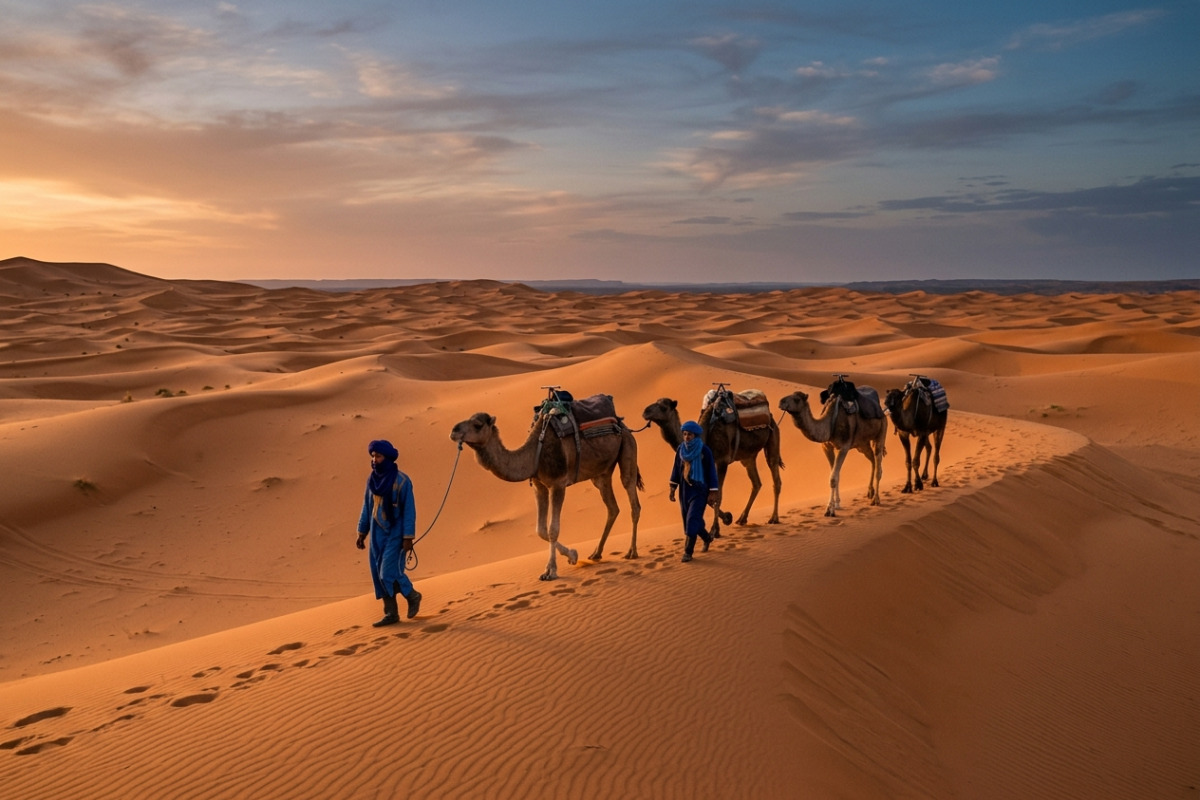
The vast expanse of the Sahara is often defined by its geography—the rolling golden dunes, the stark rock formations, and the endless horizon that seems to merge with the sky. However, the true soul of this desert lies not in the sand, but in the people who have called it home for millennia. Stepping into the Sahara is an invitation to witness a way of life that has survived empires, climate shifts, and the encroachments of the modern world. For the traveler seeking more than just a scenic backdrop, meeting the nomadic tribes offers a profound lesson in resilience, community, and the art of living in harmony with nature. As we move through January 2026, the allure of these cultural encounters remains as potent and transformative as ever.
To truly understand the desert, one must sit with its guardians. The Amazigh (Berber) and Tuareg communities represent the heartbeat of this arid landscape. Their history is etched into the very rocks and carried on the desert winds, preserved through oral traditions and a deep spiritual connection to the land. Engaging with these communities is not merely a tourist activity; it is a privilege that allows outsiders to glimpse a worldview defined by simplicity, patience, and an overwhelming sense of hospitality.
The Guardians of the Sands: Understanding the Tribes
The term 'nomad' often conjures romanticized images of wandering caravans, but the reality is a complex tapestry of survival and tradition. In the Moroccan Sahara, the primary cultural groups you will encounter are the Amazigh, often referred to as Berbers, and further south, the Tuareg. The Amazigh are the indigenous people of North Africa, with a history stretching back thousands of years before the Arab conquest. They refer to themselves as *Imazighen*, meaning 'free people,' a title that perfectly encapsulates their spirit. Their adaptation to the harsh desert environment is a testament to human ingenuity, utilizing profound knowledge of water sources, celestial navigation, and animal husbandry to thrive where others would perish.
Distinct yet related, the Tuareg people are famously known as the 'Blue Men of the Desert' due to the indigo dye of their traditional *tagelmust* (cheich) turbans, which often stains their skin. While many have adopted semi-sedentary lifestyles in recent decades due to changing borders and climates, the nomadic ethos remains central to their identity. Their social structure, music, and poetry are deeply intertwined with the rhythm of the desert. When you Explore Morocco and its southern frontiers, you are entering territories where these tribal lineages define the cultural map far more than any drawn border.
The Architecture of Nomadic Life
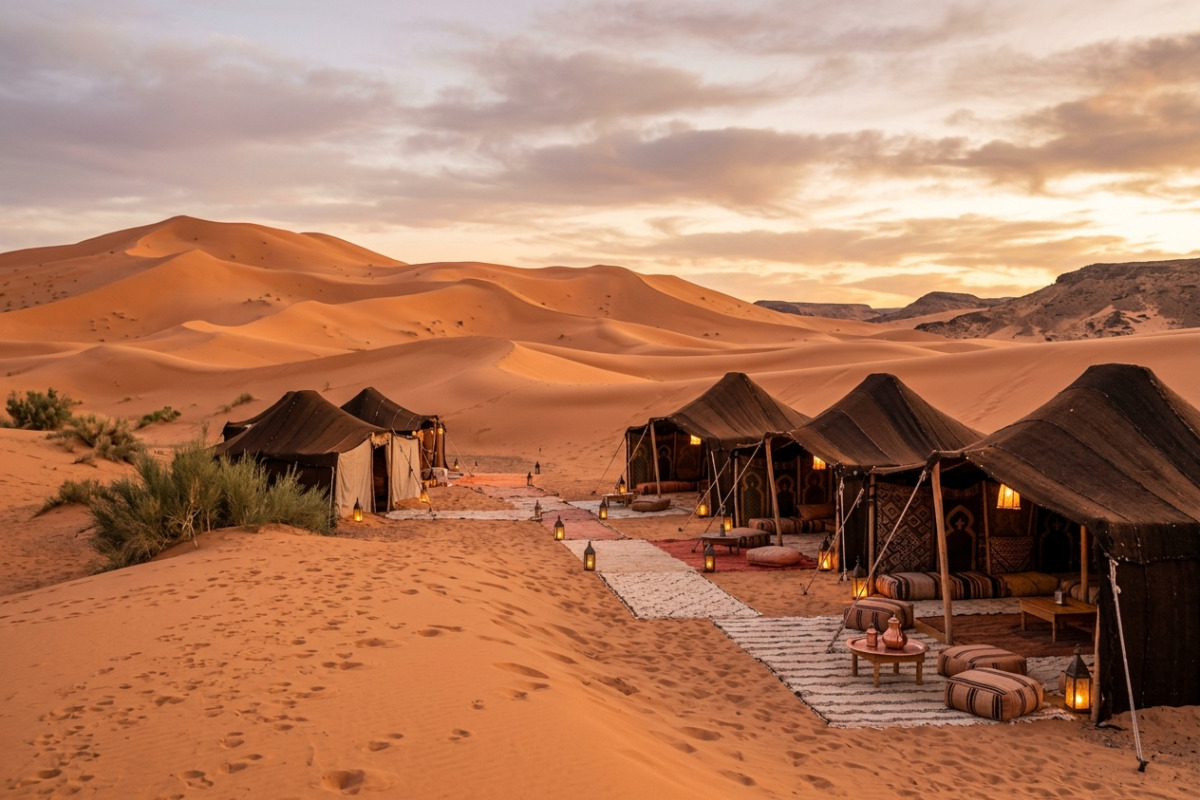
The nomadic home is a marvel of functional design, meant to be packed, moved, and reassembled with efficiency. The traditional tent, known as the *khaima*, is woven from goat hair and camel wool. This heavy, dark fabric is miraculous in its properties: it swells when wet to become waterproof during rare desert storms, yet provides cool shade and breathability under the scorching sun. The interior of a khaima is a sanctuary of warmth, lined with colorful rugs and cushions that separate the harsh exterior from the intimate family space. It is here that the day's stories are told and plans for the next migration are made.
Life revolves around the livestock—camels, goats, and sheep—which provide milk, meat, wool, and transport. The daily routine is dictated by the sun and the needs of the herd. Men often travel great distances to find grazing grounds or water, while women manage the camp, weave, and prepare food. This division of labor is rooted in survival, yet it fosters a strong sense of community interdependence. In a world that is increasingly digital and disconnected, witnessing this tangible connection to the earth and to one another is a grounding experience for any visitor.
The Sacred Ritual of Tea and Hospitality
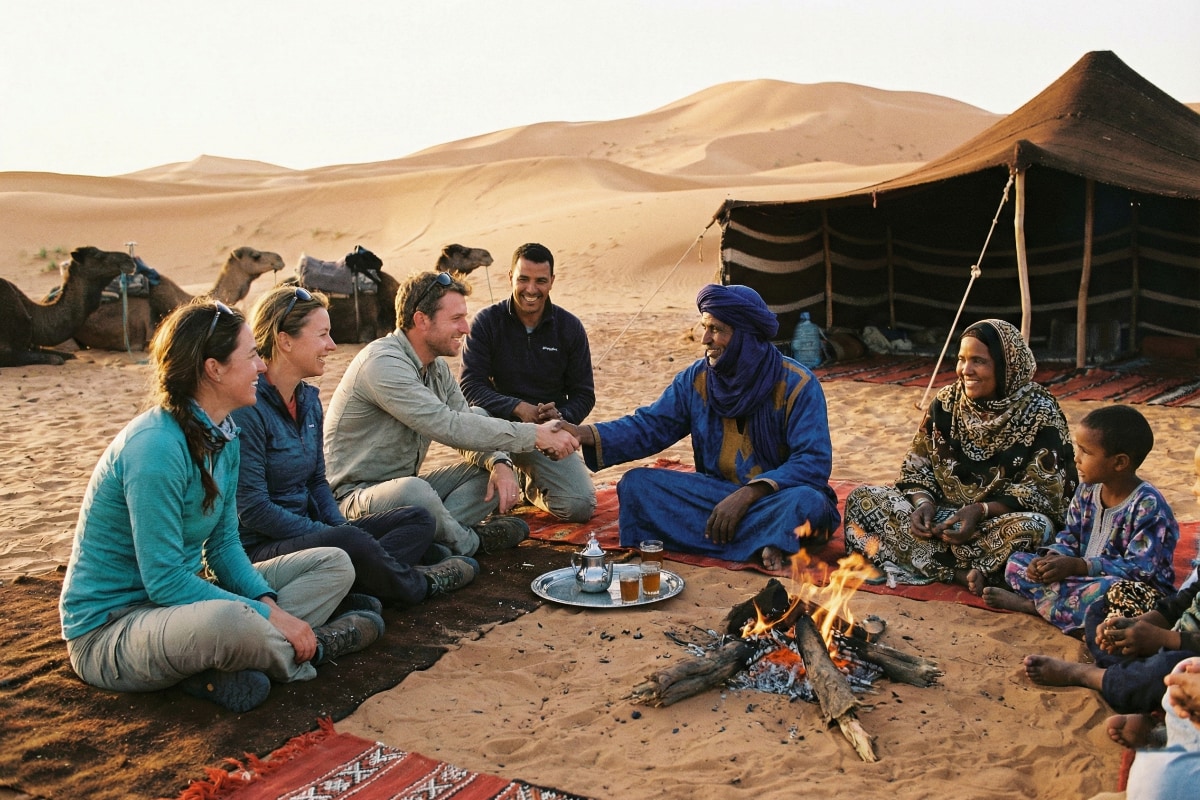
If there is one universal language in the Sahara, it is the tea ceremony. Moroccan mint tea, or *Atay*, is far more than a beverage; it is a sign of welcome, friendship, and negotiation. Refusing a cup is considered a grave insult. The preparation is a performance in itself, often done over charcoal embers. Green tea is steeped with generous amounts of sugar and fresh mint (or desert herbs like absinthe in winter), then poured from a height to create a frothy crown known as the *reza*. This process is repeated to ensure the flavor is perfect before it is served to guests.
The famous proverb regarding the three glasses of tea served to a guest perfectly captures the poetic nature of the culture: "The first is bitter like life, the second is strong like love, the third is gentle like death." Sitting on a rug under the vast canopy of stars, sipping hot tea while communicating through smiles and gestures, breaks down cultural barriers instantly. It is in these quiet moments that travelers often find the most meaningful connection, realizing that hospitality here is not a service, but a sacred duty.
Cultural Expressions: Music, Dress, and Cuisine
The culture of the Sahara is vibrant and expressive, serving as a counterpoint to the silence of the dunes. To help you understand the distinct elements you might encounter, here is a breakdown of key cultural pillars:
| Cultural Aspect | Description | Significance |
| Clothing (Djellaba & Gandora) | Long, loose-fitting robes often worn with a turban (Tagelmust). | Protects the body from the sun, sandstorms, and extreme temperature shifts between day and night. |
| Music (Gnaoua & Desert Blues) | Rhythmic drumming (tbel), metal castanets (qraqeb), and string instruments (guembri). | Used for storytelling, healing rituals, and celebrating community events. It induces a trance-like state connecting to ancestors. |
| Cuisine (Tagine & Madfouna) | Slow-cooked stews and "Berber Pizza" (stuffed bread baked in sand). | Cooking methods are adapted to resource scarcity, utilizing slow heat and minimal water to create nutrient-dense meals. |
Participating in these cultural expressions is a highlight of any desert journey. You might find yourself clapping along to the hypnotic rhythms of Gnaoua music around a campfire or learning how to wrap a turban properly to shield your face from the wind. These experiences are not staged performances but authentic sharings of a heritage that is lived every day.
Navigating the Modern World and Sustainability
It is important to acknowledge that the nomadic way of life is evolving. Climate change, bringing more frequent droughts to an already arid land, poses a significant threat to traditional grazing patterns. Furthermore, modernization and the desire for education and healthcare have led many families to settle in oasis towns or establish semi-nomadic lifestyles. When you visit in 2026, you are witnessing a culture in transition, balancing the preservation of ancient wisdom with the necessities of the 21st century.
However, the nomadic lifestyle itself holds keys to sustainable living. Their deep understanding of the desert ecosystem, their efficient use of resources, and their cyclical movement to allow land regeneration are all practices that modern society can learn from. Traditional animal husbandry, for example, is adapted to the carrying capacity of the land, preventing overgrazing. The use of solar energy for basic needs is also becoming increasingly common, blending ancient practices with modern technology.
Tourism, when done responsibly, plays a crucial role in this balance. It provides an economic lifeline that allows families to maintain their herds and traditions while accessing modern goods. By choosing to engage with local guides and staying in camps that support local families, travelers become active participants in the preservation of this cultural heritage. It transforms the trip from a passive observation into a supportive exchange.
Tips for Respectful Interaction
Visiting a nomadic family or tribe requires a level of sensitivity and respect. You are entering their living space, and while they are famously hospitable, following certain etiquettes ensures a positive interaction for everyone involved:
- Ask Before Photographing: Never take photos of people, especially women, without asking for explicit permission first. It is a matter of dignity and privacy.
- Dress Modestly: The Sahara is a conservative region. Wearing loose clothing that covers shoulders and knees is respectful and also practical for the climate.
- Accept Hospitality: If offered tea or food, try to accept at least a small amount. It is a gesture of friendship.
- Learn a Few Words: Learning basic greetings in Arabic or Tamazight (such as "Azul" for hello) goes a long way in showing respect and building rapport.
- Leave No Trace: The desert ecosystem is fragile. Ensure you leave nothing behind and respect the environment that sustains these communities.
Ultimately, a journey to the Sahara is a journey inward. The silence of the desert amplifies your thoughts, but the laughter and stories of the nomads ground you in shared humanity. As you watch the sun dip below the horizon, painting the sky in violet and orange, and listen to the soft murmur of conversation in a language you may not speak but can feel, you realize that the greatest treasure of the Sahara isn't the landscape—it's the enduring spirit of its people.