When most people imagine the Sahara Desert, they visualize an endless ocean of golden sand, devoid of life and movement under the scorching sun. However, this perception could not be further from the truth. The Sahara is a vibrant, albeit challenging, ecosystem teeming with life that has evolved over millennia to master the art of survival. As we embrace the travel trends of January 2026, more adventurers are looking beyond the landscapes to understand the heartbeat of the desert—its unique and resilient wildlife. From the smallest insects leaving delicate tracks in the dunes to the majestic mammals that roam the vast plains, the Sahara offers a wildlife viewing experience unlike any other on Earth.
To truly appreciate the biodiversity of this region, one must look closer and understand the biological marvels at play. The creatures here do not just survive; they thrive in conditions that would be fatal to most other species. Whether you are planning to Explore Morocco and its southern frontiers or simply dreaming of the dunes, understanding these animals adds a profound layer of depth to the desert experience. Let us journey into the sands to meet the hidden residents of the Great Desert.
Masters of Adaptation: How Life Survives the Heat
The Sahara presents two extreme challenges: blistering heat during the day and scarce water sources. The wildlife here has developed fascinating physiological and behavioral adaptations to cope with these extremes. Many of the desert’s inhabitants are nocturnal or crepuscular, meaning they are most active during the cooler hours of dawn, dusk, or night. By sleeping in deep burrows during the day, they escape the sun’s lethal rays and conserve vital moisture.
Water conservation is the ultimate key to survival in this arid expanse. Some animals have evolved to never drink free-standing water in their entire lives. Instead, they obtain all the necessary hydration from the seeds, roots, and insects they consume. Their kidneys are highly efficient, producing concentrated urine to minimize fluid loss. These evolutionary traits are a testament to nature's ingenuity, turning a barren landscape into a habitable home for those equipped to handle it.
Iconic Mammals of the Dunes
While the desert may seem empty at first glance, patient observers can spot some of the most charismatic mammals on the planet. These creatures have become symbols of the Sahara, representing resilience and grace under pressure.
The Fennec Fox: The Soul of the Sahara
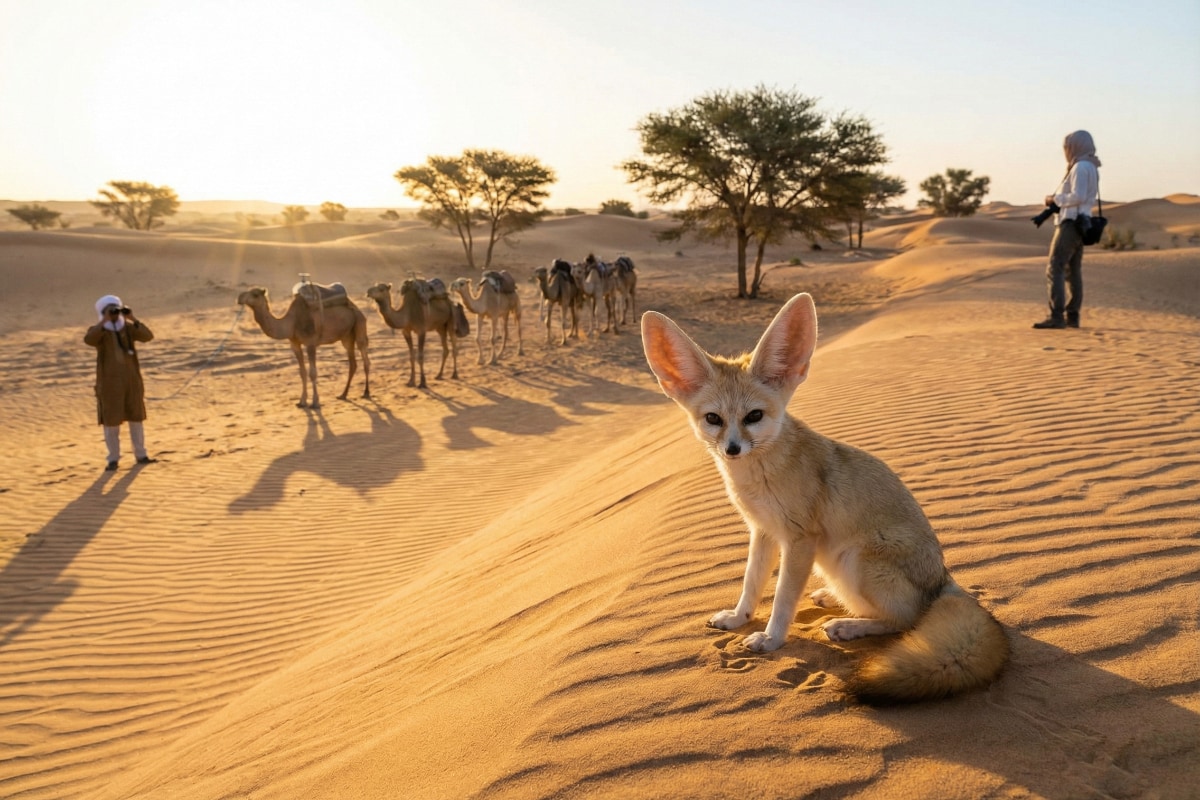
Perhaps the most adorable and iconic resident of the Sahara is the Fennec Fox. Weighing only about 1 to 1.5 kilograms, it is the smallest canid in the world, yet it possesses the largest ears relative to its body size. These massive ears serve a dual purpose: they act as radiators to dissipate excess body heat and provide exceptional hearing to locate prey, such as insects and small rodents, moving underground.
Fennec foxes are strictly nocturnal. During the day, their sandy-colored fur provides perfect camouflage against the dunes as they sleep in underground dens. Seeing a Fennec fox in the wild is a rare privilege, often requiring the guidance of local experts who know how to track their delicate paw prints in the sand.
The Dromedary Camel: The Ship of the Desert
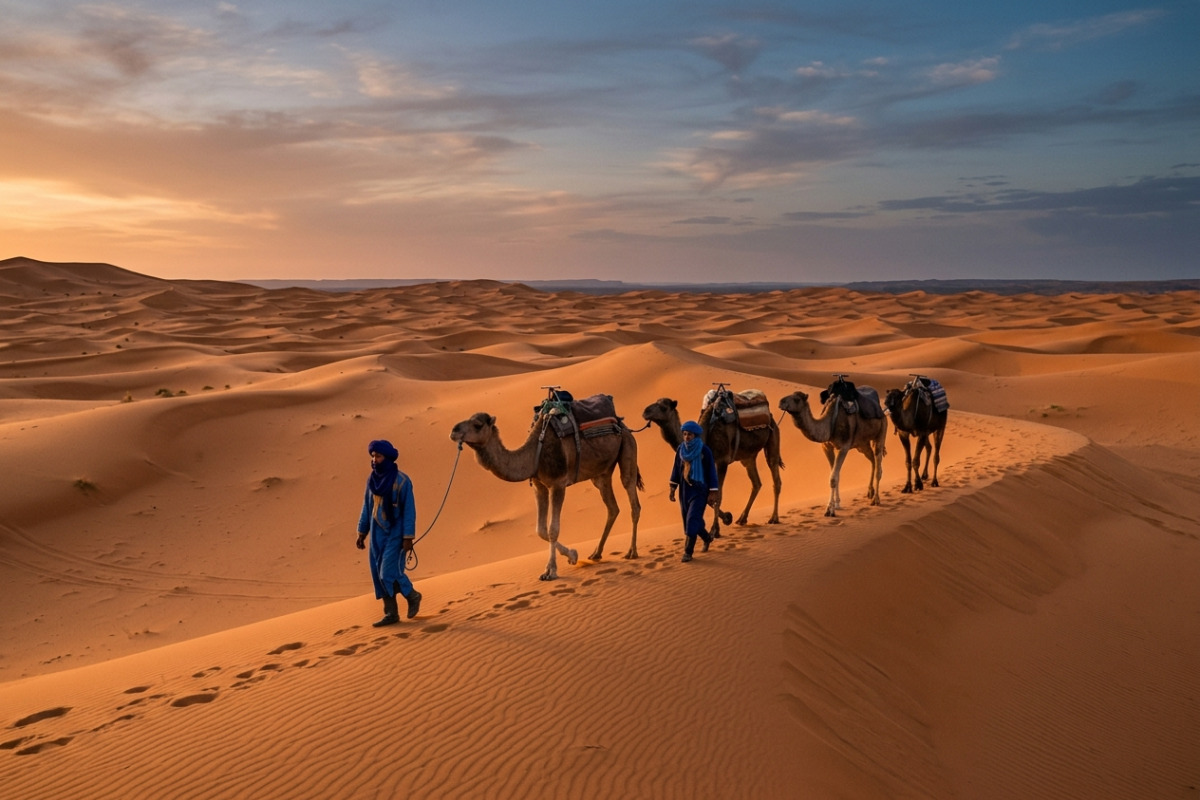
No discussion of Sahara wildlife is complete without the Dromedary Camel. While many are domesticated, they are perfectly engineered for this environment. Contrary to popular belief, their humps store fat, not water, which serves as an energy reserve when food is scarce. Their broad, padded feet prevent them from sinking into the soft sand, and their long eyelashes and sealable nostrils protect them from blowing dust and sandstorms.
The Dorcas Gazelle
The Dorcas Gazelle is a master of minimalism. These elegant creatures can go their entire lives without drinking water if necessary, relying solely on moisture from acacia leaves and desert plants. They are incredibly agile and can run at speeds of up to 80 kilometers per hour to escape predators like cheetahs or jackals. Spotting a herd of gazelles leaping across the rocky plateaus is a breathtaking sight for any wildlife enthusiast.
Reptiles and Insects: The Hidden Residents
If mammals are the stars of the desert, reptiles are the unsung heroes. Cold-blooded animals are naturally suited to the desert because they require less food energy than mammals. However, they must still manage their body temperature carefully.
- The Horned Viper: Known for the menacing horn-like scales above its eyes, this snake moves using a distinct sidewinding motion. This technique minimizes contact with the hot sand and allows it to move quickly across loose surfaces.
- The Uromastyx (Spiny-Tailed Lizard): These prehistoric-looking lizards are often seen sunbathing on rocks in the morning to raise their body temperature before hunting. They are herbivorous and obtain water exclusively from vegetation.
- Deathstalker Scorpion: While its name is intimidating, this arachnid plays a crucial role in the food web, controlling insect populations. They are fluorescent under UV light, making night walks with a UV torch a thrilling activity.
Comparative Adaptations of Sahara Wildlife
To better understand how different species tackle the same environmental challenges, here is a comparison of their unique survival strategies:
| Animal | Primary Habitat | Key Survival Adaptation |
| Fennec Fox | Sand Dunes (Ergs) | Oversized ears dissipate heat; nocturnal lifestyle. |
| Dromedary Camel | Open Plains & Dunes | Hump stores fat for energy; sealable nostrils block sand. |
| Addax Antelope | Gravel Plains & Sand | Coat changes color (white in summer to reflect heat, gray in winter). |
| Sahara Silver Ant | High Heat Dunes | Reflective silver hairs prevent overheating; active during midday. |
| Monitor Lizard | Rocky Outcrops | Thick skin retains moisture; enters aestivation (dormancy) in extreme heat. |
Birdlife in the Arid Expanse
The skies above the Sahara are far from empty. The desert lies on a major migratory route for birds traveling between Europe and Africa. However, there are also permanent residents that have adapted to the arid conditions. The Lappet-faced Vulture dominates the skies, scavenging for carrion and playing a vital role in keeping the ecosystem clean.
Another fascinating bird is the Desert Sparrow. Unlike its urban cousins, this bird nests in acacia trees and even in the walls of abandoned wells. The contrast of their pale feathers against the deep blue desert sky is a photographer's delight. For those interested in ornithology, combining a desert trek with birdwatching is one of the most rewarding experiences available in the region.
Responsible Wildlife Tourism
Observing wildlife in the Sahara requires patience, respect, and ethical considerations. The desert ecosystem is fragile. Disturbing a burrow or chasing an animal can cause them to expend critical energy reserves that they cannot easily replenish. Travelers are encouraged to maintain a safe distance and use long lenses for photography.
When visiting the Sahara, particularly the rich regions of Southern Morocco, it is essential to travel with guides who understand the local ecology. They can point out tracks, scats, and signs of life that an untrained eye would miss. This not only enhances your safety but ensures that your presence does not disrupt the delicate balance of the desert. Whether you are tracking the elusive sand cat or watching beetles navigate the dunes, the wildlife of the Sahara tells a story of endurance that is both humbling and inspiring.