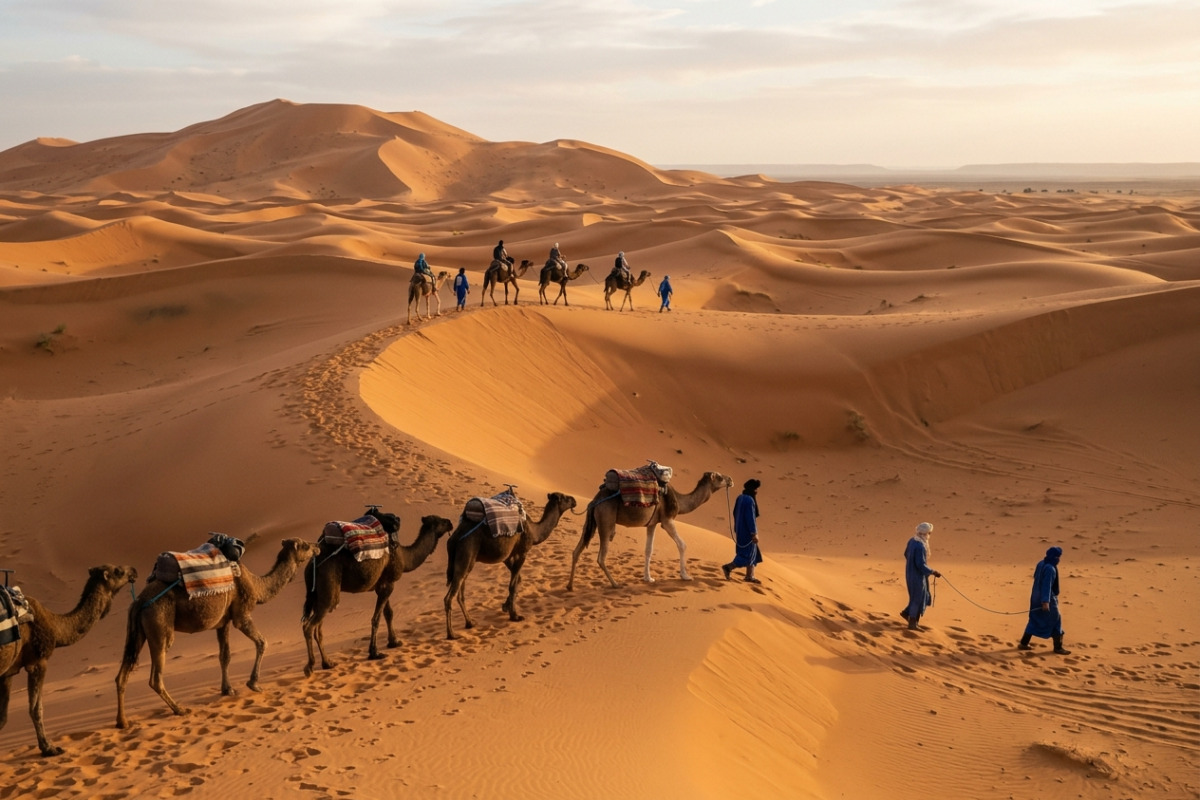
When one imagines the Sahara, the mind often conjures images of endless silence, rolling golden dunes, and a solitude that stretches to the horizon. However, this vast landscape is far from empty; it is the stage for some of the world's most vibrant and soulful gatherings. The desert is alive with a rhythm that beats in time with the hearts of its people, and nowhere is this more evident than during the spectacular festivals that dot the calendar. For the modern traveler in 2026, attending a Sahara festival is not merely a sightseeing opportunity; it is a profound immersion into an ancient way of life that continues to thrive amidst the sands.
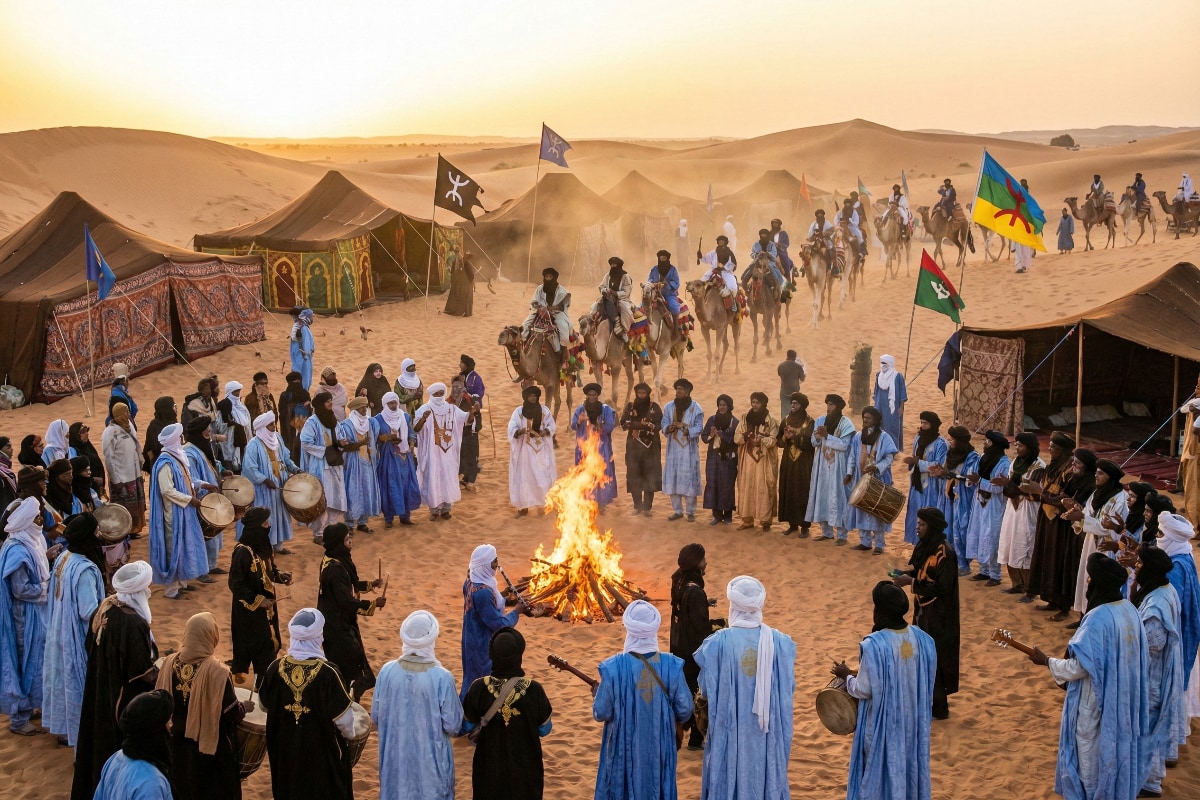
These events serve as a bridge between the past and the present, where the nomadic traditions of the Tuareg, Berber, and Sahrawi peoples are celebrated with pride and joy. The festivals are a riot of color against the monochromatic backdrop of the sand, featuring indigo robes, intricate jewelry, and the mesmerizing sounds of desert blues. As you plan your journey to explore the diverse regions of Morocco, aligning your trip with one of these cultural celebrations can transform a standard vacation into a life-altering odyssey. It is here, under the vast canopy of the Milky Way, that you truly begin to understand the resilience and beauty of desert culture.
The Heartbeat of the Sands: Why These Festivals Matter
To understand the festivals of the Sahara, one must first understand the concept of the gathering. For centuries, nomadic tribes moved across these arid lands, their paths crossing at specific oases for trade, news exchange, and celebration. Today’s festivals are the modern evolution of these tribal gatherings (moussems). They are vital for preserving intangible cultural heritage, ensuring that oral histories, musical traditions, and artisanal skills are passed down to the younger generations. They are not staged merely for tourists; they are authentic expressions of identity.
The cultural significance runs deep, acting as a unifying force for the diverse ethnic groups inhabiting the region. Music, in particular, acts as a universal language here. The hypnotic rhythms of Gnawa, the poetic lyrics of Hassani songs, and the electric guitars of desert rock bands tell stories of struggle, love, and freedom. For the visitor, witnessing these performances is an intimate look into the soul of the Sahara. It allows for a connection that transcends language barriers, where the shared experience of rhythm and emotion creates a bond between the host and the guest.
Major Festivals to Mark on Your Calendar
While the Sahara hosts numerous local gatherings throughout the year, several major festivals have gained international acclaim for their scale and cultural depth. Each offers a unique flavor and focus, ranging from spiritual music to endurance and traditional sports. Travelers looking for unique immersive desert experiences should consider these flagship events as the centerpiece of their itinerary.
- International Festival of Nomads (M'hamid El Ghizlane): usually held in the spring (typically March or April), this festival is a celebration of nomadic culture in all its forms. It takes place in an open-air setting where the stage is surrounded by dunes. You can expect workshops on bread baking in the sand, demonstrations of traditional crafts, and nights filled with music from across the Sahel and North Africa. Imagine the aroma of freshly baked tagine bread filling the air as you learn the ancient techniques.
- Taragalte Festival: embracing the theme of eco-tourism and peace, Taragalte pays homage to the old caravans that crossed the Sahara. It is held under the stars (usually in October or November) and focuses heavily on preserving the fragile desert environment while celebrating the musical heritage of the region. The atmosphere is often described as magical and meditative. Picture yourself sipping mint tea under a blanket of stars, listening to soulful melodies that echo through the dunes.
- Merzouga International World Music Festival: located near the towering dunes of Erg Chebbi, this festival brings together artists from around the globe to collaborate with local musicians. It is a high-energy event (often held in July) where the fusion of cultures creates a vibrant, dance-filled atmosphere that lasts well into the night. Envision yourself dancing to the rhythm of world music as the sun rises over the majestic Erg Chebbi dunes.
- The Rose Festival (Kelaat M'gouna): while technically on the edge of the desert in the Dades Valley, this harvest festival is an essential part of the region's cultural fabric. Celebrating the rose harvest (usually in May), it features parades, music, and the election of a Rose Queen, offering a fragrant and colorful contrast to the deep desert events. The air is thick with the sweet scent of roses, and the vibrant colors of the festival are a feast for the eyes.
- Tan-Tan Moussem: A large gathering (moussem) that showcases Bedouin culture, including camel races, traditional music, and displays of horsemanship. While not strictly a music festival, the cultural performances are a major draw. It typically takes place in August.
What Travelers Can Expect: A Sensory Journey
Attending a festival in the Sahara is an adventure that engages all five senses. Visually, the contrast is striking. The stark beauty of the dunes is interrupted by vibrant tents, colorful turbans (shesh), and the glow of campfires. The scent of mint tea and roasting lamb permeates the air, mixing with the crisp, dry smell of the sand. But it is the sound that truly defines the experience—the clapping of hands, the trill of the ululations, and the deep resonance of drums echoing off the dunes.
Beyond the music and sights, the food is an integral part of the Saharan festival experience. Be sure to sample traditional dishes like tagine (a slow-cooked stew), couscous (steamed semolina), and mechoui (roasted lamb). These dishes are often prepared using ancient techniques and local ingredients, offering a true taste of the desert. Don't forget to try the sweet and refreshing mint tea, a staple of Saharan hospitality.
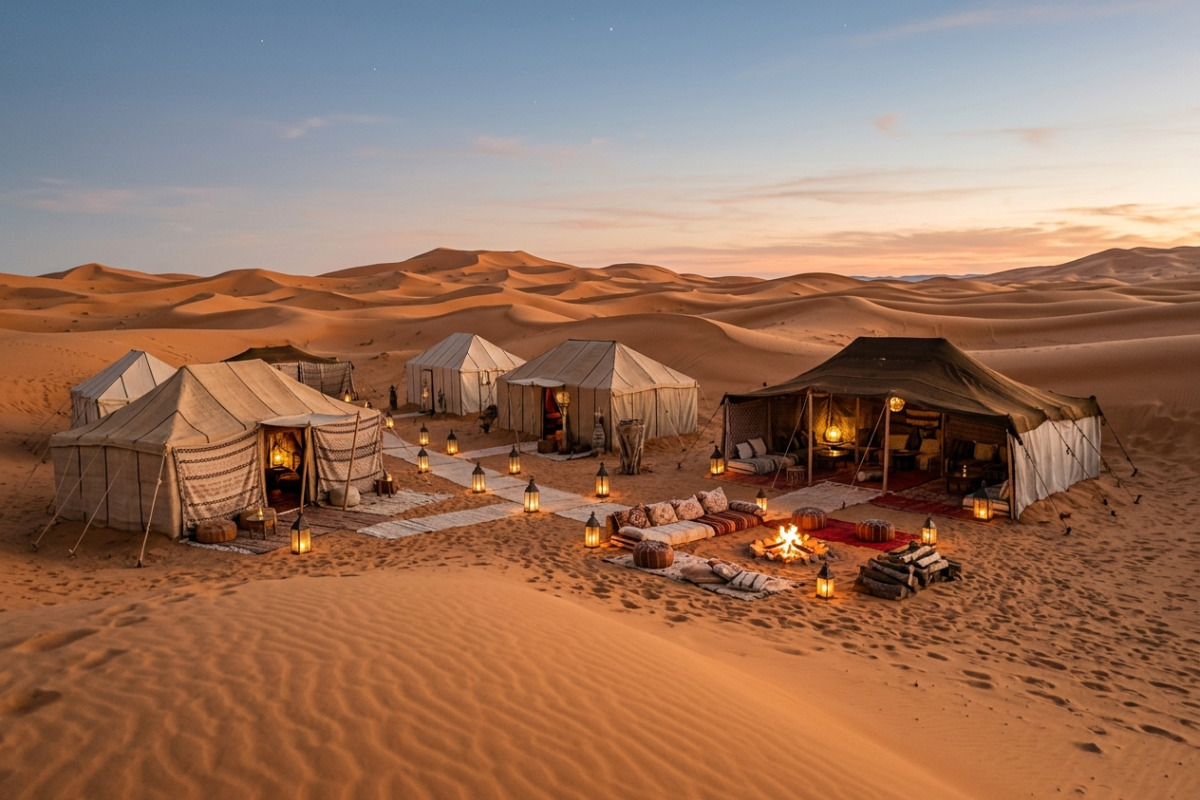
Travelers should be prepared for a rustic yet comfortable environment. Accommodation often involves sleeping in traditional wool tents or bivouacs set up specifically for the festival. These temporary cities in the sand foster a sense of community. Meals are often communal, with large platters of couscous or tagine shared among new friends. It is a place to leave luxury hotels behind and embrace the warmth of Saharan hospitality. The pacing of the festivals is also distinct; events often run on "desert time," meaning they start when the mood is right and the heat of the day has subsided.
Festival Essentials: A Quick Guide
To help you prepare for this unique environment, here is a breakdown of what characterizes the festival experience in the Sahara:
| Feature | Description | Traveler Tip |
| The Venue | Open-air stages nestled between sand dunes or in palm groves. | Bring a scarf or turban to protect against wind and sand. |
| The Music | A mix of traditional folk, desert blues (Tuareg rock), and fusion. | Open your mind to new rhythms; dancing is encouraged. |
| Accommodation | Nomadic tents (khaimas) or eco-lodges nearby. | Book well in advance as capacity in remote areas is limited. |
| Climate | Hot days and surprisingly cool nights. | Layer your clothing. A warm fleece is essential for the evenings. |
| Local Cuisine | Tagine, couscous, mechoui (roasted lamb), and mint tea. | Be adventurous and try new flavors. Remember to drink plenty of water. |
Navigating Cultural Etiquette
Respect is the currency of the desert. While the locals are incredibly welcoming and accustomed to international visitors, maintaining cultural sensitivity ensures a positive experience for everyone. Dress modestly, covering shoulders and knees, which is not only respectful but also practical for protection against the sun. When taking photos, especially of people, always ask for permission first. In many cases, a smile and a polite gesture are all it takes to establish a connection.
Furthermore, the desert environment is fragile. These festivals often promote eco-responsibility. Visitors are expected to manage their waste carefully, avoiding single-use plastics where possible and respecting the scarcity of water. By treading lightly, you contribute to the sustainability of these events and the preservation of the landscape that hosts them. Engaging with artisans by purchasing their crafts is another wonderful way to support the local economy and take home a piece of the festival spirit.
The Lasting Impact of the Dunes
Leaving the Sahara after a festival is never easy. The silence that follows the music feels heavier, yet more peaceful. Travelers often find that the memories of the desert are sticky; they cling to you long after you have shaken the sand from your shoes. The combination of the vast, indifferent landscape and the warm, vibrant human spirit creates a paradox that is deeply moving.
Whether you are swayed by the spiritual chants of the Taragalte or the energetic beats of Merzouga, a Sahara festival is more than an event—it is a pilgrimage to the roots of human connection. As you return to the modern world, you carry with you the echo of the drums and the knowledge that in the middle of nowhere, you found a place that felt strangely like home.