The vast, undulating dunes of the Sahara have captivated travelers for centuries, offering a profound silence and a canopy of stars that feels close enough to touch. However, the increasing popularity of desert tourism brings with it a critical responsibility: the need to protect this fragile ecosystem. As we step into January 2026, the conversation around travel in Morocco has shifted significantly toward sustainability. It is no longer just about witnessing the majesty of the desert; it is about ensuring that our footprints do not leave a lasting scar on these ancient sands. Travelers are now seeking immersive experiences that align with their values, prioritizing camps that respect both the environment and the local heritage.
For many, the allure of the desert lies in its pristine, untouched nature. To maintain this, camp operators and local communities have begun implementing rigorous eco-friendly practices. These initiatives are designed to minimize the environmental impact of tourism while maximizing the benefits for the local population. From the golden dunes of Merzouga to the remote expanses of Chegaga, a green revolution is quietly taking place under the scorching sun. Understanding these practices allows visitors to make informed choices, ensuring that their adventure contributes to the preservation of one of the world's most stunning landscapes.
The Shift Toward Sustainable Desert Tourism
Sustainability in the Sahara is not merely a trend; it is a necessity for survival. The desert ecosystem is incredibly delicate, with scarce water resources and wildlife that is easily disturbed by human activity. In recent years, there has been a concerted effort to move away from mass tourism models that generate high waste and consume excessive resources. Instead, the focus has shifted to 'slow travel' and low-impact camping. This approach encourages visitors to stay longer, engage more deeply with the culture, and consume less.
This transition is supported by a growing awareness among travelers who want to Explore Morocco without compromising its future. High-end luxury camps and rustic bivouacs alike are auditing their operations. They are realizing that true luxury in the desert is not about excess, but about harmony with nature. By integrating modern technology with traditional wisdom, these camps are proving that comfort and conservation can coexist seamlessly. For example, some camps are now using drone technology to monitor wildlife populations and track changes in the desert landscape, providing valuable data for conservation efforts.
Harnessing the Power of the Sun
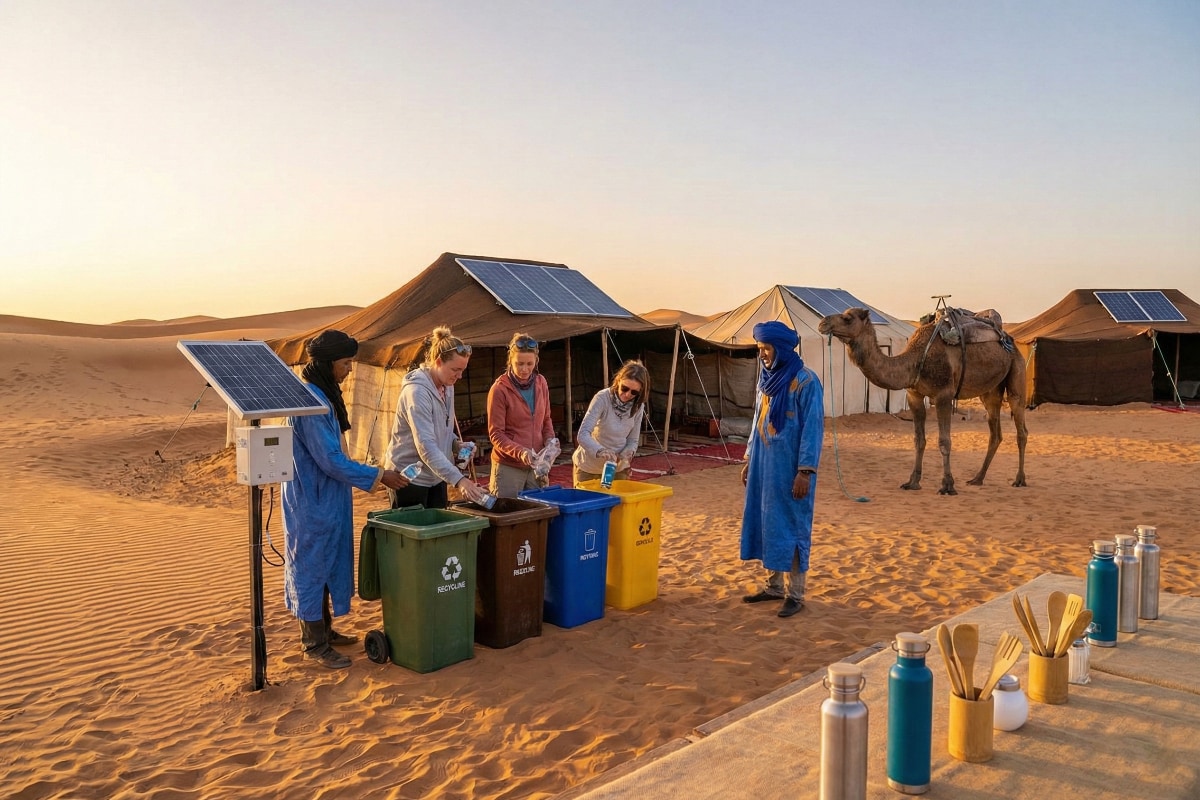
One of the most logical and impactful changes in Sahara desert camps is the widespread adoption of solar energy. The desert offers an abundance of sunlight, making it the perfect environment for photovoltaic systems. In the past, noisy and polluting diesel generators were the standard for providing electricity in remote camps. Today, the hum of generators is being replaced by the silent efficiency of solar panels.
- Lighting: LED lighting systems powered by solar batteries illuminate tents and pathways, providing a warm ambiance without the heavy carbon footprint.
- Water Heating: Solar thermal heaters are used to provide warm showers for guests, utilizing the sun's intense heat during the day to store energy for the cool desert nights.
- Charging Stations: Centralized charging hubs for cameras and phones are now entirely off-grid, allowing guests to stay connected (if they wish) using clean energy.
This shift not only reduces greenhouse gas emissions but also enhances the guest experience. The absence of generator noise allows the profound silence of the desert to take center stage, making stargazing and meditation sessions far more authentic.
Water Conservation: The Desert's Gold
In an environment where rainfall is a rare anomaly, water conservation is paramount. Eco-friendly camps treat water with the reverence it deserves. The lavish, high-pressure showers of city hotels are replaced with innovative, low-flow fixtures that maintain comfort while significantly reducing usage. Furthermore, the philosophy of water usage in these camps extends beyond just the plumbing hardware.
Many sustainable camps have implemented greywater recycling systems. Water from sinks and showers is filtered through natural bio-systems and used to irrigate local flora, such as tamarisk trees and date palms, which help stabilize the dunes. This circular approach ensures that every drop is utilized to its fullest potential. Guests are also educated on the scarcity of water upon arrival, encouraging a mindset of mindfulness that often persists long after they return home. Some camps are even experimenting with atmospheric water generators, which extract moisture from the air to create potable water, further reducing their reliance on traditional water sources.
Waste Management and the Battle Against Plastic
Managing waste in a remote location is a logistical challenge. Responsible camps have adopted a zero-waste philosophy, particularly concerning single-use plastics. The days of plastic water bottles littering the dunes are fading. Instead, camps provide filtered water in glass bottles or encourage guests to bring their own refillable containers. This simple switch prevents thousands of plastic bottles from entering the landfill or, worse, the open desert, every season.
Organic waste is typically composted on-site or fed to local livestock, closing the nutrient loop. For non-organic waste, conscientious operators arrange for transportation back to urban centers where recycling facilities are available. When you book your desert experiences, looking for operators who explicitly mention their waste management policies is a great way to support these efforts. Some camps are partnering with local artisans to upcycle waste materials into souvenirs and crafts, providing an additional income stream for the community and reducing waste simultaneously.
Traditional Architecture and Natural Materials
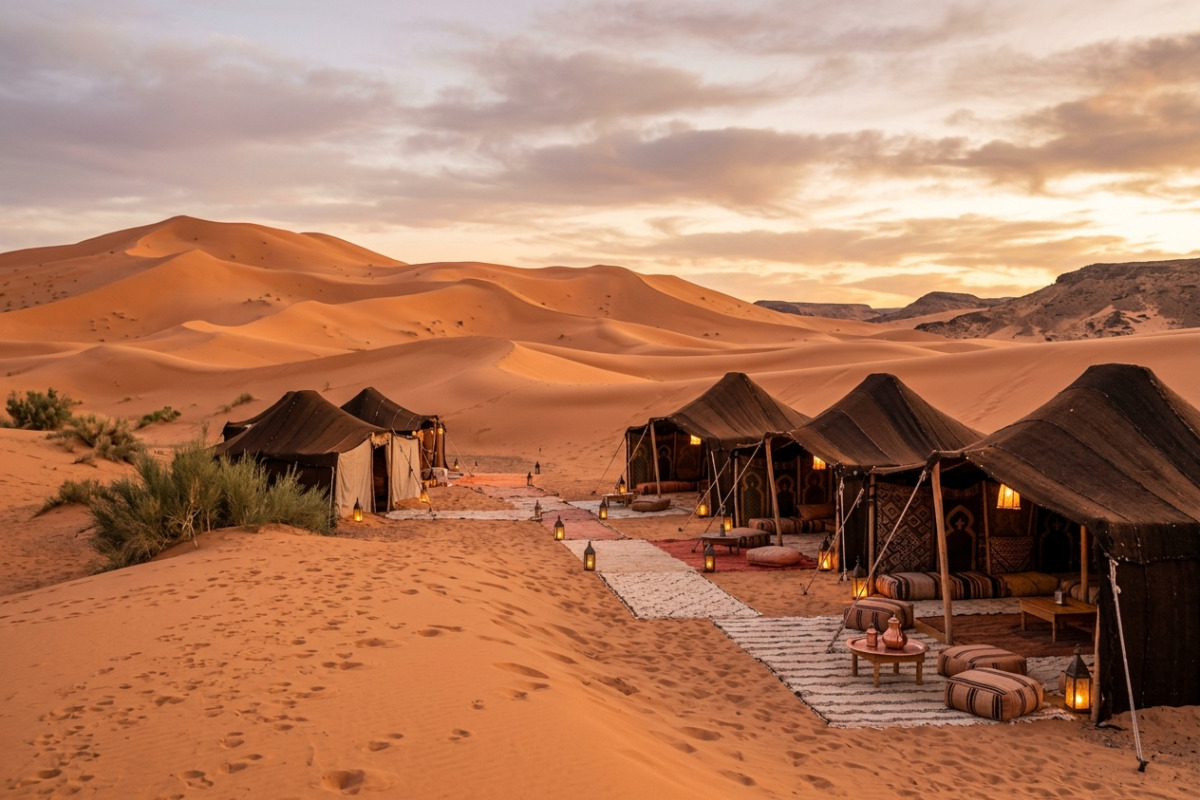
Sustainability is also reflected in how camps are built. The most eco-friendly structures are those that utilize traditional Moroccan building techniques. Using locally sourced materials like pisé (rammed earth) or adobe bricks offers superior thermal insulation compared to concrete or synthetic tents. These materials keep the interiors cool during the blistering heat of the day and retain warmth during the freezing desert nights, reducing the need for energy-intensive climate control.
| Feature | Standard Commercial Camp | Eco-Friendly Sustainable Camp |
| Energy Source | Diesel Generators (Noisy, polluting) | Solar Panels (Silent, renewable) |
| Water System | High consumption, direct drainage | Low-flow fixtures, greywater recycling |
| Construction | Synthetic fabrics, concrete bases | Natural fibers, adobe, local wood |
| Food Sourcing | Imported, packaged goods | Locally sourced, organic, seasonal |
| Community Impact | External staff, low local reinvestment | Local hiring, supports nomadic families |
Supporting Local Communities
True sustainability encompasses social and economic factors as well as environmental ones. The best eco-camps are deeply integrated with the local nomadic and Berber communities. This involves hiring staff from nearby villages, ensuring that the economic benefits of tourism stay within the region. It also means sourcing food locally—buying vegetables, meat, and dates from local farmers rather than importing processed goods from distant cities.
By engaging with these camps, travelers gain a more authentic insight into the desert way of life. Cultural exchange becomes a two-way street, where visitors learn about the traditions of the Sahara, and locals are empowered to preserve their heritage. This symbiotic relationship is the cornerstone of responsible tourism. For example, some camps offer workshops led by local artisans, teaching traditional crafts like weaving and pottery. These activities provide tourists with a unique cultural experience while supporting the preservation of traditional skills and generating income for the local community. Furthermore, many camps contribute a percentage of their profits to local development projects, such as building schools or providing access to healthcare.
How Travelers Can Contribute
While camp operators play a massive role, the behavior of the traveler is equally important. Being a responsible tourist in the Sahara involves a few conscious choices that can make a world of difference. It starts with preparation and continues through every step of the journey.
- Pack Light and Right: Bring biodegradable toiletries (shampoo, soap) to ensure that the greywater recycling systems are not contaminated with harsh chemicals.
- Respect Wildlife: The desert is alive. Avoid disturbing animals such as Fennec foxes or lizards, and never feed wildlife, as it disrupts their natural diet.
- Leave No Trace: This golden rule applies everywhere. If you carry it in, carry it out. This includes cigarette butts and small wrappers.
- Cultural Respect: Ask for permission before taking photos of local people and dress modestly to respect local customs.
As we navigate through 2026, the Sahara remains a place of wonder. By choosing eco-friendly camps and practicing responsible habits, we ensure that the magic of the dunes remains synonymous with purity and preservation. A sustainable adventure is not just about seeing the world; it is about caring for it.