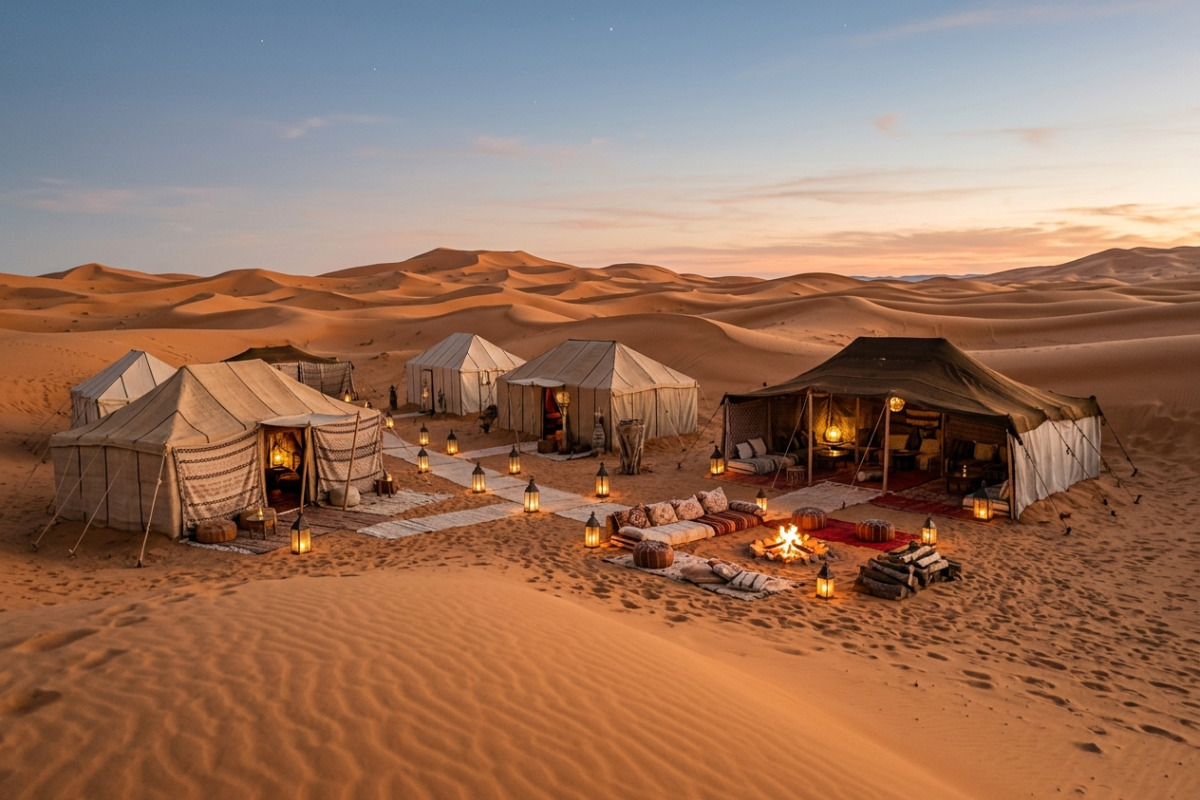
The vast, golden expanse of the Sahara Desert is often perceived by the uninitiated as a barren wasteland, a place of silence and emptiness. However, for those who call these shifting sands home, the desert is a living, breathing entity that demands respect, understanding, and a profound level of resilience. The nomadic lifestyle in the Sahara is not merely a struggle for survival; it is a sophisticated dance with nature, honed over millennia of observation and adaptation. As we look across the dunes in January 2026, the ancient traditions of the Amazigh and Bedouin tribes continue to offer a masterclass in sustainability and endurance, proving that life can flourish even in the most extreme conditions.
To understand the nomad is to understand the rhythm of the earth itself. Unlike modern urban living, which seeks to conquer or ignore the environment, the nomadic way of life embraces the landscape’s temperament. This existence is built on the philosophy of minimalism and mobility, where every object has a purpose and every movement is calculated. The resilience of these tribes lies in their ability to read the signs of the desert—the shift in the wind, the texture of the sand, and the position of the stars—allowing them to navigate a world without roads or signposts.
Mastering the Elements: Shelter and Clothing
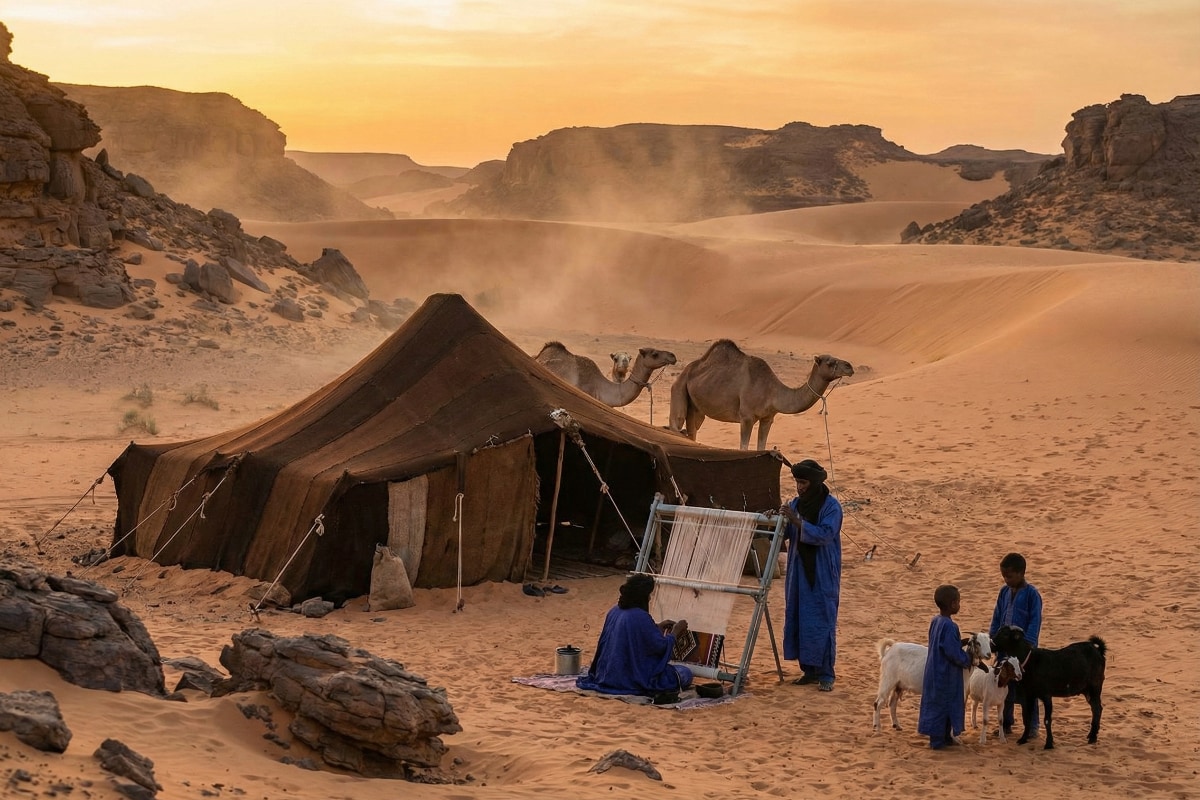
One of the most visible symbols of nomadic adaptation is the traditional dwelling, often referred to as the khaima. These black, tent-like structures are marvels of indigenous engineering, typically woven from goat and camel hair. The material is naturally water-resistant, swelling when wet to seal out rare desert rains, yet breathable enough to allow air circulation during the scorching heat of the day. The aerodynamic shape of the tent is designed to withstand the fierce desert winds, anchoring the family to the ground while providing a mobile sanctuary that can be packed up and moved at a moment's notice.
Similarly, the traditional attire of Sahara nomads is far more than a cultural fashion statement; it is a survival tool. The loose-fitting robes trap a layer of cool air against the body, insulating the wearer from the intense sun. The iconic headscarf, or tagelmust, serves multiple purposes: it protects the head from heatstroke, shields the face from abrasive sandstorms, and preserves moisture by reducing evaporation from the mouth and nose. These adaptive strategies are crucial for anyone wishing to Explore Morocco and its deep desert regions, where the environment dictates the rules of engagement.
Water: The Currency of Life
In the Sahara, water is not just a resource; it is the sacred center of existence. Nomadic tribes have developed an intricate mental map of water sources, known as gueltas (natural rock pools) and hidden wells. This knowledge is passed down through generations, often encoded in songs, stories, and poetry. The ability to locate water in an arid landscape is perhaps the single most critical skill for survival, requiring an intimate understanding of geology and plant life.
Conservation is ingrained in every aspect of daily life. Water is never wasted; it is used for drinking and cooking first, with cleaning being a secondary luxury often achieved with sand for scouring. This deep respect for resources creates a culture of mindfulness that the modern world could learn much from. Travelers who seek authentic desert experiences often find themselves humbled by this perspective, realizing how disconnected urban societies have become from the sources of their sustenance.
The Social Fabric: Hospitality as a Survival Mechanism
Resilience in the Sahara is not a solitary endeavor; it is a communal effort. The harshness of the environment has fostered a culture of extreme hospitality that is legendary across the globe. In a place where being left alone can mean death, treating a guest—whether a stranger or a kin—with the utmost honor is a social imperative. This hospitality creates a safety net across the desert, ensuring that travelers and other clans can find support when resources run low.
The ritual of mint tea is the heartbeat of this social structure. It is said that the first glass is as bitter as life, the second as strong as love, and the third as gentle as death. This ceremony is not rushed; it is a time to exchange news, negotiate alliances, and reinforce social bonds. Key values of this lifestyle include:
- Interdependence: Every member of the tribe has a specific role, from herding livestock to setting up camp, ensuring the group's collective survival.
- Mobility: The willingness to leave everything behind and move towards greener pastures prevents the depletion of local resources.
- Oral Tradition: History, laws, and survival skills are preserved through storytelling, ensuring knowledge is portable and indestructible.
- Patience: The desert cannot be rushed; nomads possess a profound patience that allows them to endure long treks and scarcity without despair.
Economic Adaptation: Livestock and Trade
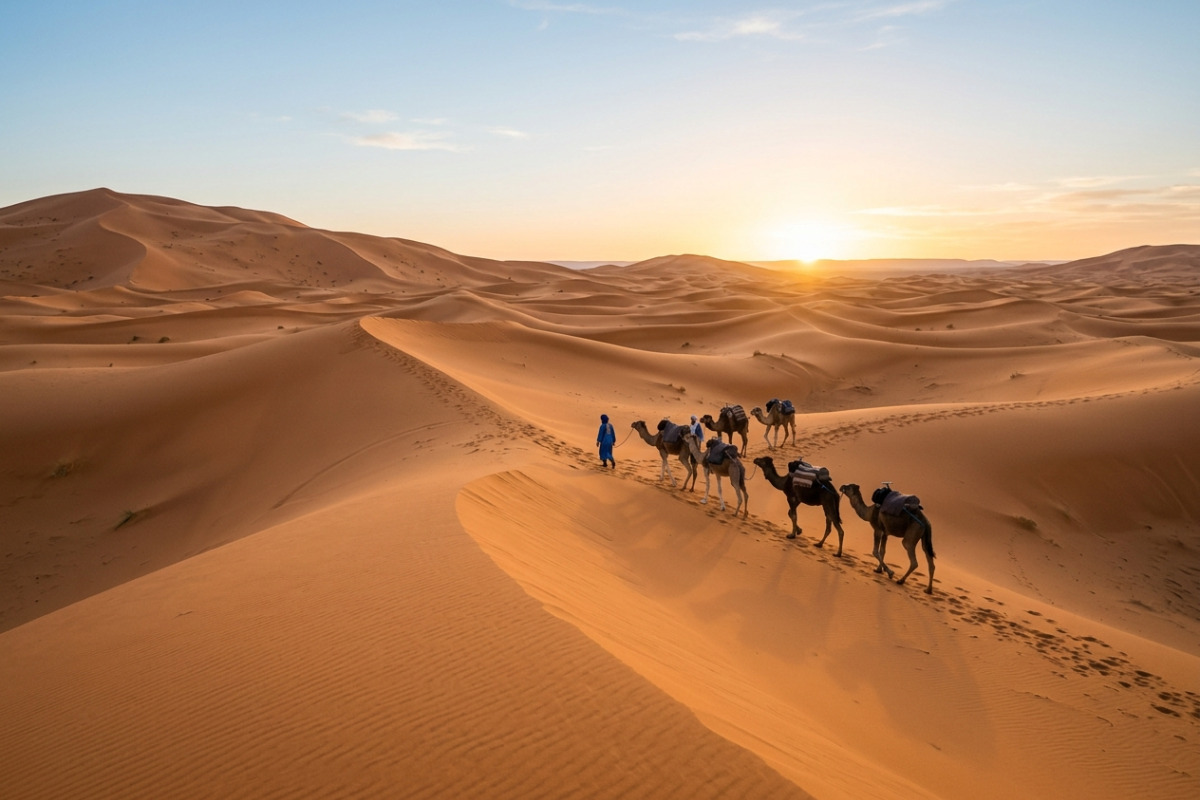
The nomadic economy has historically relied on a symbiotic relationship with livestock, primarily camels, goats, and sheep. These animals are the engines of the nomadic lifestyle, providing milk, meat, wool, and transportation. The camel, often called the "ship of the desert," is particularly vital due to its ability to travel long distances without water and carry heavy loads. Herding these animals requires a constant search for grazing land, driving the perpetual migration that defines the nomadic existence.
Below is a breakdown of how nomadic tribes address common desert challenges through traditional wisdom:
| Desert Challenge | Nomadic Adaptive Strategy | Cultural Significance |
| Extreme Temperature Fluctuations | Use of goat-hair tents (insulating) and layered robes (Gandora/Djellaba). | Represents harmony with nature rather than fighting against it. |
| Resource Scarcity | Seasonal migration (Transhumance) to allow land to recover. | Reinforces the concept of non-attachment to physical places. |
| Navigation in Featureless Terrain | Celestial navigation (stars) and reading dune formations. | Demonstrates a deep spiritual and physical connection to the cosmos. |
| Isolation | Strict codes of hospitality (Dakheel) for strangers. | Builds a trusted network of support across vast distances. |
The Modern Nomad: Balancing Tradition and Change
Today, the nomadic lifestyle faces unprecedented challenges. Climate change is altering rainfall patterns, making traditional water sources less reliable, while modernization and border restrictions limit the freedom of movement that is essential to this way of life. However, resilience is about adaptation, not just stubborn persistence. Many nomads are finding new ways to preserve their heritage while engaging with the modern world.
Some families have adopted a semi-nomadic lifestyle, settling near oases during the harshest months to access education and healthcare, while still maintaining herds in the open desert. Others have turned to sustainable tourism, acting as guides who share their unparalleled knowledge of the Sahara with visitors. This transition allows them to keep their culture alive and valued, transforming their ancient skills into economic assets in the 21st century. By sharing their stories, they ensure that the wisdom of the desert does not vanish into the sands of time.
The resilience of the Sahara's nomads is a testament to human ingenuity and spirit. It teaches us that adaptation is not about giving up who we are, but about evolving to meet the challenges of our environment. Whether through the careful conservation of water, the strength of community bonds, or the quiet dignity of a life lived under the stars, the nomadic way of life remains a powerful inspiration for all of us seeking balance in a rapidly changing world.