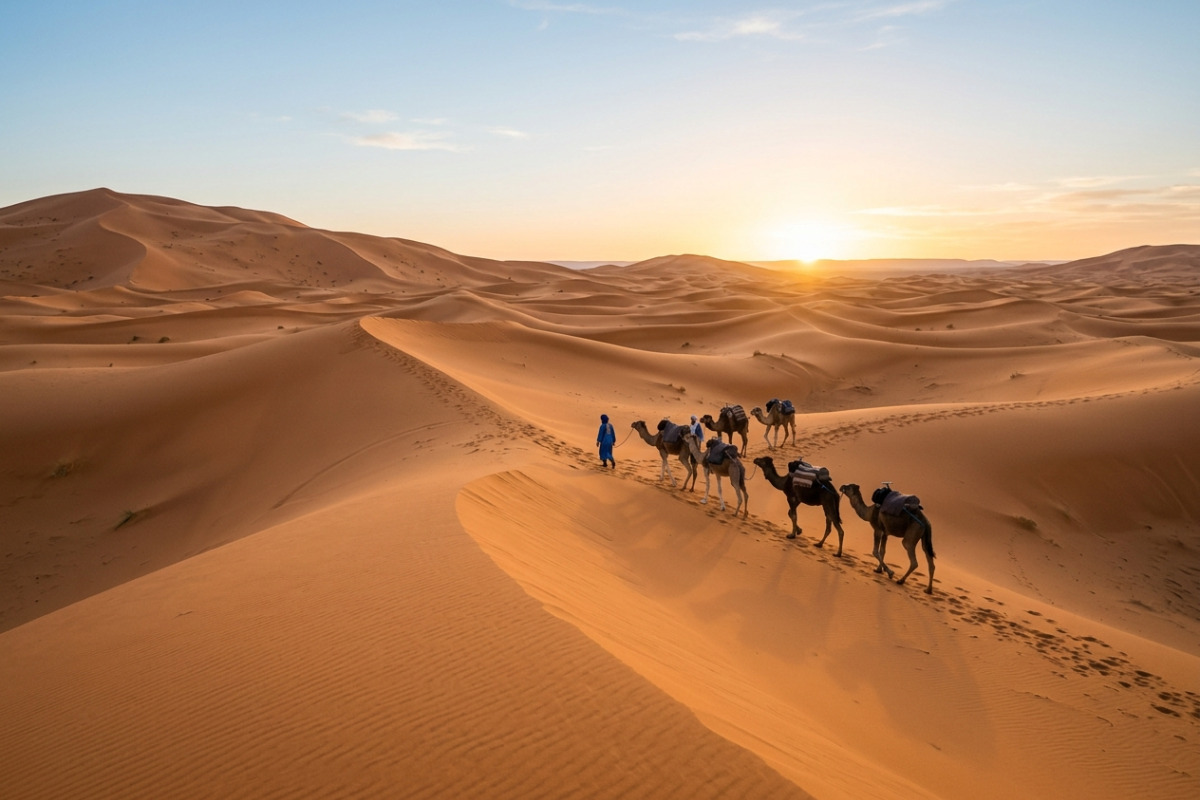
The Sahara Desert is frequently romanticized as a place of profound silence, a vast expanse of golden dunes where the only sound is the wind shifting the sands. However, for those who call this arid landscape home, the desert is anything but silent; it is a vibrant echo chamber of history, lineage, and belonging, articulated through a rich tapestry of languages and dialects. Language in the Sahara is not merely a tool for communication; it is the very soul of the culture, an invisible thread that binds nomadic communities together and anchors them to their ancestral lands. To understand the people of the Sahara, one must listen beyond the silence and tune into the nuanced cadences of their speech.
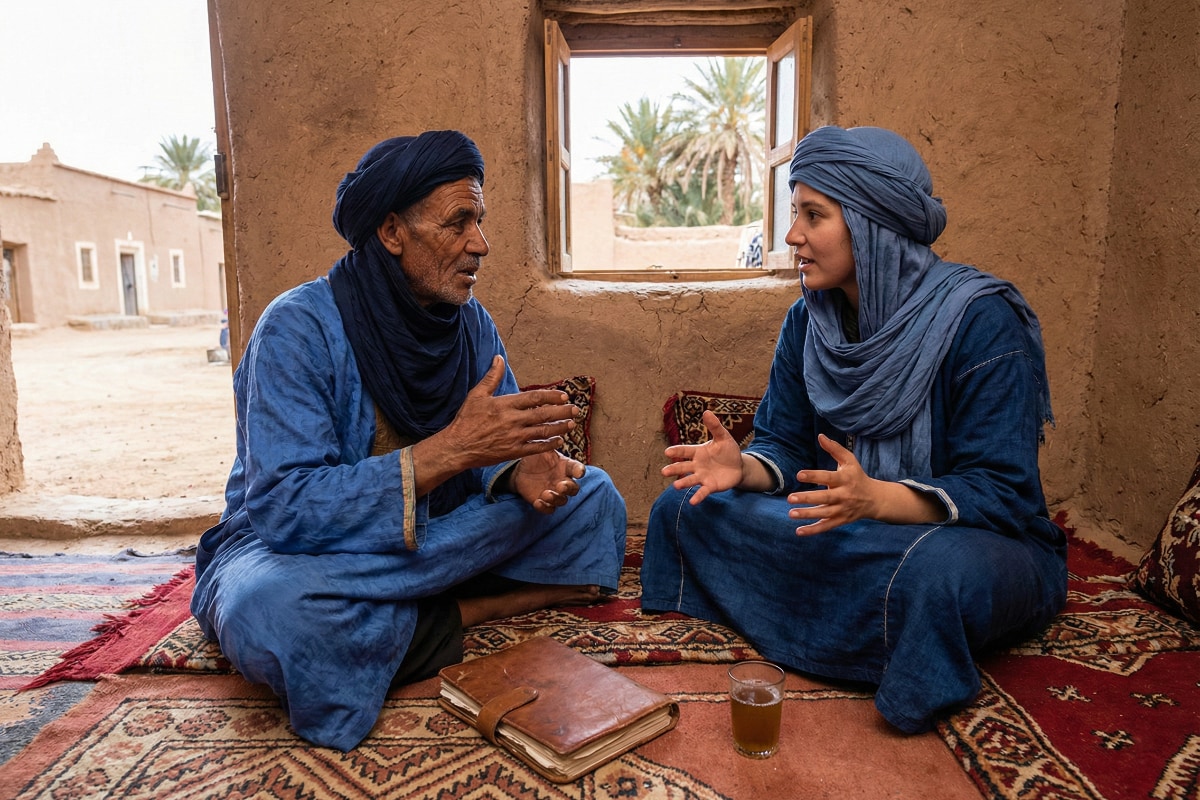
Imagine a Sahrawi elder, his face etched with the wisdom of the desert, recounting tales of his ancestors' journeys across the sands, each word a brushstroke painting a vivid picture of survival and resilience. This is the power of language in the Sahara. In the southern provinces of Morocco and across the wider Saharan region, the spoken word carries a weight that written text often cannot convey. Here, dialects are the repositories of genealogy, survival skills, and poetic expression. As we navigate through 2026, the resilience of these linguistic traditions stands as a testament to the pride of the Sahrawi and Amazigh peoples. Whether it is the rhythmic flow of Hassaniya or the ancient roots of Tamazight, every syllable spoken under the desert sky reinforces a distinct cultural identity that has withstood centuries of change.
The Linguistic Mosaic of the Sahara
The linguistic landscape of the Sahara is far from monolithic; it is a complex mosaic formed by centuries of migration, trade, and interaction between diverse groups. At the heart of this landscape in the Moroccan Sahara lies Hassaniya, a dialect of Arabic that is distinct for its purity and closeness to classical Arabic, yet infused with unique vocabulary related to desert life. It is the primary tongue of the Sahrawi people and serves as a badge of honor, distinguishing them from speakers of other Arabic dialects found in the north. The dialect is known for its musicality and its extensive vocabulary describing camels, rain, and the nuances of the landscape.
Interwoven with Hassaniya are the indigenous Amazigh languages, particularly Tashelhit and Tamazight. These languages have been spoken in North Africa for millennia, long before the arrival of Arab tribes. In many oasis communities and mountainous fringes of the desert, Amazigh dialects remain the language of the home and the earth. This duality creates a fascinating cultural dynamic where multilingualism is common, and code-switching becomes a social skill. Understanding these distinctions is crucial for anyone wishing to Explore Morocco in depth, as the shift in dialect often signals a shift in tribal territory and local custom. Picture a bustling marketplace in a desert town, where the air is thick with the sounds of Hassaniya and Tamazight blending together, a testament to the region's rich linguistic diversity.
Language as the Architect of Community
In a harsh environment where survival historically depended on cooperation, language acts as the ultimate social glue. Speaking the local dialect is an immediate signal of trust and kinship. It breaks down barriers that might otherwise exist between strangers. In Saharan culture, the specific way a person greets another—the length of the inquiry into one’s health, family, and livestock—tells a story of respect and social standing. These elaborate greetings are not just formalities; they are a verbal embrace, reaffirming the bond between individuals in a vast, often isolating environment.
Furthermore, dialects function as a secret code of shared values. There are proverbs and idioms in Hassaniya that encapsulate the wisdom of the desert—lessons on patience, hospitality, and navigation—that lose their potency when translated. For example, the Hassaniya proverb "*اللي فات مات*" (that which is past is dead) emphasizes the importance of focusing on the present and future, a vital mindset in a challenging environment. When a community shares these idioms, they are reinforcing a collective worldview. This sense of belonging is vital for the younger generation, who, despite the influences of globalization, continue to use their native dialects to assert their unique place in the world.
The Role of Oral Tradition
Because the Saharan culture has historically been nomadic, material possessions were kept to a minimum, making the spoken word the primary vessel for art and history. Poetry is the crowning jewel of this oral tradition. In the Sahara, poetry is not just entertainment; it is a political tool, a historical record, and a method of courtship. The Tebra, a form of poetry exclusively composed and recited by women, allows for emotional expression within a conservative society, using metaphors and dialect-specific imagery that outsiders might miss completely. Imagine a group of women gathered around a fire, their voices rising and falling in melodic verses, sharing stories of love, loss, and resilience through the art of Tebra.
- Preservation of Lineage: Elders recite genealogies that trace families back generations, ensuring that no individual forgets their roots.
- Knowledge Transfer: Survival knowledge, such as the location of hidden water sources or the medicinal properties of desert plants, is encoded in rhymes and stories. For instance, the knowledge of how to find water by observing the flight patterns of certain birds is often passed down through oral tradition.
- Moral Guidance: Fables and legends passed down through dialects teach children the ethical codes of the tribe, emphasizing honor and generosity.
- Cultural Resistance: Maintaining the dialect is a form of resistance against cultural homogenization, keeping the unique Saharan identity alive.
Comparative Look at Saharan Linguistic Elements
To appreciate the diversity within the region, it is helpful to look at how different linguistic roots approach common concepts. The following table illustrates the variety found within the cultural sphere of the Moroccan Sahara and its surroundings, highlighting the richness of expression.
| Concept | Standard Arabic Roots | Hassaniya Context | Cultural Significance |
| The Desert | Sahara | Tiris / Badia | In Hassaniya, specific words denote the *type* of desert (rocky, sandy, flat), reflecting a deep geographical intimacy. |
| Tea | Shay | Atay | More than a drink, 'Atay' in the local dialect implies a three-round ritual of hospitality that can last hours. |
| Group/Tribe | Qabila | Frakh / Ahel | Terms refer specifically to family units and camping groups, emphasizing the tight-knit nomadic structure. |
| Poetry | Shi'r | Ghazal / Tebra | Distinctions are made between male-recited epic poetry and female romantic verse, each with its own linguistic rules. |
Preserving Traditions in a Modern World
As modernization expands infrastructure and digital connectivity across the desert, there is a conscious effort to preserve these dialects. Language is the key to unlocking the intangible heritage of the region. Without the specific vocabulary of the dialect, traditional crafts, camel husbandry techniques, and folk music lose their context. Festivals and cultural gatherings in cities like Laayoune and Dakhla now heavily feature poetry recitals and traditional storytelling in Hassaniya to ensure these art forms remain relevant for the youth.
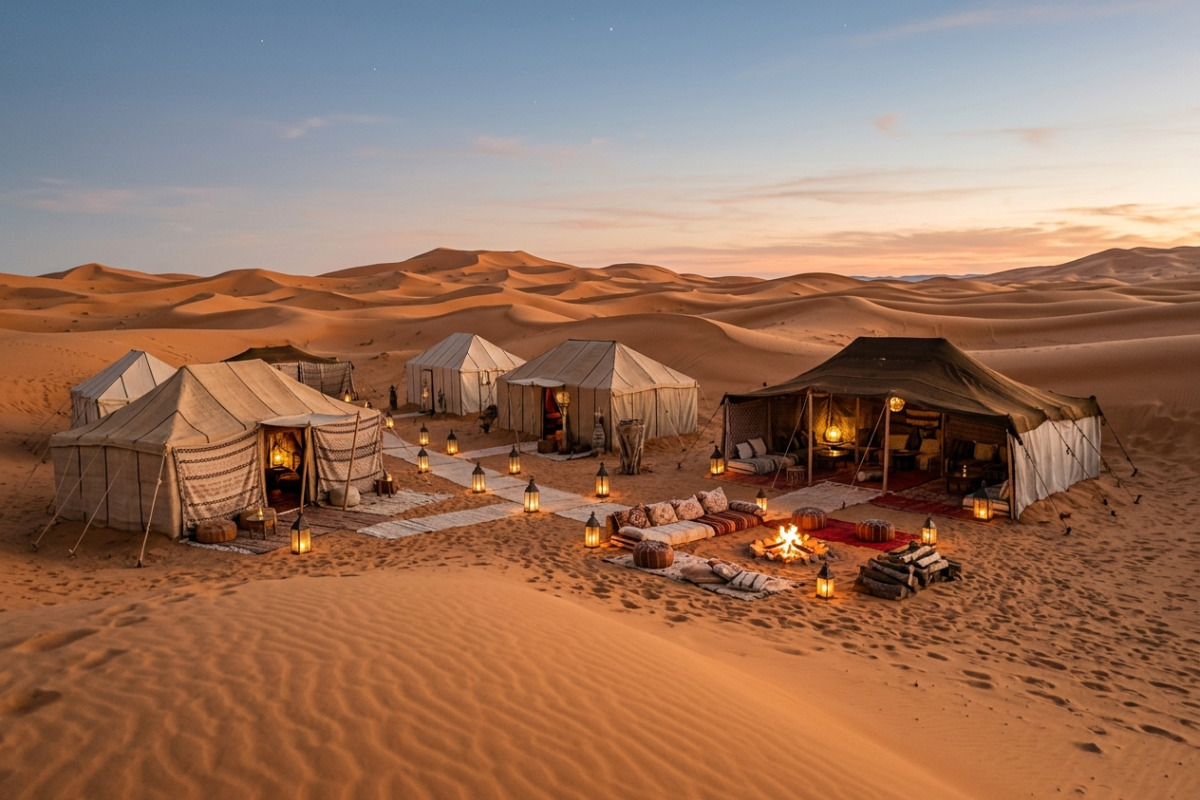
For the traveler, this linguistic pride adds a layer of depth to the journey. When you partake in authentic cultural experiences, such as sitting in a Khaima (traditional tent) and listening to local music, you are witnessing the living application of these dialects. Even learning a few basic phrases—like the traditional greeting "Salam Alaykum" followed by the local "Yak labas?" (Are you fine?)—opens doors and brings smiles. It demonstrates a respect for the local identity that goes beyond the typical tourist interaction. Imagine the warmth of a Sahrawi smile as you greet them in their own dialect, a simple gesture that bridges cultures and creates a genuine connection.
The Emotional Resonance of the Mother Tongue
Ultimately, the connection between language and identity in the Sahara is emotional. For a Sahrawi, hearing their dialect spoken is like hearing the sound of home. It evokes the smell of brewing tea, the texture of indigo fabric, and the warmth of the hearth. It is a reminder that despite the harshness of the environment, they belong to a civilization that has mastered the art of living in the desert. The dialect is a fortress of identity, protecting the cultural nuances that make the Saharan people unique.
In a world that is increasingly connected yet often culturally diluted, the steadfast preservation of Saharan dialects is a powerful statement. It declares that culture is not just about artifacts or buildings; it is about the living, breathing connection between people. By cherishing their language, the people of the Sahara ensure that their history is not written in sand to be blown away, but carved into the very air they breathe, spoken and sung for generations to come.