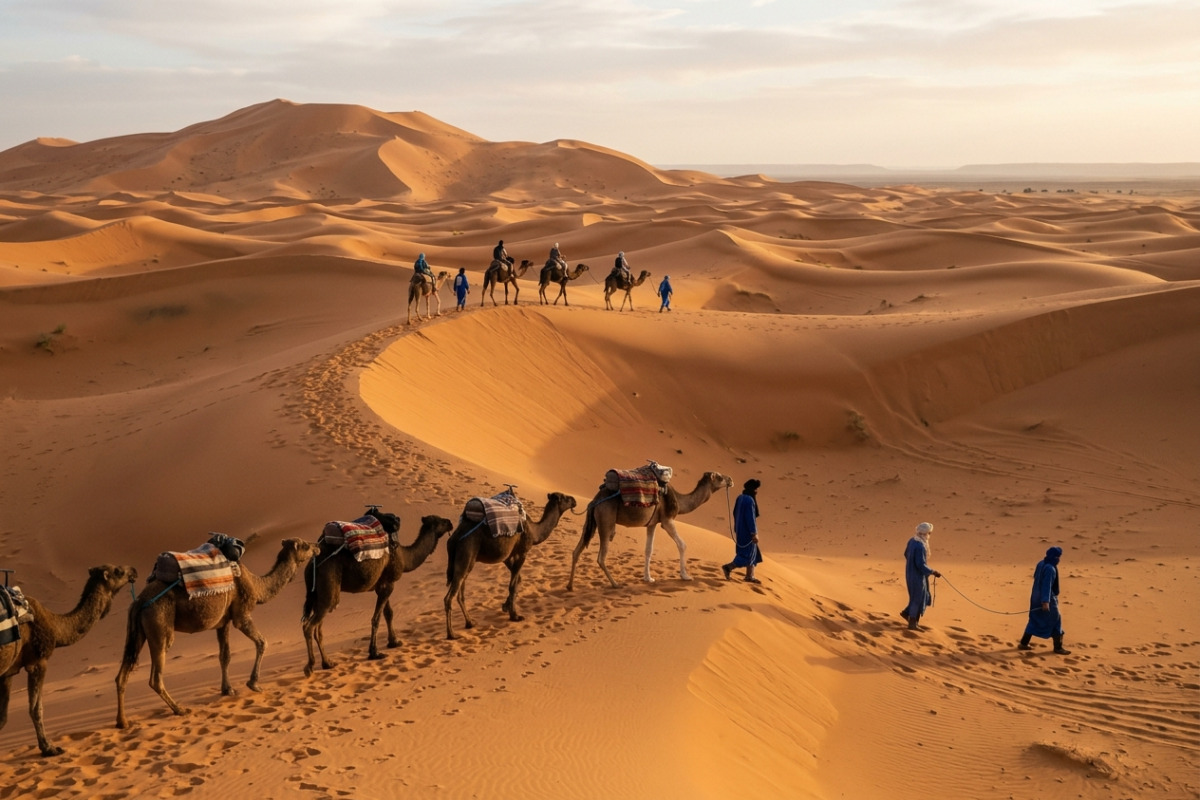
When gazing across the endless, undulating dunes of the Sahara, the silhouette of a camel against the golden horizon is the most iconic image that comes to mind. However, for the people who call this vast desert home, the camel is far more than a mere photogenic symbol or a beast of burden. Known affectionately as the "Ship of the Desert," the dromedary camel is the very backbone of Saharan existence, intertwining with every aspect of life from survival and economics to poetry and spiritual identity. As we move through January 2026, the reverence for these resilient creatures remains as strong as it was centuries ago, serving as a living bridge between the ancient past and the modern world of the desert dweller.
The relationship between the Saharan nomad and the camel is one of profound symbiosis, built on mutual respect and absolute necessity. Without the camel, human habitation in the deep desert would have been biologically and logistically impossible for much of history. This bond goes beyond utility; it is emotional and cultural, shaping the rhythms of daily life and the migration patterns of tribes such as the Tuareg, the Sahrawi, and the Berbers. To understand the Sahara is to understand the camel, for their histories are written in the same shifting sands.
The Historical Lifeline: Architects of Trade
Long before modern borders were drawn on maps, camels were the engines of globalization across North Africa. They facilitated the legendary Trans-Saharan trade routes, connecting the Mediterranean coast with the empires of West Africa. These caravans, sometimes numbering in the thousands, carried salt, gold, spices, and knowledge across terrain that was impassable to horses or wheels. The camel's unique physiology—capable of traveling up to ten days without water and sensing sandstorms before they arrive—allowed civilizations to flourish in the heart of the arid wilderness.
This historical role has deeply influenced the cultural geography of the region. Many of the oasis towns and cities we visit today were originally founded as caravanserai—resting points for camels and traders. When you Explore Morocco and its southern regions, you are tracing the footsteps of these ancient merchants. The cultural exchange facilitated by camels brought Islam, Arabic language, and diverse architectural styles to the remote corners of the desert, creating a rich tapestry of heritage that defines the region today. Consider the story of Timbuktu, once a bustling center of trade and Islamic scholarship, whose prosperity was directly linked to the camel caravans that traversed the Sahara.
Social Status and the Currency of the Sands
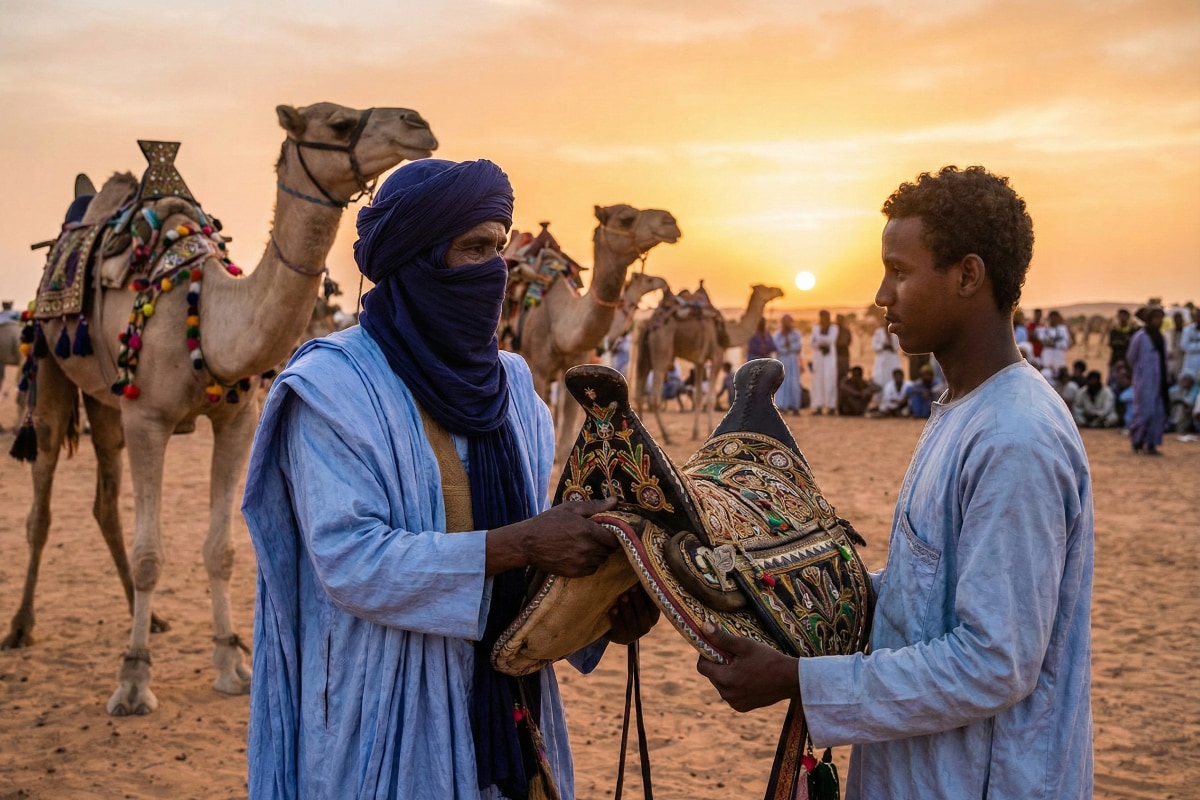
In traditional Saharan societies, wealth was never measured by gold stored in a vault, but by the size and health of one's camel herd. The camel is the ultimate status symbol, representing stability, power, and prestige. Among tribes like the Reguibat or the Tuareg, a man's social standing is often immediately recognized by the quality of his riding camel (mehari) and the intricacy of the saddle and tack he utilizes. This living currency plays a pivotal role in the most important social contracts of tribal life.
- Marriage Dowries: In many nomadic cultures, the groom offers camels to the bride's family as a dowry. The number and color of the camels signify the value placed on the union and the status of the families involved.
- Conflict Resolution: Historically, disputes between clans or individuals were often settled through the exchange of camels. This form of compensation, known as 'diya' (blood money) in some contexts, prevented cycles of violence and maintained social harmony.
- Festive Sacrifices: During major religious festivals or significant tribal gatherings, the slaughter of a camel is a gesture of immense hospitality and generosity, meant to feed the entire community.
The Camel in Art and Folklore
The dromedary has inspired a vast genre of oral literature, poetry, and song. In the Hassaniya dialect and Tamazight languages, there are hundreds of words to describe a camel, differentiating them by age, color, temperament, and gait. Poets compare the grace of a camel to the movement of clouds or the beauty of a beloved woman. This linguistic richness highlights how central the animal is to the collective imagination. Songs sung during long treks set the rhythm for the caravan, a cadence that mimics the swaying motion of the camel's walk, proving that the animal has literally shaped the musical heritage of the Sahara. Even today, you can hear echoes of these ancient rhythms in contemporary Saharan music.
Survival: The Giver of Life
Beyond their cultural symbolism, camels are biological marvels that provide the essential resources for survival in one of the earth's harshest environments. For a nomadic family, a herd is a mobile pantry, pharmacy, and hardware store. Every part of the animal is utilized with gratitude and efficiency, ensuring that nothing goes to waste. This sustainable approach to resources is a lesson in adaptation that has kept desert communities alive for millennia. Consider the recent drought in the Sahel region; nomadic communities with healthy camel herds were significantly more resilient than those without, highlighting the camel's continued importance in ensuring food security.
| Resource | Application | Cultural Value |
| Camel Milk | A staple diet, rich in vitamins and hydration. It can be consumed fresh or fermented (shmen). | Considered a cure-all remedy and a gesture of welcome to guests. |
| Camel Hair/Wool | Woven into tents (khaima), rugs, and cloaks (djellaba). | Provides essential insulation against both the scorching sun and freezing desert nights. |
| Dung | Dried and used as fuel for fires in areas with no wood. | Essential for cooking and tea ceremonies during long migrations. |
| Leather | Crafted into saddles, bags, sandals, and water containers. | Noted for its durability and intricate artistic tooling. |
Experiencing the Legacy Today
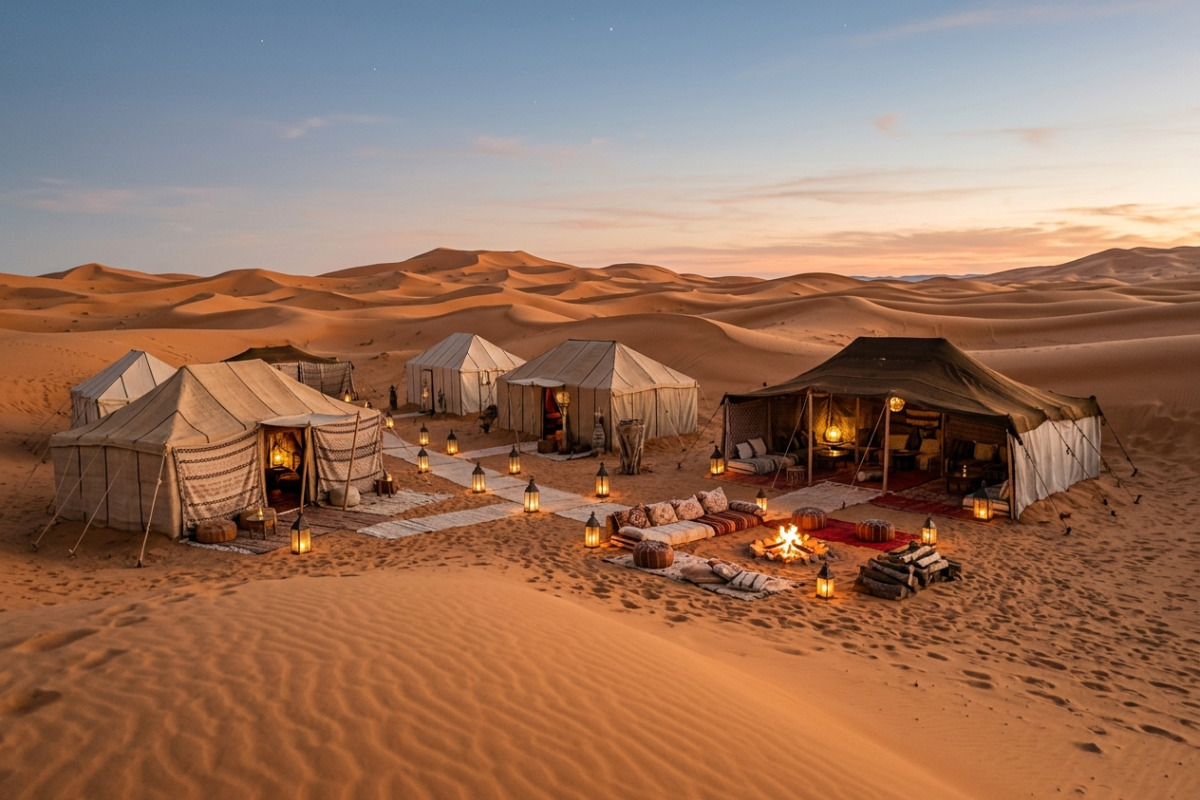
For the modern traveler, engaging with camel culture is the most authentic way to connect with the spirit of the Sahara. It is not just about riding an animal; it is about understanding a way of life that refuses to be conquered by the elements. When you participate in authentic desert experiences, such as multi-day trekking, you begin to appreciate the animal's intelligence and the guide's expertise. You learn to read the sands through the behavior of the camel and find a rhythm that calms the mind.
The Ethics of Camel Tourism
As tourism grows, the cultural significance of the camel is evolving. It is crucial for visitors to engage with operators who treat these animals with the traditional respect they deserve. In Saharan culture, a camel is a partner, not a machine. Observing how local guides care for their animals—checking their feet, ensuring they graze properly, and speaking to them with familiarity—offers a glimpse into the deep bond discussed throughout this article. By choosing responsible travel options, visitors help preserve this heritage and ensure that the camel remains a dignified symbol of the desert. Many responsible tour operators now work with local communities to ensure that camel tourism benefits them directly, supporting sustainable livelihoods and preserving traditional knowledge.
Ultimately, the camel is the key to unlocking the secrets of the Sahara. They are the silent witnesses to history, the bearers of culture, and the guardians of nomadic identity. To walk alongside them is to walk through history itself, understanding that in this vast ocean of sand, the camel is the only vessel that truly matters.