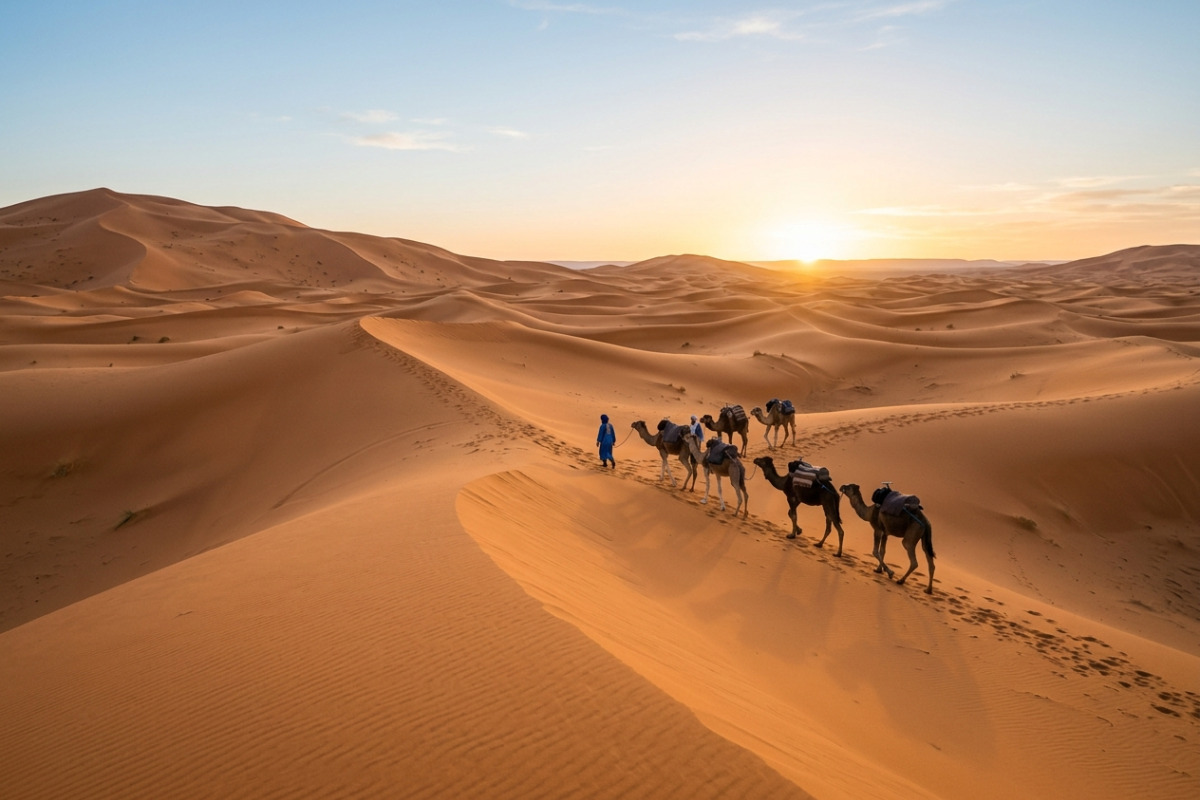
When the sun dips below the horizon in the Sahara, the world transforms in a way that defies simple description. As the golden hues of the dunes fade into a deep, twilight blue, a profound silence settles over the landscape, preparing the stage for one of nature's most spectacular shows. For travelers and astronomy enthusiasts alike, the Sahara Desert offers a window into the universe that is rapidly disappearing elsewhere on Earth due to light pollution. Standing amidst the vast sands of Morocco in January 2026, with the crisp winter air sharpening the visibility, you realize that the sky here isn't just a backdrop; it is a living, breathing cathedral of light.
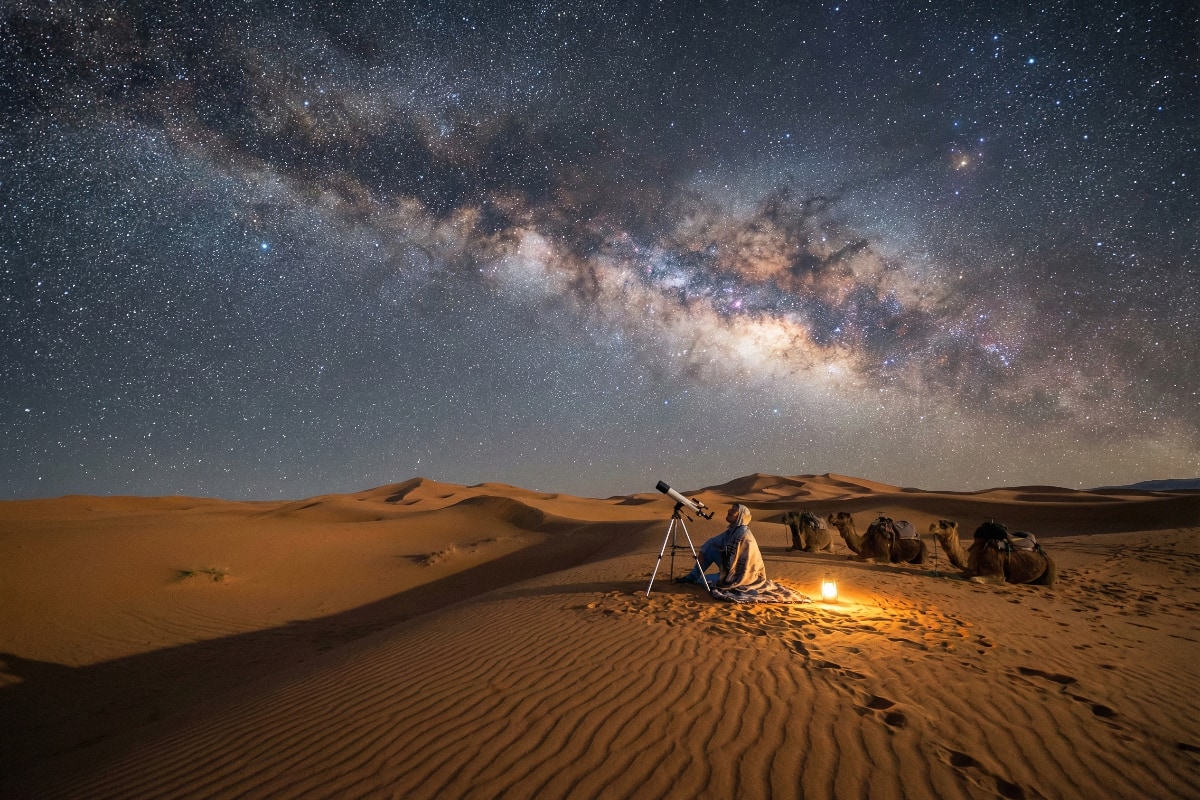
The experience of looking up in the desert is visceral; the stars don't just twinkle, they seem to burn with an intensity that makes them feel within arm's reach. Without the interference of city lights or heavy atmospheric moisture, the sheer number of visible stars can be overwhelming, turning familiar constellations into crowded fields of diamonds. This is a place where the Milky Way casts a shadow, and where the concept of infinity becomes a tangible feeling rather than an abstract thought. Whether you are a seasoned astronomer with a telescope or a romantic traveler seeking a moment of awe, the Sahara night sky promises a connection to the cosmos that changes your perspective on our place in the universe.
Why the Sahara is a Premier Stargazing Destination
The primary reason the Sahara ranks among the world's best astrotourism destinations is the near-total absence of light pollution. In the heart of the Moroccan desert, the skies often rate as Class 1 or 2 on the Bortle Scale, which measures the brightness of the night sky. This darkness is essential for seeing faint deep-sky objects, the zodiacal light, and the intricate dust lanes of our galaxy. Furthermore, the desert climate plays a crucial role; the extremely dry air lacks the humidity that often distorts light in coastal or tropical regions, resulting in seeing conditions that are incredibly stable and sharp.
Another factor is the expansive horizon. In the undulating dunes, there are no skyscrapers, mountains, or forests to block your view. You have a 360-degree theater of the heavens, allowing you to track celestial bodies from the moment they rise in the east until they set in the west. This vastness also contributes to the emotional impact of the experience; surrounded by nothing but sand and silence, the connection between the earth and the sky feels unbroken and ancient.
Best Spots in Morocco for Celestial Views
While the entire desert offers impressive views, certain locations in Morocco are legendary for their specific stargazing conditions. Finding the right spot depends on your balance of comfort and desire for isolation. To find the perfect backdrop for your celestial adventure, take time to Explore Morocco and its diverse desert landscapes, ranging from accessible dunes to remote wilderness.
- Erg Chebbi (Merzouga): This is the most famous dune field and offers a great balance of accessibility and beauty. While there are camps nearby, a short trek into the deep dunes blocks out any ambient light from the hotels, revealing a pristine sky. The high dunes provide dramatic foregrounds for photography. Consider staying at a camp further away from Merzouga village for even darker skies. Some camps offer guided stargazing tours with local astronomers.
- Erg Chigaga: For those willing to venture further, Erg Chigaga is wilder and more isolated. Located about 60 kilometers from the nearest paved road, the light pollution here is virtually non-existent. It offers a raw, immersive experience where you feel truly alone with the stars. Due to its remoteness, a 4x4 vehicle is highly recommended to reach Erg Chigaga. Many tours include overnight stays in traditional Berber tents.
- Zagora and the Draa Valley: While the dunes here are smaller (Tinfou), the rocky plateaus and vast open spaces of the valley provide excellent stability for telescopes and tripods, making it a favorite for amateur astronomers. The Draa Valley also offers opportunities to visit ancient kasbahs and experience the local culture. The skies here are generally darker than in Zagora town itself, so venture a bit further into the valley for optimal viewing.
What to Watch: A Seasonal Guide
The night sky is a dynamic canvas that changes throughout the year. Since we are currently in January 2026, winter observers are treated to some of the brightest stars and most distinct constellations. However, every season has its own celestial jewels. Understanding what is visible during your visit can greatly enhance your appreciation of the night.
| Season | Key Features | Highlights |
| Winter (Dec - Feb) | Crystal clear air, long nights. | Orion Nebula, Sirius (brightest star), Pleiades (Seven Sisters), Gemini. |
| Spring (Mar - May) | Mild temperatures, rising galactic core. | Leo, Virgo, and the early morning rise of the Milky Way core. |
| Summer (Jun - Aug) | Hot days, spectacular Milky Way views. | The Galactic Core is visible all night; Scorpius, Sagittarius, Summer Triangle. |
| Autumn (Sep - Nov) | Stable weather, Andromeda Galaxy visibility. | Cassiopeia, Pegasus, Andromeda Galaxy (visible to naked eye), Perseids meteor shower remnants. |
Capturing the Cosmos: Astrophotography in the Sahara
Photographing the Sahara night sky is a bucket-list item for many creatives, but it requires specific techniques to capture the grandeur you see with your eyes. The contrast between the golden sand and the ink-black sky creates a color palette that is unique to desert astrophotography. To get the best results, you need to move beyond automatic settings and embrace manual control over your camera.
Essential Equipment
Before venturing into the desert with your camera, ensure you have the right gear:
- Camera: A DSLR or mirrorless camera with manual mode capabilities. Full-frame sensors generally perform better in low light.
- Lens: A wide-angle lens (14mm to 24mm) with a wide aperture (f/2.8 or lower) is crucial for capturing a large portion of the sky and letting in as much light as possible.
- Tripod: Stability is non-negotiable. A sturdy tripod is essential because the sand can shift, and even micro-vibrations will blur the stars during long exposures.
- Remote Shutter Release: Minimizes camera shake during long exposures.
- Red Light Headlamp: Preserves your night vision while allowing you to adjust camera settings.
- Extra Batteries: Cold temperatures can drain batteries quickly.
Mastering the Settings
To capture stunning astrophotographs, follow these settings guidelines:
- ISO: Set your ISO between 1600 and 3200. Higher ISOs capture more light but can also introduce noise.
- Aperture: Use the widest aperture your lens allows (f/2.8 or lower).
- Shutter Speed: Use the "500 Rule" to determine your shutter speed (500 divided by your focal length) to avoid star trails. For example, with a 20mm lens, your shutter speed should be around 25 seconds.
- Focus: Focus manually on a bright star using your camera's live view magnification to ensure pinpoint sharpness. Autofocus will not work in the dark.
Composition Matters
While the sky is the main subject, the foreground is what gives the photo context and scale. Use the silhouette of a camel, a luxury tent, or the curving ridge of a sand dune to anchor the image. Light painting—briefly illuminating the foreground with a flashlight during the exposure—can add a magical touch, revealing the texture of the sand against the starry background. Experiment with different foreground elements to create unique and compelling compositions.
Post-Processing
Astrophotography often requires post-processing to bring out the details and reduce noise. Software like Adobe Lightroom or Photoshop can be used to adjust exposure, contrast, white balance, and reduce noise. There are also specialized astrophotography processing software options available.
The Full Desert Experience
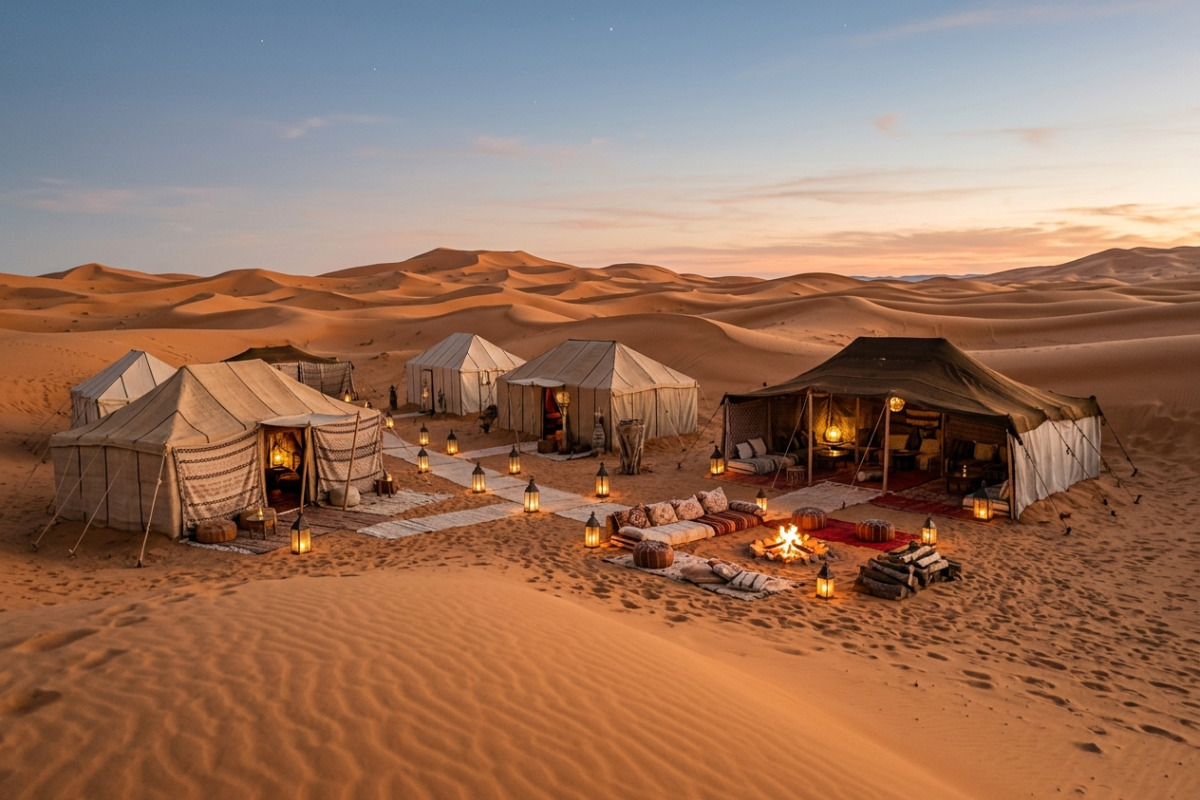
Stargazing in the Sahara is rarely a solitary activity; it is deeply woven into the fabric of desert culture. The local Amazigh (Berber) people have used the stars for navigation and timekeeping for centuries. Sitting around a campfire, listening to traditional drumming while looking up at the same sky that guided ancient caravans, creates a powerful sense of continuity. Beyond just looking up, immerse yourself in authentic experiences that combine astronomy with traditional desert hospitality, such as sleeping in open-air bivouacs or listening to folklore tales about the constellations.
Many desert camps turn off all electricity after dinner specifically to enhance the viewing experience. There is something profoundly peaceful about lying on a Berber rug, sipping warm mint tea, and watching shooting stars streak across the atmosphere. It connects you to the environment in a way that modern life rarely permits, slowing down time and heightening your senses.
Practical Considerations for Stargazers
Planning a stargazing trip requires some logistical foresight, particularly regarding the weather and moon phases. The best time to view the stars is during the New Moon phase, when the sky is darkest; a Full Moon can be so bright in the desert that it washes out the Milky Way and acts like a giant floodlight. Check the lunar calendar before booking your travel dates to ensure optimal dark-sky conditions.
Additionally, do not underestimate the desert temperature. Even in summer, the temperature drops significantly at night, and in winter months like January, it can approach freezing. Pack thermal layers, a warm hat, and gloves so you can stay outside comfortably for hours. A red-light headlamp is also a crucial piece of gear; unlike white light, red light does not ruin your night vision, allowing you to navigate the camp and adjust your camera settings without losing your adaptation to the dark.