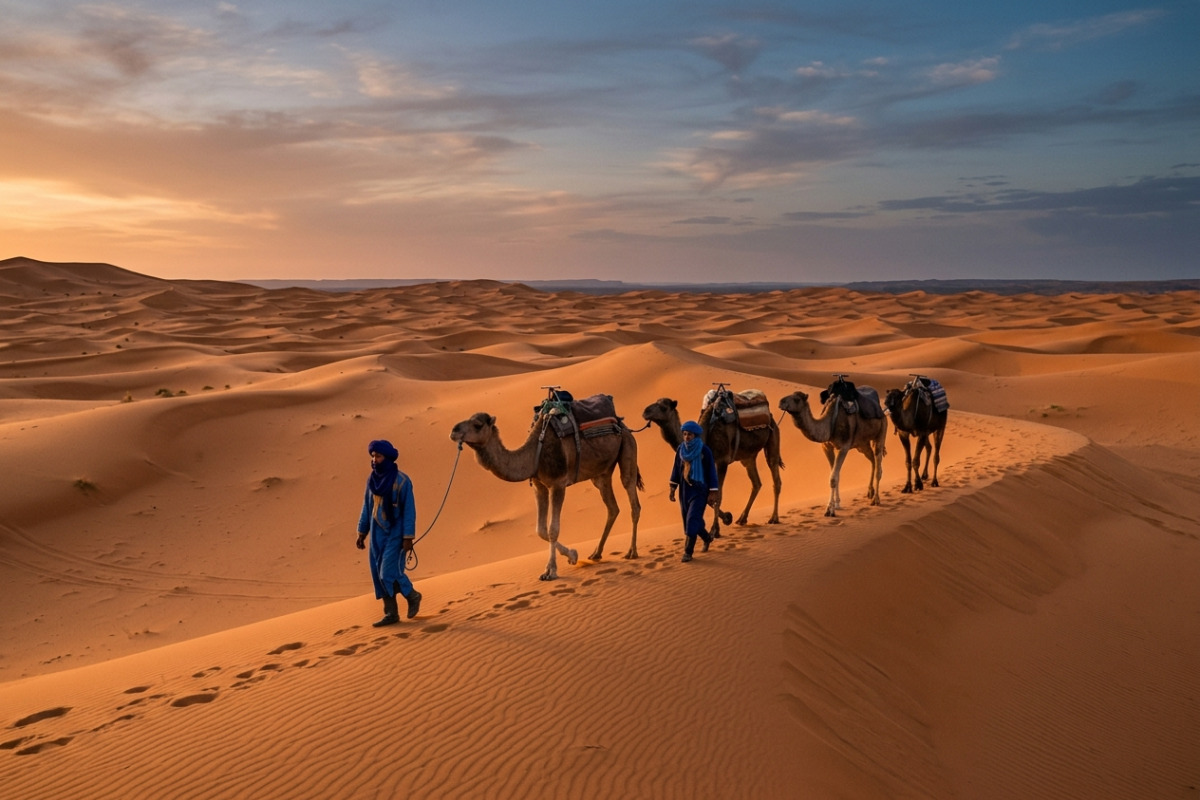
There is a profound silence in the Sahara that you cannot find anywhere else on Earth. It is not merely the absence of noise; it is a presence in itself, a vast, wrapping stillness that settles over the golden dunes as the sun begins its descent. For many travelers, the journey into the desert is defined not just by the landscape, but by the transition from day to night. As the scorching heat gives way to the crisp evening air, the true magic of the desert awakens. Imagine capturing this breathtaking scene – the endless dunes under a fiery sunset – a moment ripe for a photograph that will last a lifetime. This is not just a camping trip; it is a surrender to the timeless rhythm of nature.
Embarking on a journey into the deep sands usually begins with the swaying motion of a dromedary. As you traverse the shifting landscape, leaving civilization behind, the anticipation of the night builds. Whether you are heading towards the towering dunes of Merzouga or the wilder expanses of Zagora, the destination is a canvas of stars waiting to be unveiled. This guide explores exactly what it feels like to spend a night in the heart of the Morocco Sahara, detailing the camp atmosphere, the culinary traditions, and the celestial spectacle that follows.
Arrival at the Desert Camp
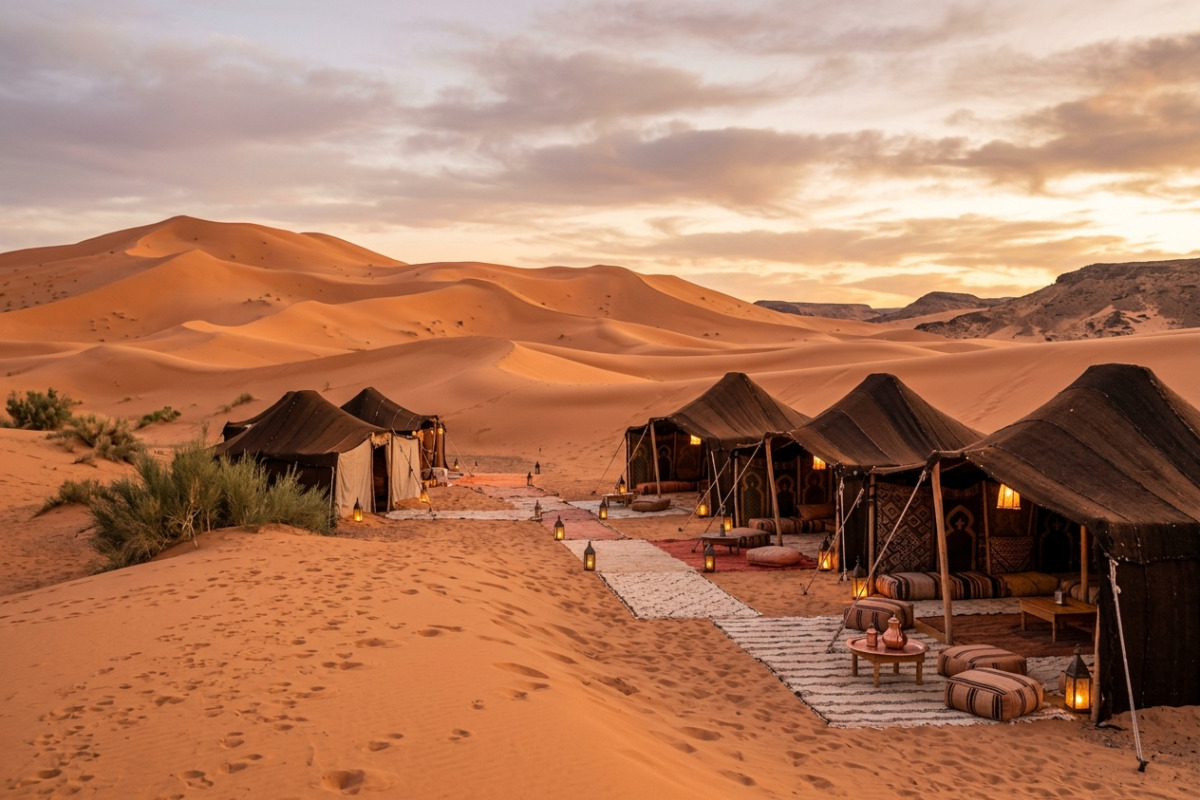
As the shadows lengthen and the dunes turn from ochre to deep violet, your camel caravan will approach the campsite. These camps are often nestled in the valleys between high dunes, offering protection from the wind and a sense of seclusion. The welcome is warm and traditional. You are typically greeted by your Berber hosts with a glass of hot, sweet mint tea—'Moroccan whiskey' as it is affectionately called locally. This ritual is more than just a drink; it is a gesture of hospitality that marks the end of your trek and the beginning of your evening relaxation.
The camps themselves vary in style, catering to different preferences and budgets. Some are simple, traditional Berber camps offering an authentic nomadic experience, while others are luxurious glamping sites with all the modern comforts. You might find yourself in a basic bivouac with shared facilities, perfect for budget travelers seeking a raw desert adventure, or in an opulent camp with private tents, gourmet meals, and even swimming pools. Regardless of the style, they all share a common goal: to provide comfort amidst the wilderness. You might be surprised to find how well-equipped these settlements are. Heavy, woven rugs cover the sand, and lanterns flicker along the pathways, guiding you to your tent. It is a rustic luxury that blends seamlessly with the environment.
Inside Your Canvas Home
Forget the idea of a flimsy nylon tent pitched on uneven ground. Accommodation in the Sahara is designed to reflect the heritage of the nomadic tribes while ensuring a good night's sleep. The tents are usually made from thick camel hair or goat wool blends, known as khaimas, which are naturally insulated against the desert's temperature fluctuations.
Inside, you will often find real beds with comfortable mattresses, clean linens, and heavy blankets to keep you warm during the cool desert nights. In luxury camps, the amenities expand to include en-suite bathrooms with running water and flush toilets, a feat of logistics that seems impossible in such a remote location. Even in more standard bivouacs, the communal facilities are kept impeccably clean.
A Culinary Journey by Firelight
After settling in, the evening centers around the communal tent or an open-air dining area, depending on the season. Food tastes different in the desert; perhaps it is the fresh air or the long day of trekking, but the flavors seem more intense. The cooks, often locals who know the secrets of desert cuisine, prepare feasts that defy the limitations of the location.
Dinner usually begins with a traditional Moroccan soup, Harira, followed by a slow-cooked Tagine. The Tagine, bubbling with chicken, lamb, or vegetables, is seasoned with saffron, cumin, and preserved lemons. Freshly baked bread, sometimes cooked in the sand or a clay oven right before your eyes, accompanies the meal. Dining here is a social affair. Travelers from different corners of the world share tables, swapping stories of their adventures and desert experiences under the dim glow of candlelight.
The Celestial Spectacle
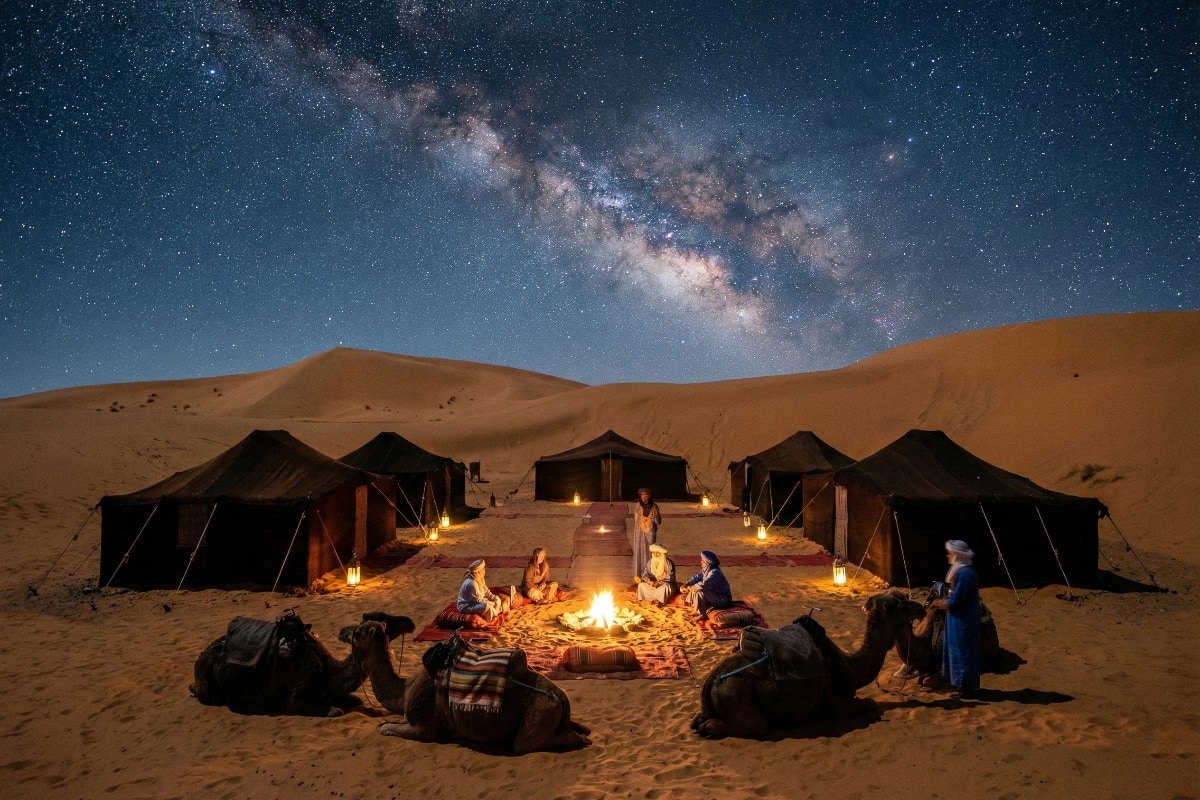
Once dinner concludes, the real show begins. With zero light pollution and an expansive horizon, the Sahara offers one of the best stargazing opportunities on the planet. As the camp generator is turned off or the lanterns are dimmed, the sky explodes into a tapestry of light. It is not just a few stars; it is the entire Milky Way, stretching across the heavens like a cloud of diamond dust.
This is the moment to step away from the fire and lie back on the dunes. The silence returns, accompanied only by the soft sound of the wind. You can easily spot constellations that are invisible in city skies. Shooting stars are so frequent that you might run out of wishes. For those interested in photography, this is a dream scenario. The contrast between the dark, silhouetted dunes and the vibrant galactic core creates images that last a lifetime.
Berber Music and Folklore
The night is rarely complete without the sounds of traditional music. Gathering around a central campfire, the camp staff often bring out drums (tam-tams) and metal castanets (qraqeb). The rhythmic beating mimics the heartbeat of the desert. Guests are encouraged to join in, clapping hands or trying their luck with the drums. It is a celebration of life, heritage, and the shared moment in time. This cultural exchange is often cited by travelers as the highlight of their Explore Morocco journey, bridging the gap between tourist and local.
Preparing for Your Night in the Dunes
To fully enjoy this experience, a little preparation goes a long way. The desert environment is extreme, and conditions change rapidly from day to night. Here is a comparison of what to expect during different seasons to help you pack effectively:
| Feature | Winter (Nov - Feb) | Summer (May - Sep) | Shoulder Season (Mar-Apr, Oct) |
| Night Temperature | Very Cold (0°C to 10°C) | Warm/Pleasant (20°C to 25°C) | Cool/Crisp (10°C to 18°C) |
| Clothing Needed | Thermal layers, heavy jacket, beanie, warm socks. | Light breathable cotton, light sweater for late night. | Light jacket, long sleeves, layers. |
| Sleeping Comfort | Heavy blankets provided (essential). | Sleeping under the open sky is an option. | Standard bedding is perfect. |
| Daylight Hours | Shorter days, early sunset (around 5:30 PM). | Long days, late sunset (around 8:00 PM). | Balanced day and night. |
Essential Packing List
Regardless of the season, there are a few items that should be in your overnight bag. Since your main luggage usually stays at a hotel or in the transport vehicle, you will take a smaller backpack for the camel trek.
- Power Bank: Most camps have electricity for charging, but solar power can be limited at night. A backup battery ensures your camera is always ready.
- Flashlight or Headlamp: Essential for navigating the camp after the generator goes off.
- Wet Wipes and Hand Sanitizer: Water is precious in the desert; these help you freshen up quickly.
- Scarf (Shesh): Useful for protection against sand during the trek and warmth at night.
- Lip Balm and Moisturizer: The air is incredibly dry; your skin will thank you.
Waking Up to a New World
If the night is for wonder, the morning is for renewal. It is highly recommended to wake up before dawn. Climbing the nearest high dune to watch the sunrise is a spiritual experience. The colors of the sand shift dramatically as the first rays of light hit the horizon, turning from grey to pink, and finally to a brilliant gold. The silence of the morning is broken only by the shifting sands and the distant call of a bird.
After the sunrise, a hearty breakfast awaits back at the camp. Fresh coffee, Moroccan pancakes (Msemen), olive oil, honey, and dates provide the energy needed for the return camel trek. As you pack your bag and mount your camel once more, the memory of the night under the stars remains vivid—a reminder of the vastness of the world and the beauty of simplicity.