Stepping into the Sahara Desert feels like entering a different world, where time seems to stand still amidst the endless ocean of sand. For a photographer, this landscape offers a canvas of shifting shadows, intense colors, and minimalist beauty that is unparalleled. However, capturing the essence of the desert, especially while balancing on the back of a swaying camel, presents a unique set of challenges. The combination of harsh sunlight, fine sand that finds its way into every crevice, and the constant motion of your mount requires preparation and technique. Whether you are an amateur enthusiast or a seasoned pro, mastering these elements is key to returning home with images that truly reflect the magic of your journey.
The rhythm of a camel trek is slow and hypnotic, allowing you plenty of time to observe your surroundings, but it also means you must be reactive. The light in the desert changes rapidly, transforming the dunes from flat beige expanses to dramatic sculptures of gold and deep orange. To help you navigate this environment, we have compiled essential tips that cover everything from gear protection to composition strategies, ensuring your portfolio does justice to the breathtaking Sahara.
Battling the Elements: Protecting Your Gear from Sand
Before you even press the shutter, your primary concern in the Sahara must be the safety of your equipment. The sand in the desert is incredibly fine, almost like powder, and it can wreak havoc on camera sensors and lens mechanics. It is vital to adopt a defensive mindset regarding your gear from the moment you step onto the dunes. Avoid changing lenses while outside; if you must change a lens, do it inside a tent or a sealed bag, and always turn your back to the wind. A high-quality UV filter is non-negotiable, as it protects the front element of your lens from scratching caused by blowing sand.
Carrying your camera requires more than just a standard neck strap. When you Explore Morocco and its deep desert regions, you will find that the wind can pick up unexpectedly. Use a weather-sealed camera bag or a dry bag to store your camera when not in use. For those shooting with DSLRs or Mirrorless cameras, consider using a rain cover or a specialized plastic housing to shield the body from dust without hindering your access to the controls. Even a simple roll of gaffer tape can be a lifesaver to seal off ports and gaps on your camera body.
Example: Consider using a camera rain cover like the one shown below to protect your DSLR or mirrorless camera from sand and dust.
Mastering the Golden Hour and Managing Harsh Light
The desert sun is unforgiving. At high noon, the light is flat, shadows are virtually non-existent, and the contrast can be overwhelming, washing out the textures of the sand. To capture the Sahara in all its glory, you must take advantage of the 'Golden Hour'—the period shortly after sunrise and just before sunset. During these times, the sun is low on the horizon, casting long, dramatic shadows that accentuate the curves and ripples of the dunes. The color palette shifts to warm ochres, deep reds, and soft violets, providing a three-dimensional feel to your images.
If you are shooting during the middle of the day, look for ways to use the harsh contrast to your advantage. Black and white photography can be particularly striking in these conditions, emphasizing shapes and lines over color. Additionally, always keep an eye on your histogram to ensure you aren't blowing out the highlights on the sunlit side of the dunes. Underexposing slightly can help retain the rich colors of the sand, which can be brought back in post-processing.
Example: Notice the difference in dune texture and color captured during the golden hour versus midday.
Composition Techniques from the Camel's Back
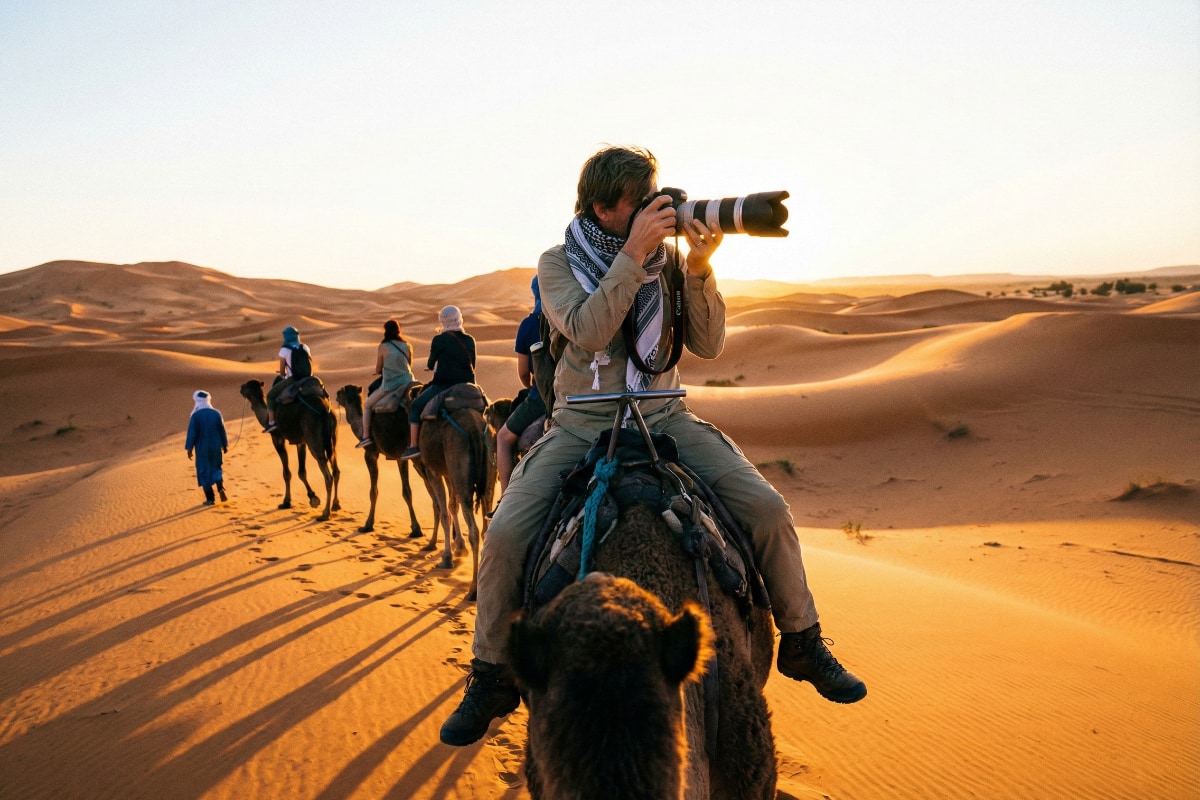
Shooting from a camel offers a unique, elevated perspective, but the constant swaying motion makes stability a challenge. To get sharp images, you need to keep your shutter speed higher than usual—aim for at least 1/500th of a second or faster to freeze the motion and eliminate camera shake. It is often better to use a zoom lens (such as a 24-70mm or 18-135mm) so you can frame your shots without needing to move physically or change lenses. Focus on the following composition elements to create compelling narratives:
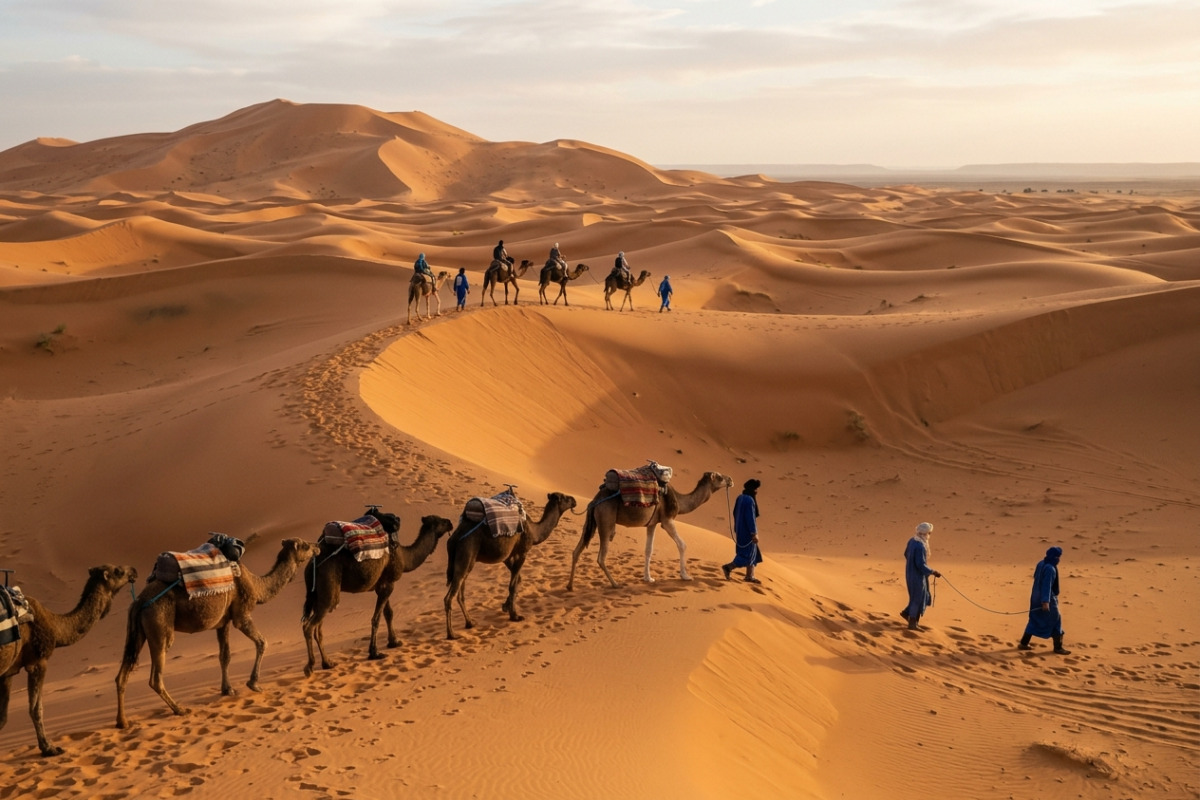
- Leading Lines: Use the ridge of a dune or the line of camels ahead of you to lead the viewer's eye into the frame.
- Scale: The desert is massive. Include a person, a camel, or a shrub in your frame to provide a sense of scale against the towering dunes.
- Layers: Look for telephoto opportunities where you can compress the distance, stacking layers of dunes one behind the other to create a painterly effect.
- Shadows: Capture the long, distorted shadows of the camel caravan stretching out across the sand.
Capturing Wildlife and Minute Details
While the grand landscapes are the main attraction, the Sahara is teeming with life if you look closely. Photographing desert wildlife requires patience and a keen eye. You might encounter Fennec foxes, desert monitors, or the resilient scarab beetle leaving intricate tracks in the sand. These macro details tell a powerful story about survival and adaptation. When participating in various desert experiences, ask your guides to point out these smaller wonders. They often know exactly where to look for lizards basking in the sun or birds hiding in the sparse vegetation.
For wildlife photography, a telephoto lens is essential to maintain a respectful distance. Do not chase animals for a photo; instead, wait for them to move naturally. Focus on the eyes of the subject to create a connection with the viewer. Additionally, photograph the textures of the desert flora—the twisted roots of an acacia tree or the geometric patterns of dried mud—to add variety to your visual storytelling.
Example: A telephoto lens allows you to capture stunning wildlife shots like this Fennec Fox without disturbing its natural habitat.
Quick Settings Guide for Desert Scenarios
To help you react quickly to the changing environment, here is a reference guide for camera settings depending on the situation:
| Scenario | Shooting Mode | Shutter Speed | Aperture | ISO |
| Camel Trekking (Moving) | Shutter Priority (Tv/S) | 1/1000s or faster | Auto | Auto (up to 800) |
| Landscape (Golden Hour) | Aperture Priority (Av/A) | Auto | f/8 - f/11 | 100 - 200 |
| Wildlife / Details | Aperture Priority (Av/A) | 1/500s + | f/4 - f/5.6 | Auto |
| Night Sky / Stars | Manual (M) | 15s - 25s | f/2.8 (widest) | 1600 - 3200 |
The Magic of the Night Sky
One of the most spectacular aspects of the Sahara is the night sky. Far from the light pollution of cities, the Milky Way appears with startling clarity. Astrophotography in the desert is a must-try experience. You will need a sturdy tripod for this, as long exposures are necessary. Since tripods are bulky on a camel trek, consider a travel-sized tripod or a "gorilla pod" that can be easily packed.
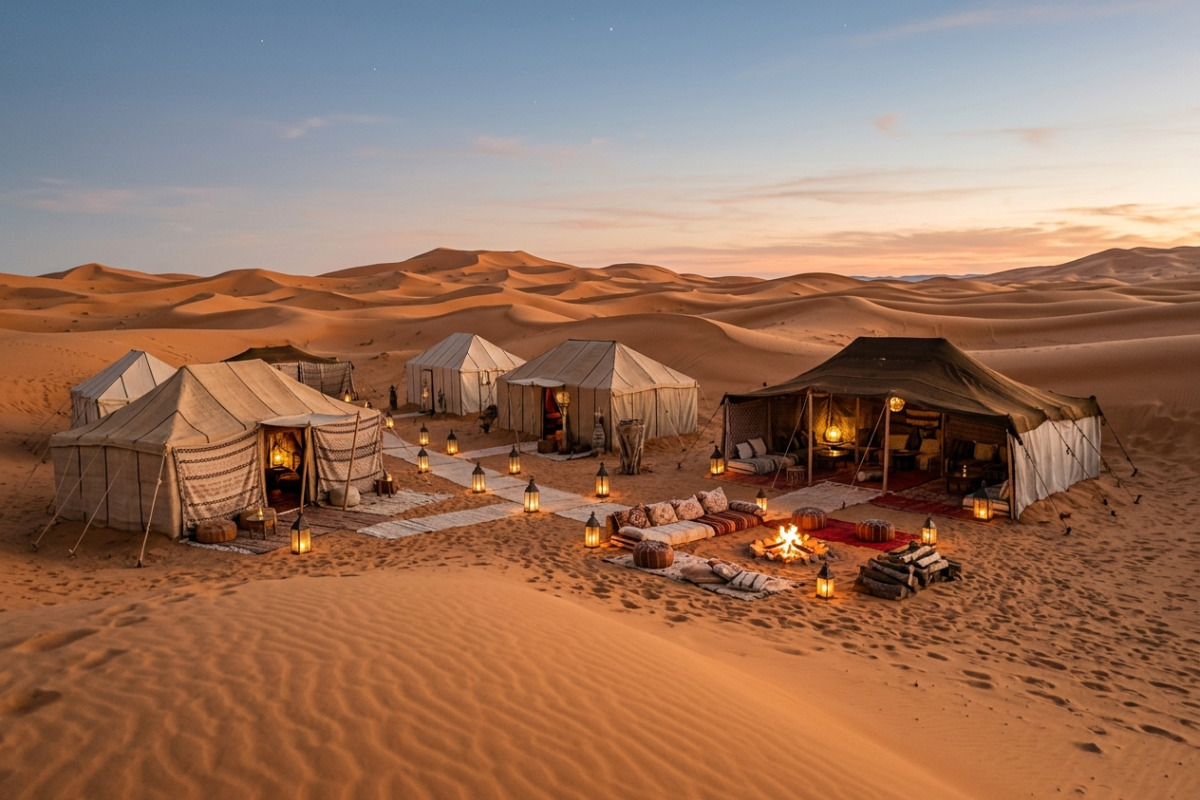
Set your camera to manual focus and focus on the brightest star using the live view magnification. Use a wide-angle lens to capture as much of the sky as possible, and try to include a foreground element, such as a silhouette of a camel or the outline of your desert camp, to anchor the image. The silence of the desert night, combined with the visual spectacle of millions of stars, is a moment you will want to immortalize.
Cultural Etiquette and Respect
Finally, it is crucial to approach photography with respect for the local culture. The Amazigh (Berber) guides and nomads who call the Sahara home are incredibly hospitable, but not everyone is comfortable being photographed. Always ask for permission before taking portraits of people. Building a rapport with your subject often leads to much better, more natural photos than stealing a candid shot. A smile and a simple gesture of showing them the photo on your camera screen can go a long way in bridging the cultural gap.
By combining technical preparation with artistic vision and cultural respect, your camel trek through the Sahara will yield a collection of images that are as timeless as the desert itself. Embrace the dust, the light, and the adventure, and let your camera tell the story of this magnificent landscape.
In Conclusion: Capturing Your Sahara Story
A camel trek through the Sahara offers unparalleled photographic opportunities, but requires careful planning and adaptation. Protecting your gear from the elements, mastering the light, and respecting the local culture are crucial for a successful and enriching experience. By applying the techniques outlined in this guide, you'll be well-equipped to capture stunning images that tell the story of your unforgettable journey through the heart of the desert. Remember to embrace the challenges, be patient, and most importantly, enjoy the magic of the Sahara.