There is a silence in the Sahara that feels ancient and heavy, yet incredibly peaceful. As the sun dips below the horizon, painting the dunes in hues of violet and burnt orange, the heat of the day dissipates, making way for a crisp, cool breeze. This transition marks the beginning of one of the most profound travel experiences available: spending a night under the unpolluted, infinite canopy of stars in the Moroccan desert. It is not merely about sleeping outdoors; it is about reconnecting with the raw rhythms of nature in a place where time seems to stand still. For many travelers, this moment of looking up at the Milky Way, stretching clearly across the sky, becomes the highlight of their entire journey.
The Celestial Spectacle: Why the Sahara Sky is Different
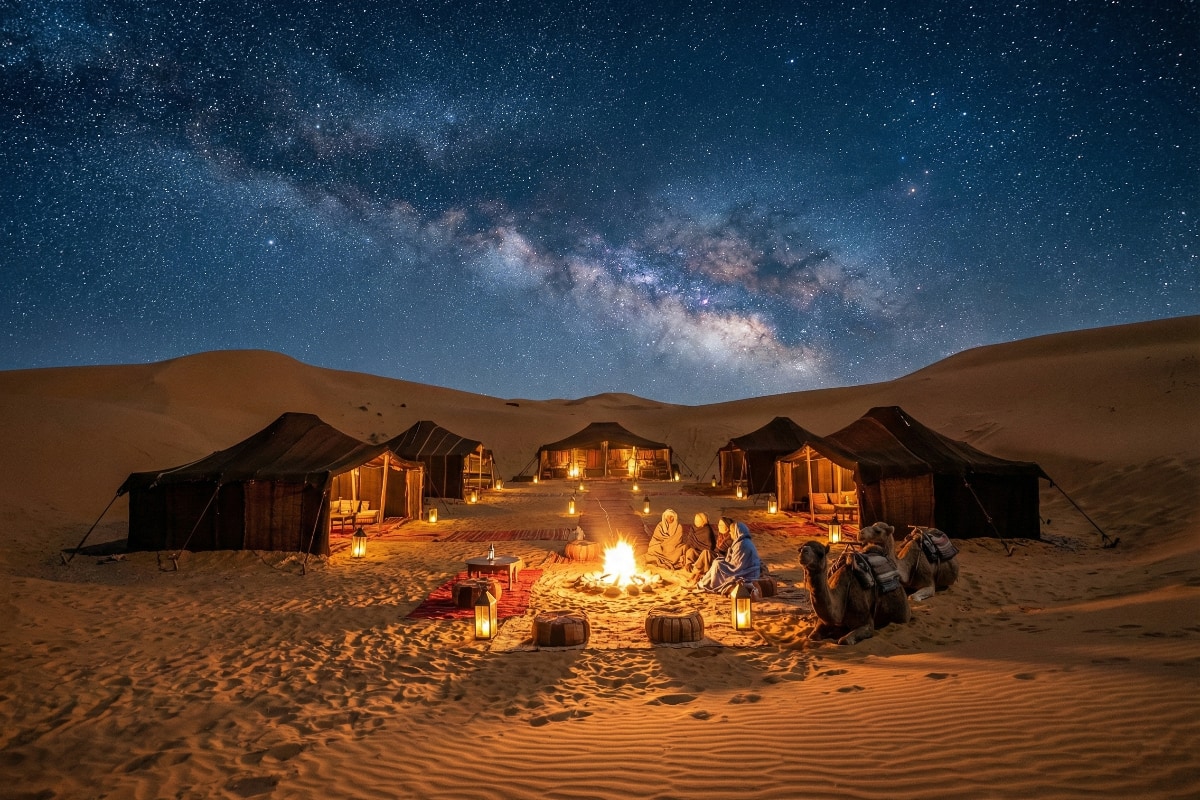
The primary reason travelers venture deep into the dunes is the promise of a sky unlike any other. Far removed from the light pollution of modern cities, the Sahara offers a window into the universe that is rarely seen in the populated world. When the moon is new, the darkness is absolute, allowing thousands of stars to shine with an intensity that can be overwhelming. You don’t just see the major constellations; you see the depth of the galaxy, shooting stars streaking across the black canvas every few minutes, and satellites moving silently in orbit. It is a humbling experience that offers a perspective on our place in the universe, making daily worries feel insignificant against the backdrop of cosmic time.
Choosing Your Dune: Erg Chebbi vs. Erg Chigaga
When planning this adventure, the first decision involves choosing the right location. Morocco offers two main gateways to the deep desert, each providing a distinct atmosphere for campers. Whether you want to Explore Morocco through its accessible routes or its wilder frontiers, understanding the difference between these regions is key.
Erg Chebbi: The Accessible Beauty
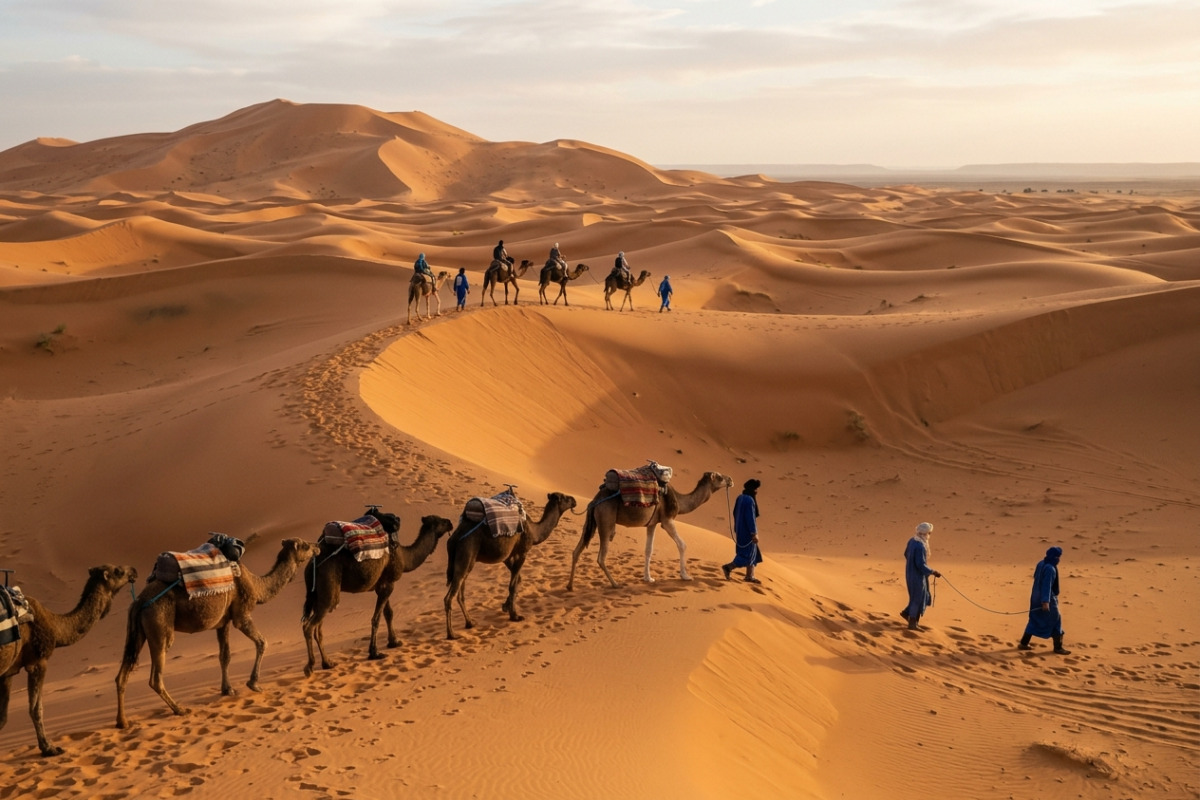
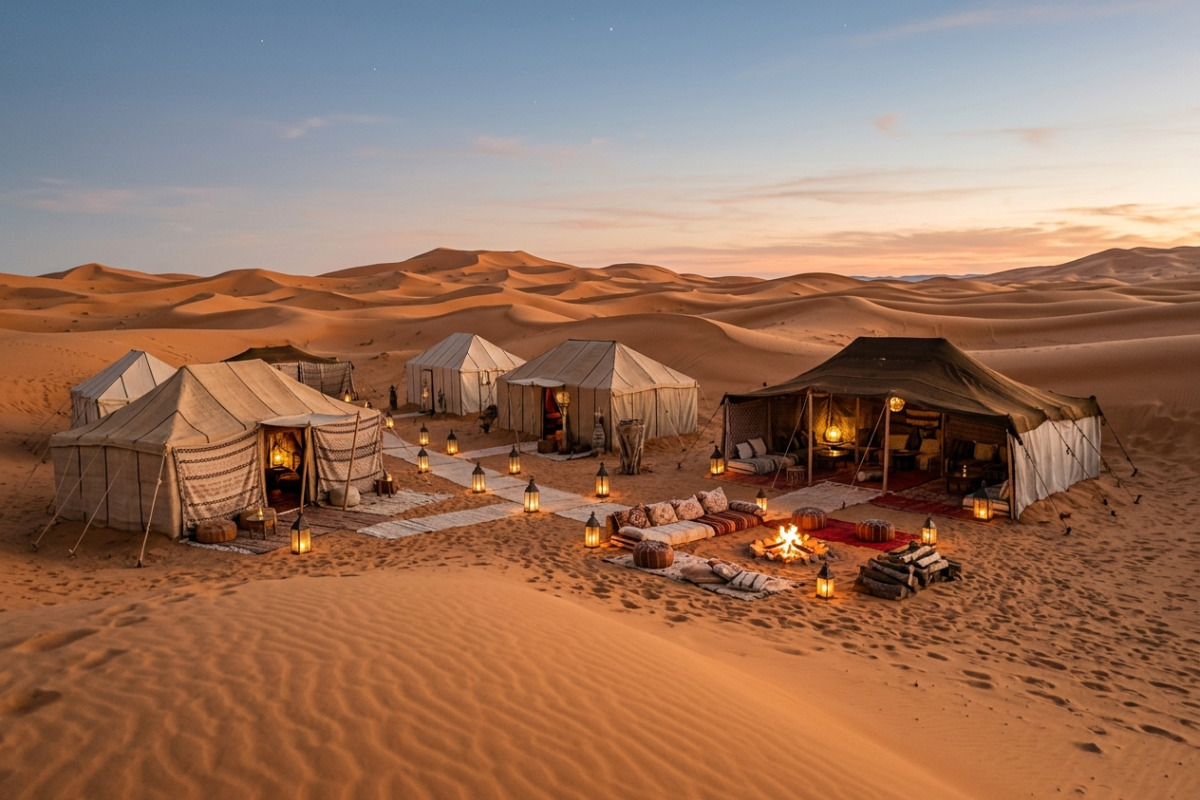
Located near the town of Merzouga, Erg Chebbi is famous for its towering orange dunes that can reach up to 150 meters in height. It is more accessible, making it a popular choice for those with limited time. Here, camps range from simple bivouacs to ultra-luxury tents with en-suite bathrooms. The proximity to the town means you can easily reach your camp by camel or 4x4 within an hour, yet once you are nestled between the dunes, you feel worlds away. The accessibility allows for a comfortable introduction to desert life without sacrificing the visual drama of the landscape.
Erg Chigaga: The Wild Frontier
For those seeking solitude and a more rugged adventure, Erg Chigaga is the answer. Located roughly 60 kilometers from the nearest paved road (M'Hamid), reaching these dunes requires a serious off-road journey. The landscape here is vast and untamed, offering a sense of isolation that is harder to find in Merzouga. If your goal is to hear absolutely nothing but the wind and your own breath, this is the destination to choose. The journey itself is part of the allure, traversing rocky hamada and dried riverbeds before the sea of sand finally appears on the horizon.
Essential Packing Guide for Desert Nights
A common misconception is that the desert is always hot. While days can be scorching, nights in the Sahara—especially during winter months like January—can drop to near freezing temperatures. Being unprepared for the cold can ruin an otherwise magical evening. To ensure you enjoy the stargazing without shivering, proper packing is essential.
| Category | Essential Items | Why You Need It |
| Clothing | Thermal layers, fleece jacket, wool socks, beanie | Temperatures drop rapidly after sunset. Layering allows you to adjust to the changing climate. |
| Footwear | Closed-toe trekking shoes or sturdy sandals | Sand can get cold, and walking on dunes requires stability. Avoid flip-flops for trekking. |
| Health & Hygiene | Moisturizer, lip balm, wet wipes, eye drops | The air is incredibly dry. Sand can irritate eyes and skin easily. |
| Gadgets | Power bank, headlamp (red light mode), tripod | Camps may have limited electricity. Red light preserves night vision for stargazing. |
Safety Tips for Desert Camping
While the Sahara offers unparalleled beauty, it's crucial to prioritize safety. Before embarking on your camping adventure, inform someone of your itinerary and expected return time. Always stay hydrated by drinking plenty of water, even if you don't feel thirsty. Be aware of the signs of heatstroke and dehydration. When exploring the dunes, stick to established paths or stay within sight of your camp to avoid getting lost. In the unlikely event of a sandstorm, seek shelter behind a large dune and cover your face to protect yourself from the sand. Finally, be mindful of wildlife; while encounters are rare, scorpions and snakes can be present, so wear appropriate footwear and avoid disturbing their habitats.
Immersive Desert Experiences & Local Culture
Camping in the Sahara is about more than just sleeping; it is about engaging with the culture and the environment. Local guides, often from Amazigh (Berber) heritage, are the custodians of this land. Their hospitality is legendary, usually centered around a crackling campfire. These authentic experiences often include live drumming, traditional songs that have been passed down for generations, and the sharing of stories about nomadic life. The Amazigh people have a rich history and deep connection to the Sahara, and learning about their traditions, such as their intricate weaving techniques, unique cuisine featuring tagines and couscous, and their profound respect for the desert environment, will greatly enhance your experience. Sipping sweet mint tea while listening to the rhythmic beat of the drums under a galaxy of stars creates a memory that photographs simply cannot capture.
Stargazing and Photography Tips
If you plan to photograph the night sky, you need stability and patience. A tripod is non-negotiable. Set your camera to a long exposure (20-30 seconds), open your aperture as wide as possible (f/2.8 is ideal), and set your ISO between 1600 and 3200. However, don't spend the entire night behind a lens. Take time to simply lie back on a blanket on the sand. Allow your eyes 20 minutes to fully adjust to the darkness. You will begin to see satellites tracking across the sky and the faint cloud-like structure of the Milky Way core.
Respecting the Environment
The Sahara ecosystem is fragile. While it looks like an endless sandbox, it is home to specialized flora and fauna. Responsible camping means leaving no trace. Whether you are in a luxury camp or a wild bivouac, ensure that all waste is carried out. Water is a precious resource in the desert; use it sparingly when washing. Respecting the silence is also part of the etiquette; loud music or shouting disrupts the peace not just for wildlife, but for fellow travelers seeking solace in the dunes.
Waking Up to the Sunrise
The night under the stars concludes with one final spectacle: the sunrise. Guides will often wake you up while it is still dark so you can climb the nearest high dune. Watching the shadows shift and shorten as the sun breaches the horizon is a dynamic display of light and texture. The sand changes color from grey to pink to a blinding gold in a matter of minutes. It is the perfect closing chapter to a night spent in one of the world's most spectacular landscapes, leaving you refreshed and inspired for the journey ahead.