Imagine standing in a vast ocean of sand where the silence is so profound you can almost hear your own heartbeat. As the sun dips below the horizon, painting the dunes in shades of burning orange and deep violet, a transformation begins. The heat of the day dissipates, replaced by a crisp, cool air, and the sky above turns into a canvas of infinite depth. This is not just a night out; it is an immersion into the cosmos. For travelers seeking a connection with nature in its purest form, the Sahara Desert offers a celestial spectacle that has guided nomads and dreamers for millennia. Far away from the light pollution of modern metropolises, the desert sky reveals secrets that are otherwise hidden from the naked eye.
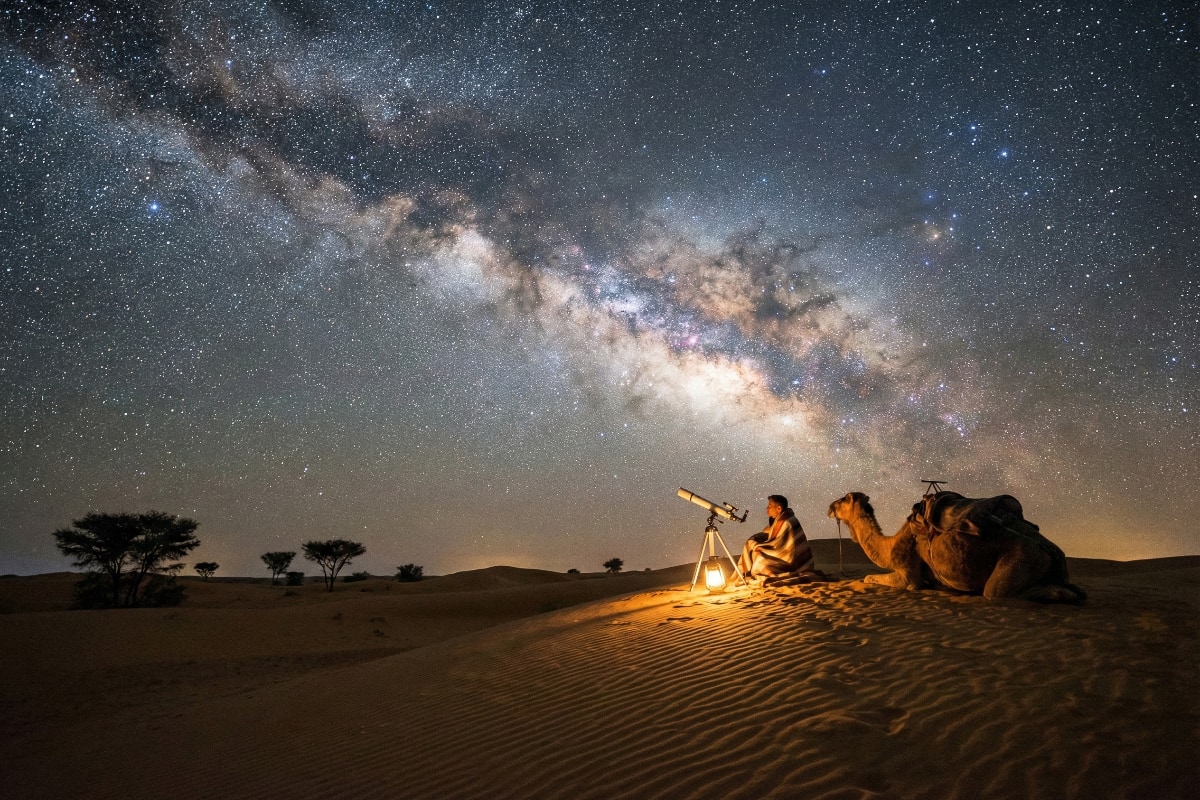
The experience of looking up in the Sahara is humbling. Without the interference of artificial lights, thousands of stars emerge, forming complex constellations and the majestic arc of the Milky Way. It is a reminder of our small place in the universe and a chance to witness the night sky exactly as our ancestors did. Whether you are an amateur astronomer, a photographer chasing the perfect shot, or simply a traveler in search of peace, the Moroccan Sahara provides the perfect stage for this nightly performance. In this guide, we will navigate through the best spots to set up camp and how to make the most of your stargazing adventure.
Why the Sahara is a Stargazer’s Paradise
The primary reason the Sahara is exceptional for astronomy is the almost total absence of light pollution. In urban environments, streetlights, buildings, and traffic create a glow that washes out the stars, leaving only the brightest planets visible. In the deep desert, however, the darkness is absolute. This lack of artificial interference allows for a level of visibility that is rare in the Northern Hemisphere. The dry desert air further enhances clarity by minimizing atmospheric distortion caused by humidity, making the stars appear sharper and brighter than anywhere else.
Furthermore, the geography of the region plays a crucial role. The vast, open horizons mean that you have a 360-degree view of the celestial dome. There are no skyscrapers or mountains to block your line of sight, allowing you to track constellations as they rise in the east and set in the west. When you Explore Morocco and venture into its southern territories, you are entering a zone classified as having some of the darkest skies on Earth. This pristine environment creates a backdrop where the Milky Way looks less like a faint smudge and more like a structured, glowing river of light stretching across the firmament.
Prime Locations for Celestial Observation
While the entire desert offers better views than the city, certain locations in Morocco are legendary for their stargazing potential. Choosing the right spot depends on how deep into the dunes you wish to venture and the level of comfort you desire. Here are the top contenders for the best night sky views:
- Erg Chebbi (Merzouga): Famous for its towering orange dunes, Erg Chebbi is accessible and offers a blend of comfort and wilderness. While there are camps nearby, a short trek into the dunes places you in complete darkness. The contrast between the silhouette of the massive dunes and the starry sky creates a dramatic visual effect.
- Erg Chigaga: Known as the "wild" desert, this area is more remote and harder to reach than Merzouga. It requires a 4x4 journey to access, which means fewer tourists and even less light pollution. The isolation here is palpable, offering an intimate experience with the cosmos.
- Zagora and the Draa Valley: While closer to civilization, the outskirts of Zagora provide excellent opportunities for those who may not have the time to venture deep into the major Ergs. The rocky plateaus here offer a different, yet equally stunning, foreground for stargazing.
Preparing for the Night: Practical Tips
To fully appreciate the wonders above, a little preparation goes a long way. The desert environment can be unpredictable, and comfort is key to staying out long enough to see the best of the sky. First and foremost, check the lunar calendar before booking your trip. The best time for stargazing is during the New Moon phase, when the moon is not visible in the night sky. A full moon, while beautiful in its own right, acts like a giant lantern that can outshine fainter stars and the details of the Milky Way.
Temperature regulation is another critical factor. Many travelers are surprised by how cold the desert gets at night, especially in winter months like January. Thermal layers, a warm hat, and gloves are essential if you plan to sit still and observe for hours. Additionally, give your eyes time to adjust. It takes about 20 to 30 minutes for human eyes to fully adapt to the dark. Avoid looking at your phone screen or using bright white flashlights during this time. If you need light to move around, use a red-light torch, which preserves your night vision.
Enhancing Your Desert Journey
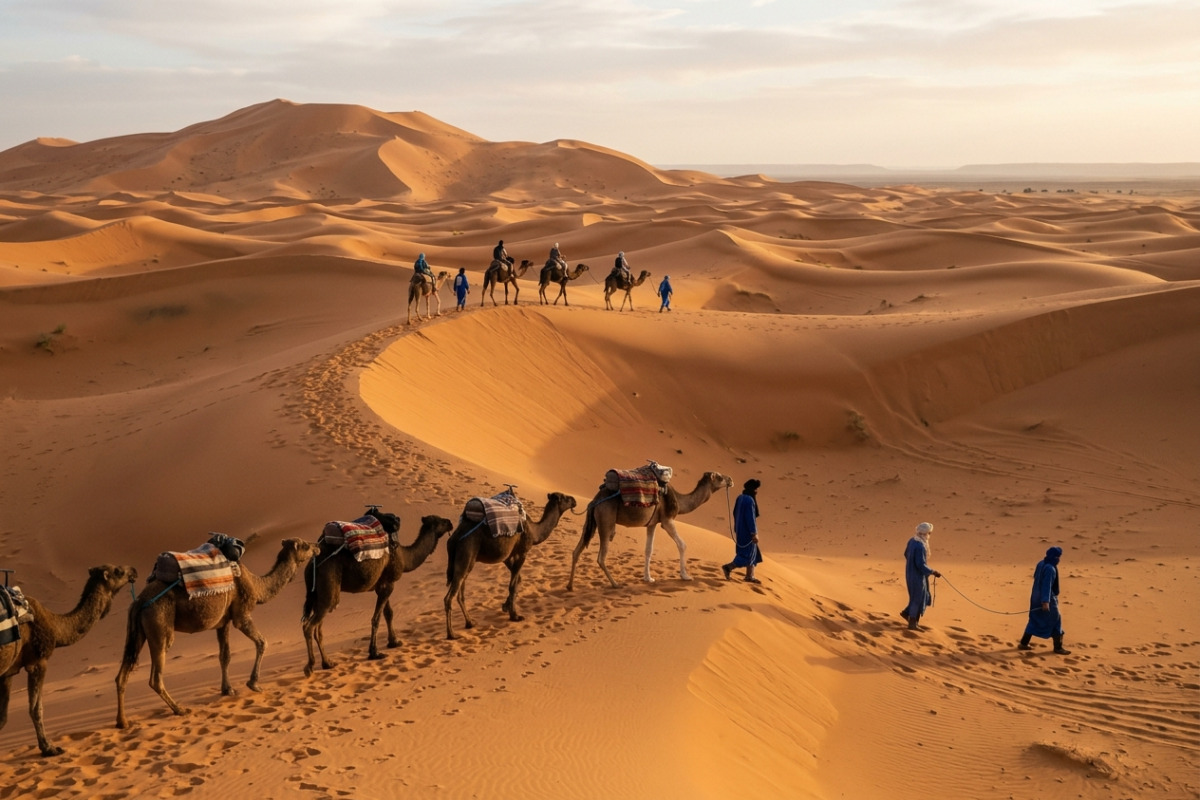
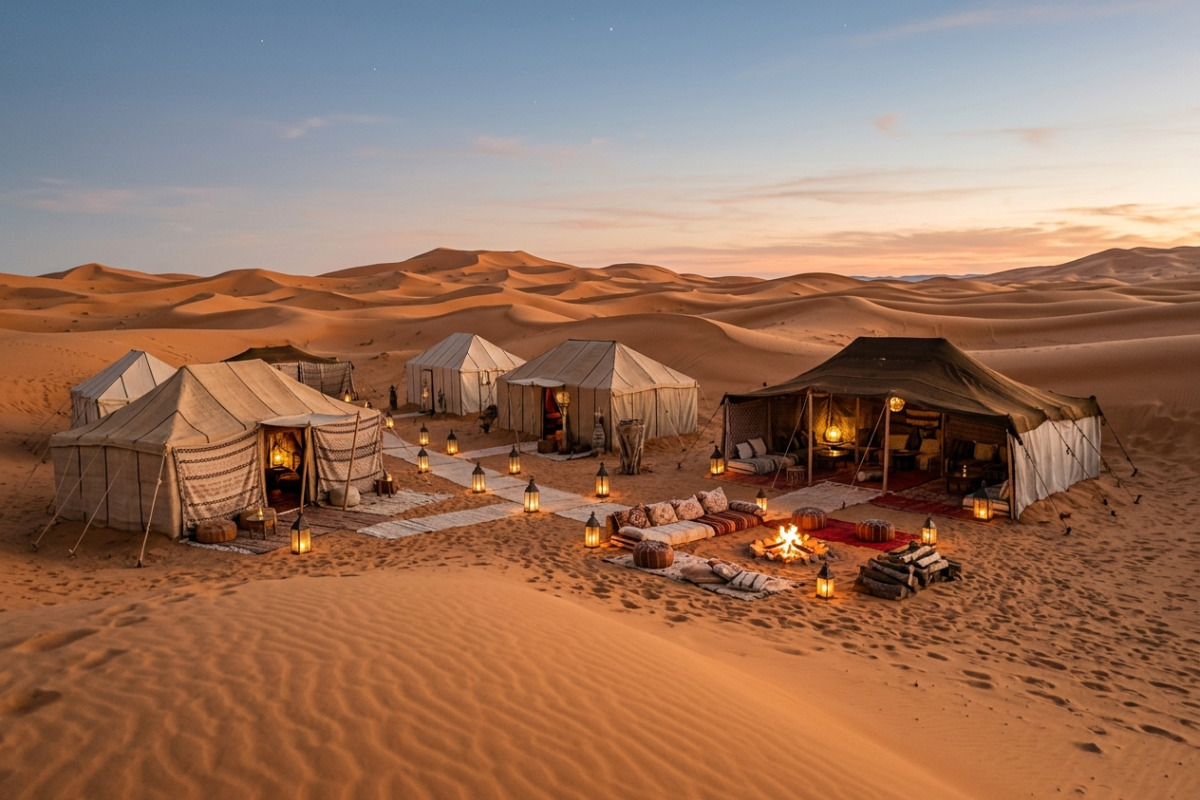
Stargazing is often the highlight of a broader desert adventure. Combining this nocturnal activity with daytime exploration creates a holistic travel memory. You might spend your day riding camels across the ridges or visiting nomadic families to understand their relationship with the stars, used for navigation for centuries. For those interested in curated itineraries that blend adventure with relaxation, looking into various desert experiences can help structure your trip effectively. Organized camps often provide comfortable seating areas specifically designed for sky-watching.
Astrophotography 101 for Desert Travelers
Capturing the magic of the Sahara night sky requires more than just pointing a smartphone at the heavens. For those bringing a DSLR or mirrorless camera, the desert is a playground. The key is to let in as much light as possible without introducing too much digital noise or star trails (unless that is your artistic intent). A sturdy tripod is non-negotiable, as you will be using long exposure times where even the slightest movement causes blur.
Below is a quick reference guide for setting up your camera to capture the Milky Way and starry landscapes:
| Setting | Recommended Value | Why? |
| Aperture | f/2.8 or lower (wider) | Allows the maximum amount of light to hit the sensor. |
| ISO | 1600 - 3200 | Increases sensor sensitivity to light, but watch for grain (noise). |
| Shutter Speed | 15 - 25 seconds | Long enough to capture light, short enough to avoid star trails due to Earth's rotation. |
| Focus | Manual Focus (Infinity) | Autofocus will not work in the dark. Focus on a bright star manually. |
| Timer | 2-second delay | Prevents camera shake caused by pressing the shutter button. |
What to Look For: Constellations and Phenomena
Once your eyes have adjusted and you are settled in the sand, the show begins. The sheer density of stars can be overwhelming at first, making it difficult to pick out familiar shapes. In the Northern Hemisphere winter, prominent constellations like Orion dominate the sky. You can easily spot Orion’s Belt, a line of three bright stars, and the reddish glow of Betelgeuse. In the summer months, the core of the Milky Way is most visible, appearing as a thick, cloudy band of light rich with interstellar dust and gas.
Beyond the static stars, the Sahara is an excellent place to spot shooting stars. With such a wide field of view, your chances of seeing a meteor burn up in the atmosphere are significantly higher than in the city. Satellites are also visible, moving steadily across the sky like silent, unblinking planes. If you are lucky and visiting during a meteor shower event like the Perseids or Geminids, the display can be spectacular, with dozens of meteors streaking across the sky every hour. Sitting by a campfire, sipping hot mint tea, and watching these celestial fireworks is a memory that stays with you forever.
The Emotional Impact of the Desert Sky
There is a spiritual dimension to stargazing in the Sahara that goes beyond the visual. In a world that is constantly connected and noisy, the desert offers a rare pause. The vastness of the sky puts daily worries into perspective. It forces you to slow down and simply exist in the moment. Many travelers report feeling a profound sense of peace and clarity after a night spent under the desert stars. It is a reminder that beauty exists in the quietest places and that sometimes, you have to travel far to see what has been above you all along.
Whether you are planning a solo expedition or a group tour, prioritizing a night of stargazing is essential. It connects the geography of the land with the history of the cosmos. As you lay back on the cool dunes of Morocco, let the universe unveil its grandeur, one star at a time.
Beyond the Popular Spots: Hidden Gems for Stargazing
While Erg Chebbi and Erg Chigaga are well-known, consider these less-traveled locations for a more secluded experience:
- Lake Iriki: This dried lakebed offers a flat, unobstructed view of the sky. Its hard surface makes it easier to set up equipment and walk around.
- M'Hamid El Ghizlane: Further south than Zagora, M'Hamid offers access to smaller, less crowded dunes and a more authentic desert experience.
- Foum Zguid: This town serves as a gateway to the desert and offers various camping options with minimal light pollution.
Share Your Sahara Stargazing Story
Have you experienced the magic of the Sahara night sky? We'd love to hear about it! Share your favorite stargazing memory, tips for fellow travelers, or stunning astrophotography shots in the comments below. Let's build a community of Sahara stargazers!