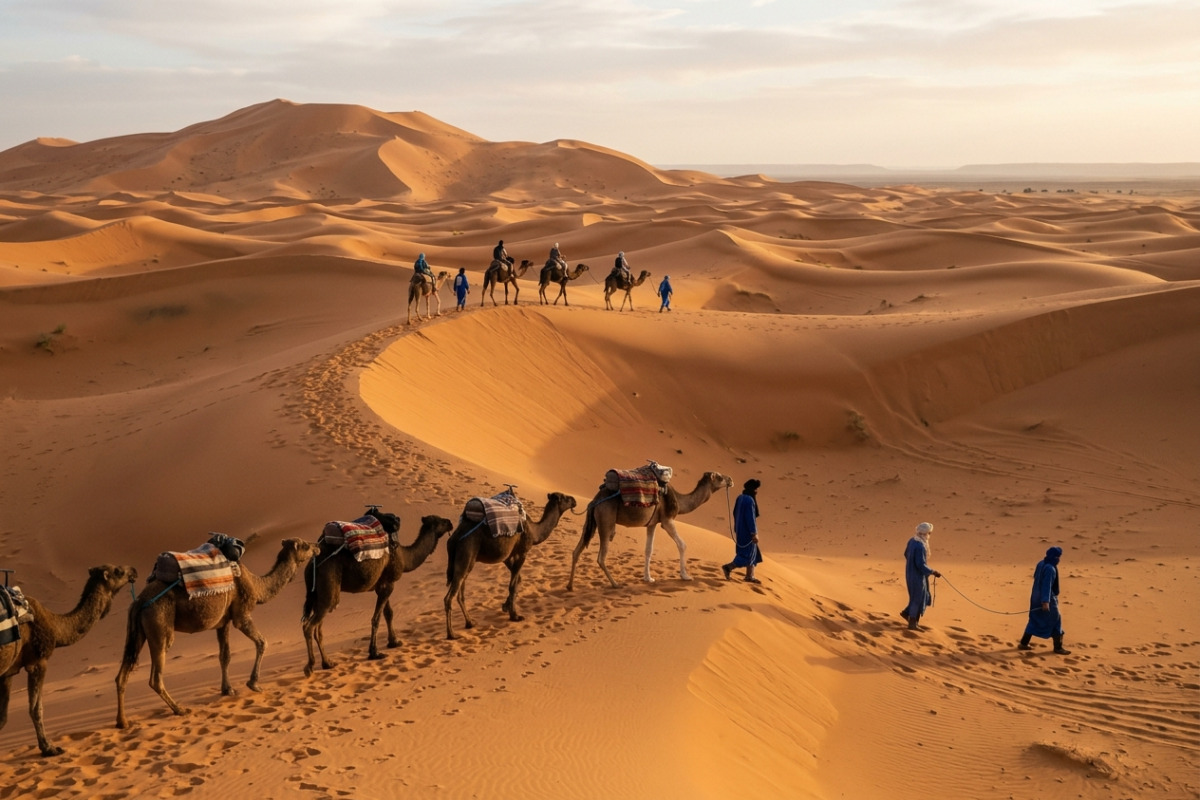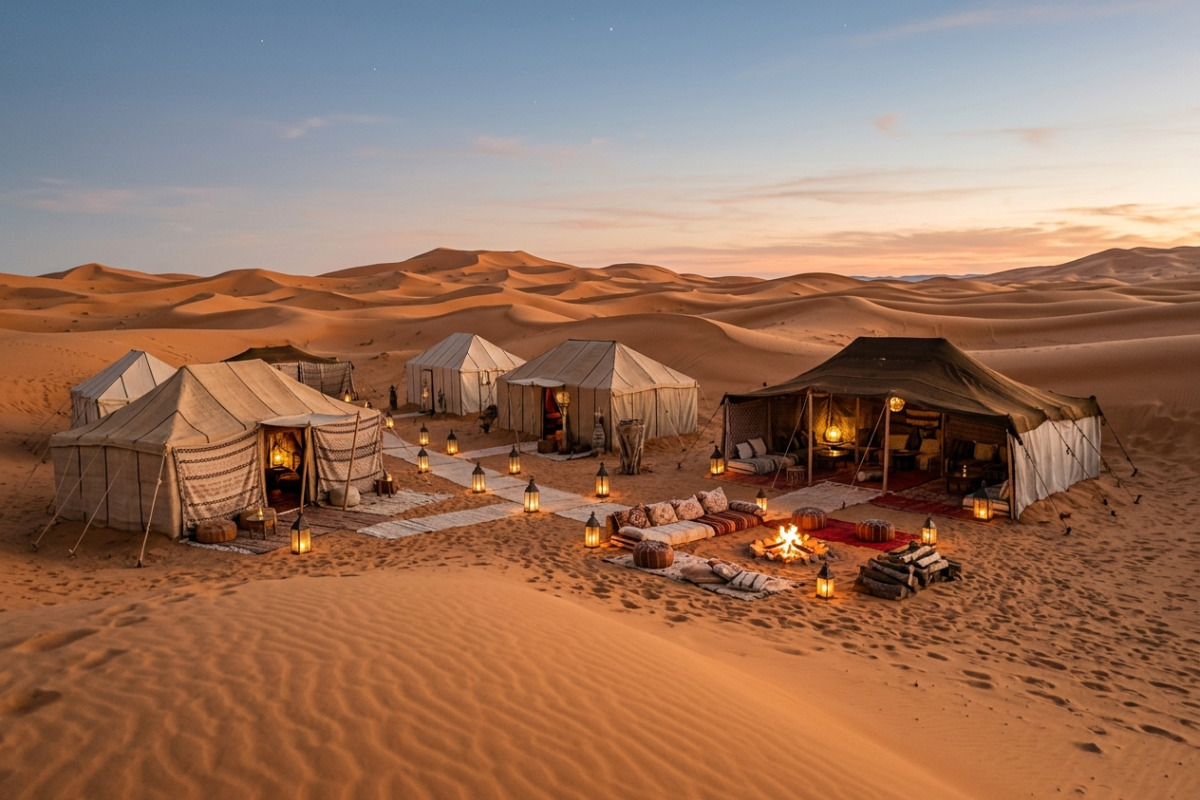
When travelers imagine the Sahara, the mind often conjures images of endless golden dunes, star-filled skies, and the profound silence of the desert. However, there is a sensory experience just as compelling as the visual grandeur: the aroma of wood fires and spices drifting through the evening air. The cuisine of the Sahara is a testament to human ingenuity and resilience, transforming the scarcity of the desert into a rich tapestry of flavors that tells the story of nomadic life. It is not merely about sustenance; it is a profound cultural expression where every dish carries the weight of history and the warmth of hospitality.
Understanding Saharan cuisine requires acknowledging the harsh environment from which it stems. For centuries, the nomadic tribes of North Africa have relied on ingredients that can withstand the heat and the journey. This necessity has birthed a culinary tradition that favors preservation, nutrient-dense ingredients, and cooking methods that utilize the elements themselves. As you prepare to Explore Morocco and its vast southern landscapes, prepare your palate for an adventure that is as rugged and beautiful as the terrain itself.
The Foundation of Desert Gastronomy
The pantry of a Saharan kitchen is defined by what the oasis provides and what the livestock yields. Unlike the verdant north where vegetables are abundant year-round, the desert diet is traditionally centered around dates, grains, milk, and meat. The date palm is often referred to as the 'tree of life,' providing not just sugary sustenance but a versatile ingredient used in savory and sweet dishes alike. These fruits are energy-dense, perfect for long treks across the sands, and serve as the cornerstone of desert hospitality.
Livestock, particularly camels and goats, play a crucial role in the diet, but meat is traditionally reserved for special occasions or guests. Instead, the daily sustenance relies heavily on dairy products. Camel milk is prized not only for its rich nutritional profile but also for its ability to stay fresh longer than cow's milk in hot climates. It is often fermented into yogurt or dried into hard cheese, known as 'jben,' which can be stored for months. This resourcefulness ensures that nothing is wasted in an environment where resources are precious.
Ancient Cooking Techniques: Fire and Sand
Perhaps the most fascinating aspect of Saharan cuisine is the cooking methodology. Without heavy ovens or modern appliances, the nomads turned to the most abundant resource available: the sand. The desert floor, heated by the scorching sun during the day and campfires at night, becomes a natural oven. This connection between the earth and the food creates a unique flavor profile that simply cannot be replicated in a modern kitchen.
The Art of Taguella (Sand Bread)
One cannot speak of Saharan food without mentioning Taguella, the iconic bread of the Tuareg and other desert dwellers. The preparation is a ritual in itself. A simple dough made of semolina, water, and salt is kneaded extensively before being buried beneath hot sand and embers. The sand acts as an insulator, baking the bread evenly and imparting an earthy, smoky flavor. Once cooked, the hard crust is scraped clean, and the bread is broken into pieces, often mixed with a sauce of tomatoes, spices, and dried meat. Witnessing the preparation of Taguella is one of the most authentic experiences a traveler can have, offering a window into the resourcefulness of desert life.
To elaborate on the Taguella preparation, after the dough is kneaded, a shallow pit is dug in the sand. A fire is built within this pit, and once the embers are glowing hot, a portion of them are spread out to create a bed of heat. The dough is then carefully placed on this bed of embers and completely covered with the remaining hot sand and embers. The baker will often use a stick to periodically check the bread's progress, ensuring it doesn't burn. The baking time can vary depending on the heat of the embers, but it typically takes around an hour. The result is a bread with a crispy, slightly charred crust and a soft, chewy interior, infused with the subtle flavors of the desert.
Slow Cooking in Earthenware
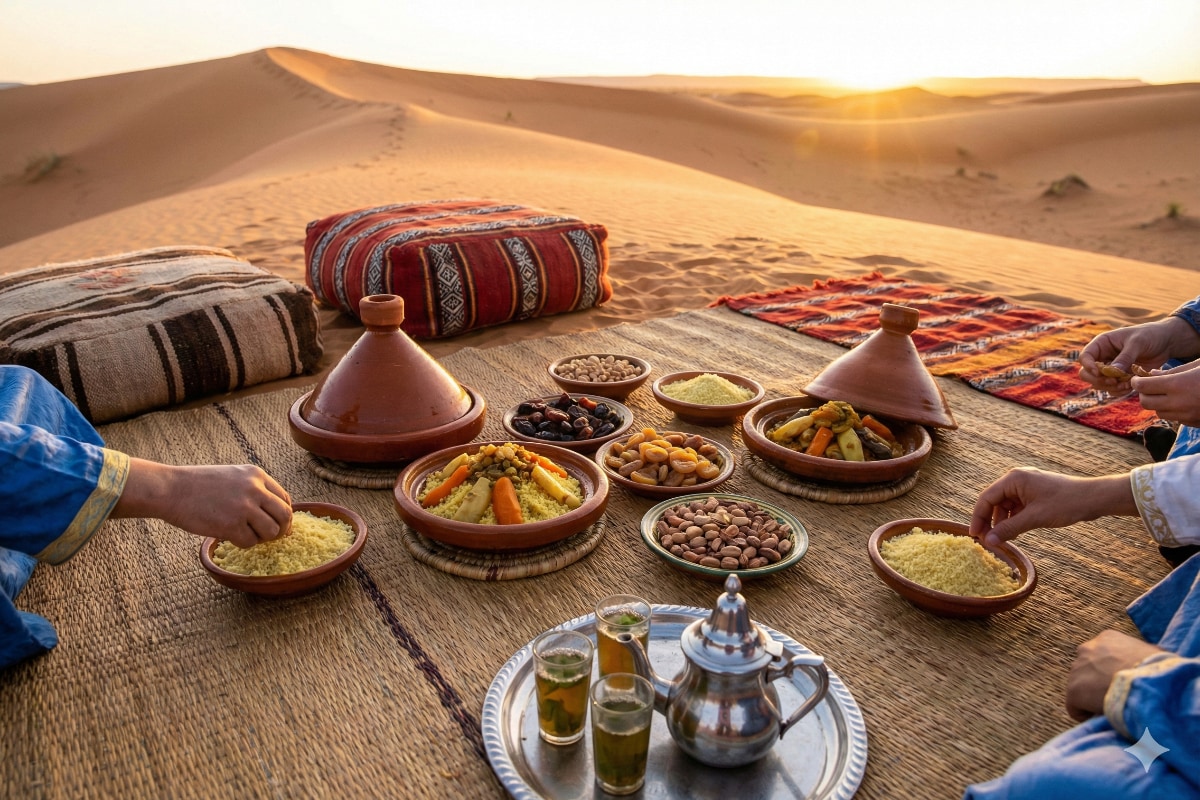
Beyond sand baking, the use of earthenware pots is ubiquitous. The famous Tajine is adapted here to suit local ingredients. In the desert, tajines are often cooked over charcoal embers for hours. The conical shape of the lid circulates steam, ensuring that tough cuts of meat become tender and that the limited amount of water used in cooking is preserved. The result is a meltingly soft stew where the sweetness of dried fruits often balances the savory depth of the meat.
Iconic Dishes You Must Taste
While the ingredients may seem simple, the combinations are sophisticated. The mastery lies in the spice blends—Ras el Hanout, cumin, saffron, and ginger—that transform basic staples into feasts. Here is a breakdown of some essential dishes you might encounter on your journey:
| Dish Name | Key Ingredients | Cultural Significance |
| Madfouna | Dough, beef or lamb, onions, spices, almonds, fat | Known as 'Berber Pizza,' this stuffed flatbread is a specialty of the Tafilalt region, representing generosity and celebration. |
| Camel Tagine | Camel meat, dates, apricots, aromatic spices | A rare delicacy often served at weddings or to honor important guests. The meat is lean and rich in flavor. |
| Tfaya | Couscous, caramelized onions, raisins, cinnamon | A sweet and savory dish that showcases the desert's love for preserving fruits and combining contrasting flavors. |
| Harira (Desert Style) | Lentils, chickpeas, tomatoes, flour, herbs | A hearty soup traditionally used to break the fast during Ramadan, providing immediate energy and hydration. |
Beyond these well-known dishes, several other culinary gems deserve mention. Eghajira, a hearty porridge made from millet or sorghum, is a staple in many Saharan communities, providing sustained energy for the day's tasks. It's often flavored with dates, milk, or a touch of butter. Another notable dish is Marqa, a slow-cooked stew featuring root vegetables, dried meat, and a blend of warming spices. The specific ingredients and preparation methods vary from region to region, reflecting the diverse culinary traditions within the Sahara.
The Social Ritual: Tea and Community
In the Sahara, eating and drinking are never solitary acts; they are the glue that holds the community together. The most potent symbol of this communal bond is the tea ceremony. Moroccan mint tea, or 'Atai,' is ubiquitous, but in the desert, the ritual takes on a slower, more deliberate pace. It is brewed over charcoal embers in small metal teapots, resulting in a strong, bittersweet, and frothy beverage. The preparation can take up to an hour, during which news is exchanged, stories are told, and bonds are strengthened.
There is a famous proverb regarding the three glasses of tea served to guests in the Sahara:
- The first glass: Bitter like life. It represents the harsh realities of existence and the strength needed to survive.
- The second glass: Strong like love. This cup signifies the passion and intensity of human connection.
- The third glass: Sweet like death. A reminder of the peace and release that eventually comes to all.
Participating in this ceremony is mandatory for anyone wishing to understand the soul of the region. It teaches patience and emphasizes that time is not money in the desert; time is a relationship. Whether you are sitting in a luxury camp or under a simple tent, the tea ceremony remains the ultimate gesture of welcome.
Preserving Heritage Through Flavor
As modernization touches even the remote corners of the dunes, these culinary traditions serve as an anchor to the past. Recipes are rarely written down; they are passed from generation to generation through observation and practice. The distinct flavors of the Sahara are not just about taste; they are about identity. They remind the people of their ancestors' ability to thrive in one of the world's most extreme environments.
For the modern traveler, engaging with Saharan cuisine is an act of cultural immersion. It requires stepping away from international buffets and daring to try the camel meat, the sand-baked bread, and the intensely sweet dates. By doing so, you are not just feeding your body; you are honoring the ancient traditions that have kept the spirit of the desert alive for millennia. So, as you plan your next adventure, let your taste buds lead the way into the heart of the golden sands.