There is a profound silence in the Sahara that you cannot find anywhere else on Earth. It is not merely an absence of noise, but a heavy, velvet presence that wraps around the golden dunes, broken only by the soft, rhythmic thud of camel hooves on the sand. Stepping away from the frantic pace of modern life and mounting a camel—the fabled "ship of the desert"—is more than just a mode of transport; it is a transition into a different era. As travelers venture deeper into the undulating landscapes of North Africa, the horizon stretches endlessly, offering a sense of freedom that is both humbling and exhilarating. The journey toward a desert camp is not just about reaching a destination; it is about surrendering to the slow, hypnotic tempo of the wild.
For many adventurers, the allure lies in the sheer contrast to their daily reality. Here, there are no notifications, no traffic, and no urgent deadlines. Instead, you are greeted by the shifting artistry of the wind-sculpted sands and the raw beauty of nature in its most elemental form. Whether you are seeking a moment of introspection or an adrenaline-filled exploration, the Sahara offers a canvas upon which every traveler paints their own unique memory. As we navigate through January 2026, the desert air is crisp and clear, making it one of the most spectacular times to witness the stark beauty of this ancient landscape.
The Art of Slow Travel: Riding the Ship of the Desert
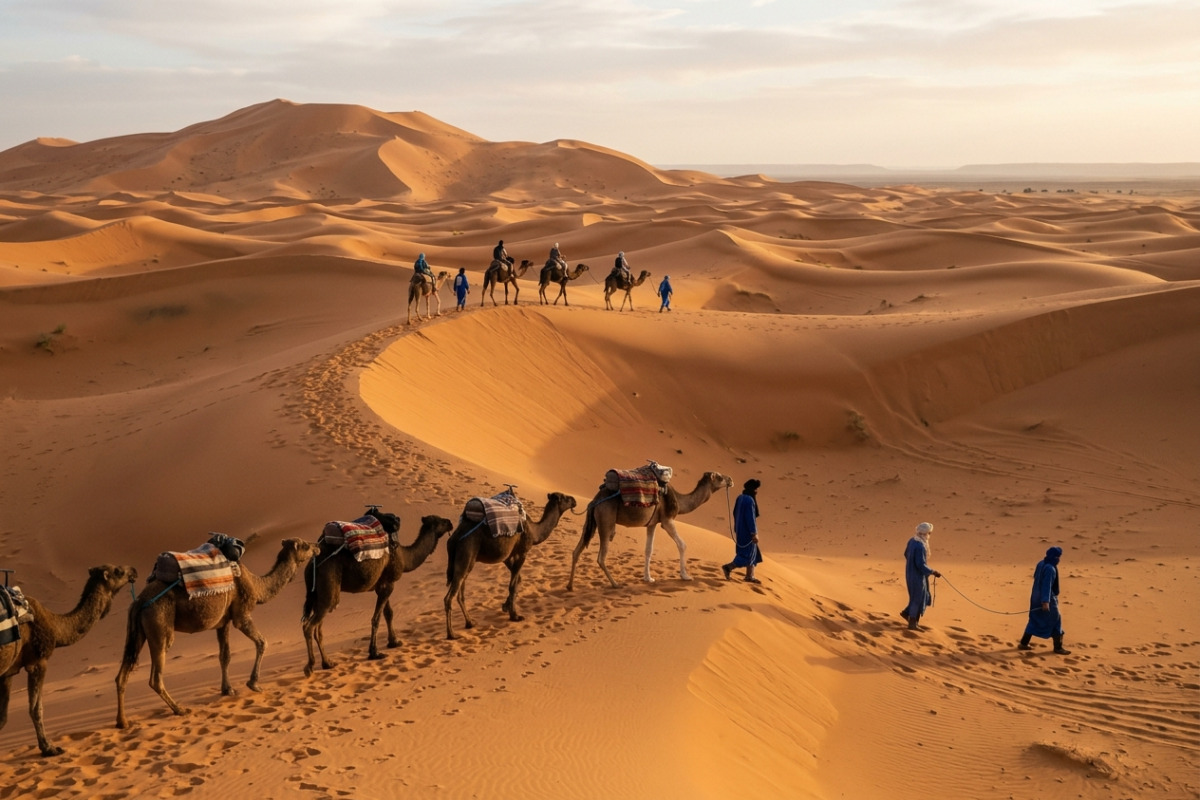
Camel trekking is the quintessential Sahara experience, a practice that has sustained trade and travel across these sands for millennia. Unlike the enclosed isolation of a 4x4 vehicle, riding a camel connects you physically to the environment. You feel the temperature change as the sun begins its descent, and you see the intricate patterns of the sand ripples up close. The dromedary camel, perfectly adapted to this harsh environment, moves with a swaying gait that quickly lulls riders into a meditative state. It allows you to appreciate the scale of the dunes, some of which can rise hundreds of feet into the air, casting long, dramatic shadows that change shape by the minute.
The routes taken during these treks are often centuries old, following paths once traversed by caravans carrying salt, gold, and spices. Guides, often born and raised in the desert, know these dunes as intimately as one knows the streets of their hometown. They navigate by landmarks invisible to the untrained eye, leading travelers through valleys of sand and across vast, flat plateaus known as hamada. For those looking to dive deeper into these unique journeys, there are various experiences tailored to different levels of adventure, from short sunset rides to multi-day expeditions that traverse the deep desert.
The Magic of the Golden Hour
Perhaps the most photographed yet indescribable moment of a camel trek is the sunset. As the caravan approaches the camp, the guides will often pause at a high vantage point. The transformation of the sky is nothing short of theatrical. The fierce blue of the day softens into hues of apricot, violet, and burning orange. The sand itself seems to catch fire, glowing with an intense reddish-gold light before cooling into the pale blues of twilight. Watching the sun dip below the horizon from the back of a camel is a spiritual moment for many, marking the end of the day’s journey and the beginning of the desert’s nocturnal magic.
Berber Hospitality and Cultural Encounters
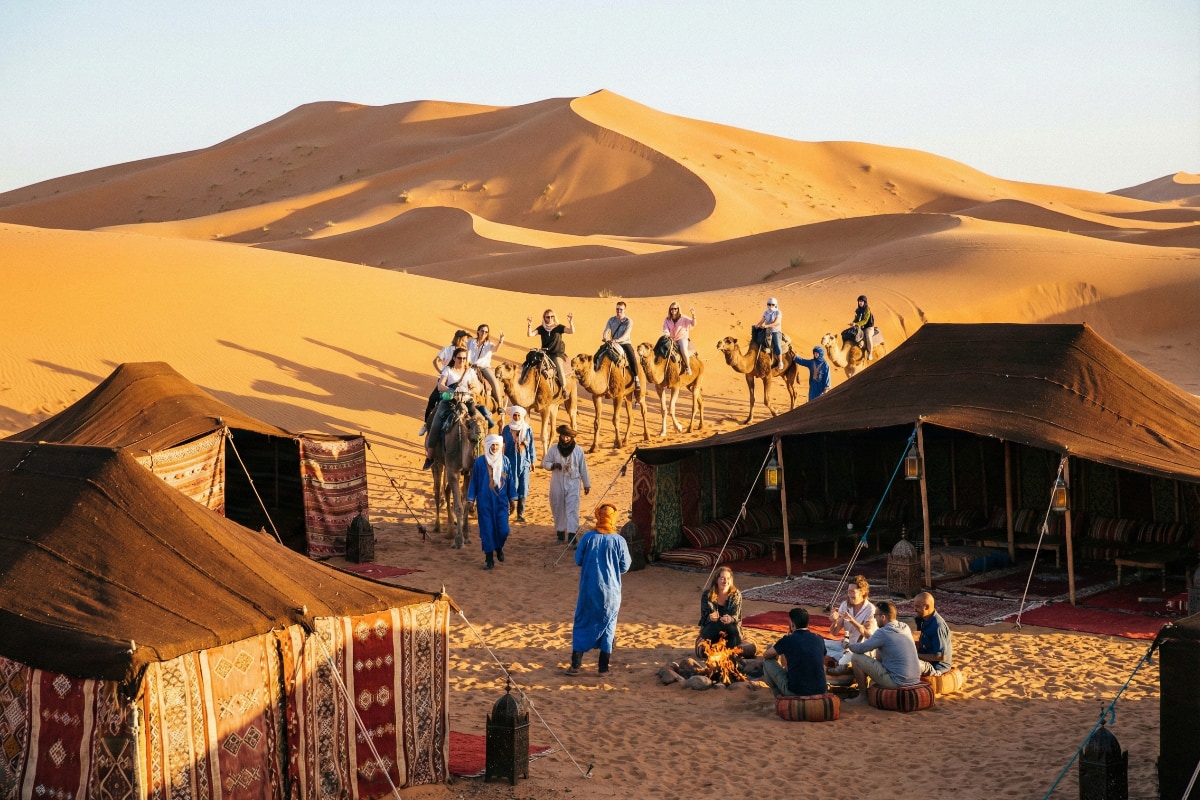
The beauty of the Sahara is not only in its geology but in its humanity. The Amazigh (Berber) people are the soul of the desert, and their hospitality is legendary. Arriving at a desert camp, travelers are almost always welcomed with the traditional ceremony of mint tea—often referred to as "Berber whiskey." This sweet, hot drink is poured from a height to create a frothy top, symbolizing welcome and friendship. It is a time to sit, shake off the sand, and converse with your hosts, learning about a lifestyle that balances ancient traditions with the realities of the modern world.
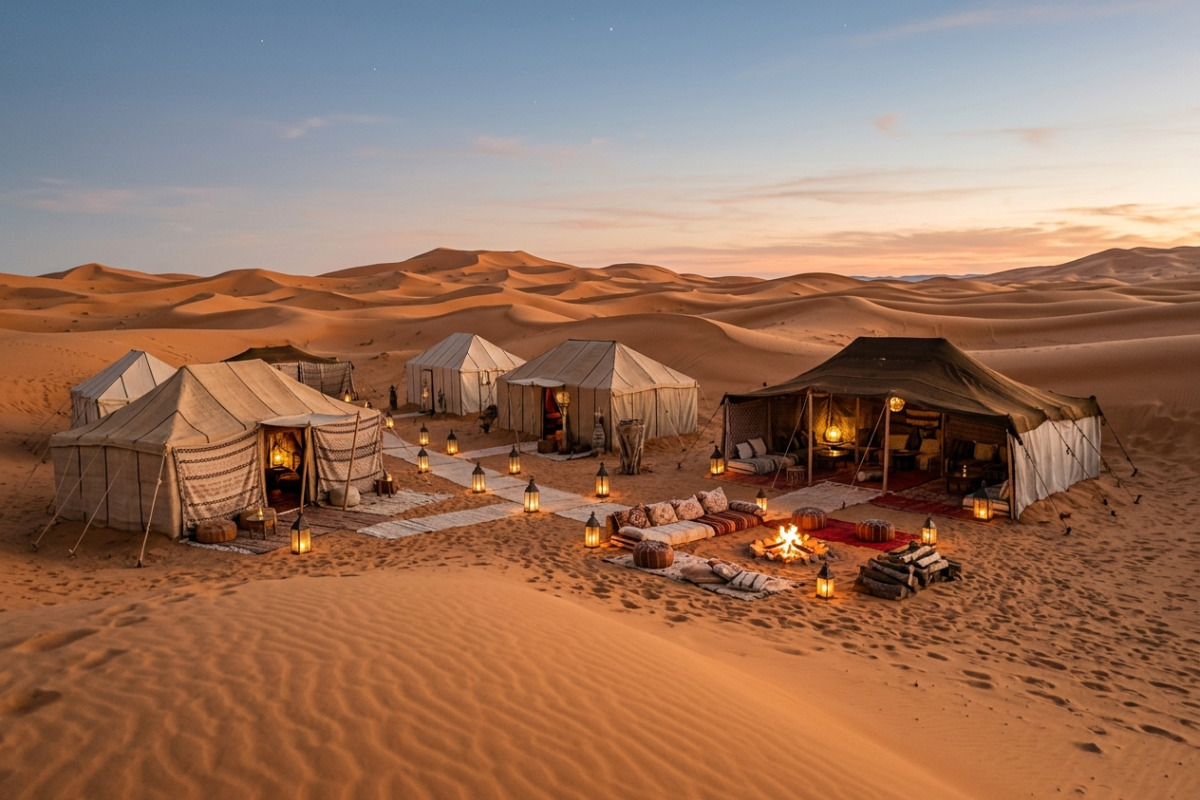
Cultural immersion continues well into the evening. Dinner in a desert camp is a communal affair, often featuring slow-cooked tagines rich with spices like cumin, saffron, and ginger, served with fresh bread baked in traditional earthen ovens. Following the meal, the silence of the night is joyfully broken by the sound of drums and castanets. Guests are invited to gather around the campfire, where guides play traditional Gnawa or Berber music. This is not a performance for tourists; it is a celebration of life, heritage, and the shared human experience under the open sky.
- Traditional Music: Rhythmic drumming that mimics the heartbeat of the desert.
- Storytelling: Tales of ancestors, nomads, and the stars passed down orally.
- Attire: The opportunity to wear a "cheich" (turban), which protects against sun and sand.
- Culinary Delights: Tasting authentic dishes prepared with limited resources but incredible flavor.
Nights Under a Canopy of Stars
Once the fire dies down and the drums fade, the true magnitude of the Sahara reveals itself. Far from the light pollution of cities, the desert sky is a revelation. It feels as though you can reach up and touch the Milky Way, which stretches across the heavens like a river of diamond dust. In the absolute darkness of the desert night, shooting stars are not a rarity but a frequent spectacle. For astrophotographers and dreamers alike, this is the pinnacle of the camping experience.
Sleeping arrangements in these camps range from basic bivouacs to luxury glamping tents equipped with real beds and en-suite bathrooms. However, regardless of the comfort level, the connection to nature remains the same. Many travelers choose to drag their mattresses outside to sleep directly under the cosmos. The air in the desert at night, especially in winter months like January, can be quite cold, but the warmth of heavy wool blankets and the sheer awe of the view make it cozy and unforgettable. Waking up to the absolute silence of the sunrise, with the dunes slowly revealing their shape again, is the perfect bookend to the night.
Planning Your Desert Adventure
To fully enjoy a camel trek and camping experience, preparation is key. The desert is an environment of extremes, and having the right gear ensures that you can focus on the beauty rather than physical discomfort. Below is a guide to help you prepare for the varying conditions you might encounter.
| Category | Essential Items | Why You Need It |
| Clothing | Loose layers, long sleeves, thermal wear (for night) | Protects against sun during the day and freezing temperatures at night. |
| Footwear | Sturdy sandals or walking shoes | Sand gets everywhere; easy removal is key, but protection is needed for rocky areas. |
| Health | Sunscreen, lip balm, hydration salts | The air is incredibly dry, and the sun is intense even in winter. |
| Tech | Power bank, camera, protective case | Camps may have limited electricity, and sand can damage lens mechanisms. |
Choosing the Right Region
Not all parts of the Sahara are the same, and choosing where to go depends on the time you have and the type of landscape you wish to see. Morocco offers some of the most accessible and stunning portions of the desert. When you explore Morocco, you will generally decide between two main dune fields: Erg Chebbi and Erg Chigaga.
Erg Chebbi, near Merzouga, is famous for its towering, orange-hued dunes that are easily accessible, making it perfect for those with limited time. The infrastructure here is well-developed, offering a range of luxury camps. On the other hand, Erg Chigaga is more remote and requires a longer off-road journey to reach. It offers a wilder, more rustic experience suited for those who want to escape the crowds completely. Both locations offer the quintessential camel trekking experience, but the atmosphere differs. Whichever route you choose, the combination of the rhythmic camel ride, the warmth of the camp fire, and the infinite starry sky creates a travel memory that resonates long after you have shaken the last grains of sand from your shoes.
Pro Tip: Book your camel trek in advance, especially if traveling during peak season (October-April). Consider travel insurance that covers activities like camel trekking. Don't forget a headlamp or flashlight for navigating the camp at night. Learn a few basic Berber phrases to enhance your cultural interactions.