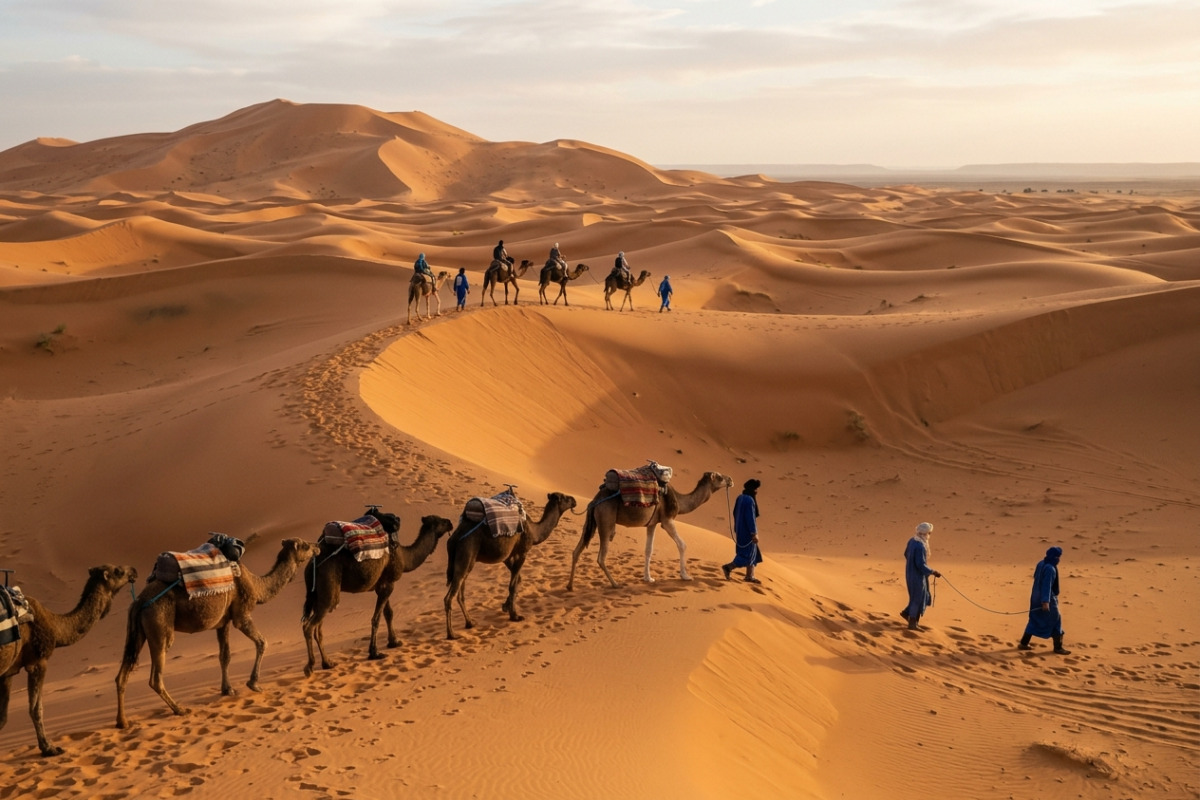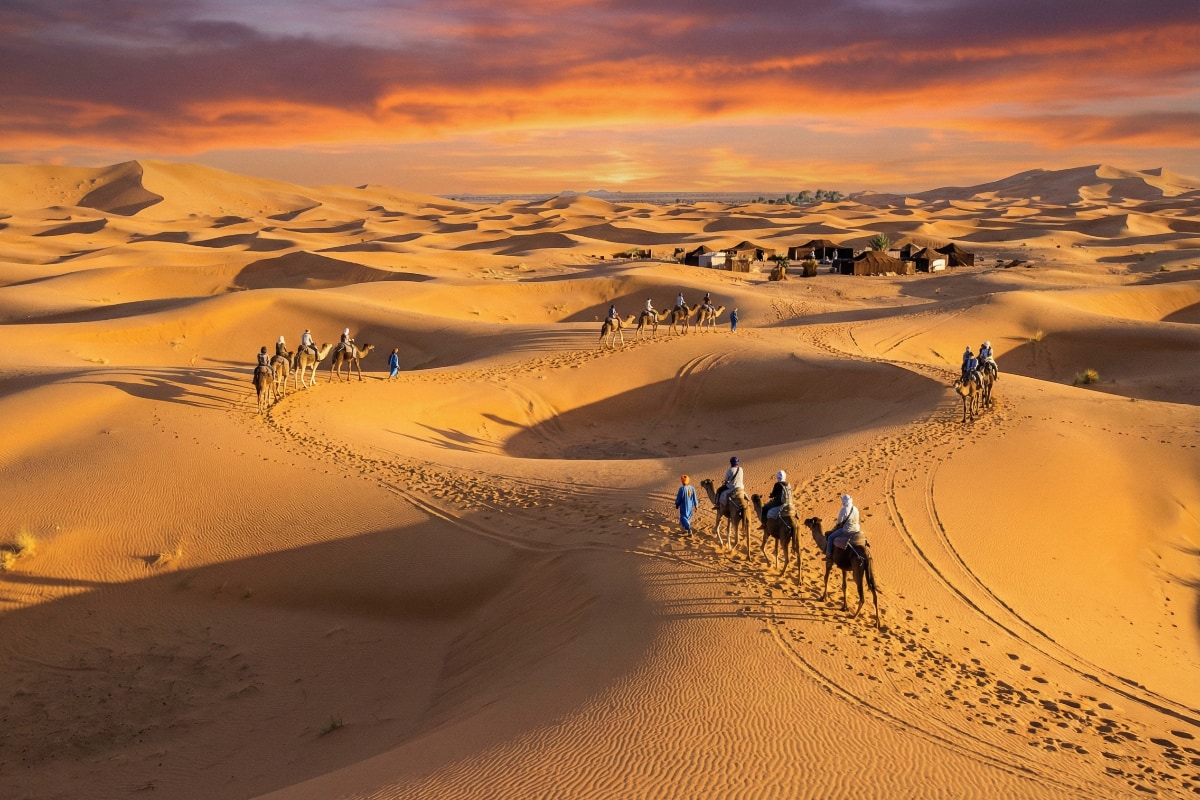
The silence of the Sahara is unlike anything else on Earth. It is a profound, heavy silence that is only broken by the rhythmic crunch of camel hooves on sand and the whispering wind shifting the dunes. For centuries, the camel caravan was the lifeline of trade across North Africa, connecting empires and cultures. Today, stepping into that history offers modern travelers a chance to disconnect from the digital noise and reconnect with nature in its most raw and majestic form. Whether you are seeking solitude, adventure, or a deep dive into nomadic culture, the desert holds a transformative power that stays with you long after you shake the sand from your shoes.
Choosing the right path for your journey is crucial, as the Sahara is not a monolith; it is a diverse tapestry of landscapes ranging from rolling golden dunes to black volcanic plateaus. As of January 2026, the infrastructure for desert tourism has become more sustainable and accessible, yet the core experience remains timeless. When you set out to Explore Morocco and its vast southern territories, you are presented with several distinct routes, each offering a different flavor of the desert.
1. Erg Chebbi (Merzouga): The Cinematic Dunes
If you have ever imagined the Sahara, you likely pictured Erg Chebbi. Located near the town of Merzouga, these are the quintessential towering orange dunes that shift color as the sun moves across the sky. Rising up to 150 meters, these dunes offer a dramatic backdrop that feels almost surreal. This route is arguably the most popular, and for good reason. The accessibility is excellent, allowing travelers to go from a comfortable hotel to the deep desert in a matter of hours.
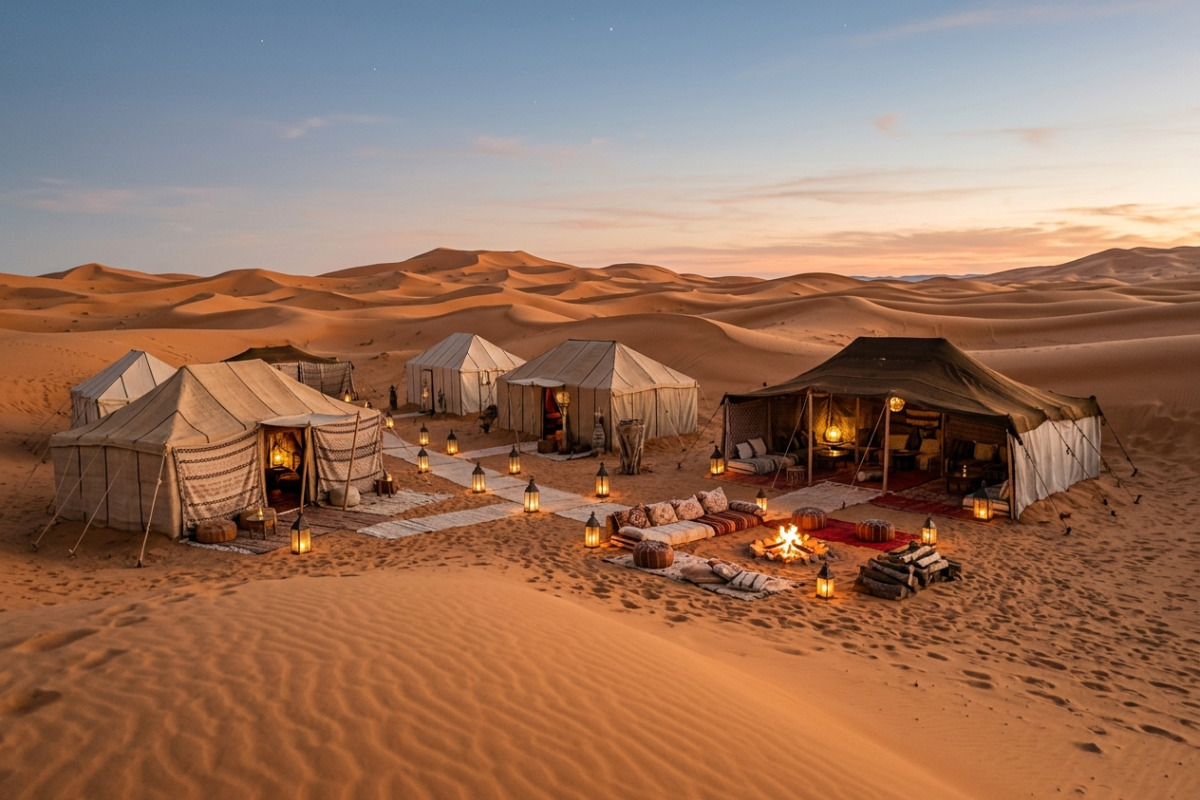
A camel trek here usually begins in the late afternoon. As your caravan ascends the ridges, the horizon expands into an endless sea of gold. The highlight of Erg Chebbi is the luxury camp experience nestled between the dunes. Here, you can enjoy traditional Gnawa music around a campfire before sleeping under a blanket of stars so thick it looks like spilled milk. While it can be busier than other routes, the sheer grandeur of the landscape makes it a must-see.
- Best for: First-time desert travelers and photography enthusiasts.
- Key Highlight: The sunrise over the highest dunes creates a spectacular shadow-play that is unmatched.
- Vibe: Accessible adventure with a touch of luxury.
- Difficulty: Easy to Moderate
- Best Time to Visit: October to April (avoiding the hottest summer months)
2. Erg Chigaga (Zagora): The Wild Frontier
For those who find Merzouga too developed, Erg Chigaga offers the antidote. Located beyond the town of Zagora and M'Hamid, this dune field is more difficult to reach, often requiring a two-hour 4x4 drive before you even meet your camels. This remoteness is its greatest asset. Erg Chigaga feels wild, untamed, and infinitely vast. The dunes here are spread out over a larger area, giving you a true sense of isolation.
Trekking in Erg Chigaga is about immersion. The silence here is deeper, and the connection to the nomadic way of life feels more authentic. The landscape is a mix of sandy dunes and hamada (stone desert), providing a varied texture to your journey. It is the perfect location for those who want to disconnect completely and experience the desert as early explorers did.
- Difficulty: Moderate to Strenuous
- Best Time to Visit: October to April
3. M’Hamid El Ghizlane: The Gateway to the End of the Road
M’Hamid is historically significant as the final oasis before the great emptiness of the Sahara begins; it was traditionally the starting point for the 52-day camel journey to Timbuktu. Trekking from M’Hamid offers a unique blend of cultural history and nature. The route often takes you through the palm groves of the Draa Valley before opening up into the arid plains.
This area is less about the height of the dunes and more about the atmosphere. It is a place of festivals and folklore, where the spirit of the desert tribes is palpable. The treks here can range from simple overnight stays to multi-day expeditions that traverse the varied terrain toward the larger dunes of Chigaga.
- Difficulty: Easy to Moderate
- Best Time to Visit: October to April
4. The White Dune (Dakhla): Where Desert Meets Ocean
Imagine riding a camel across pristine white sands with the deep blue Atlantic Ocean crashing in the background. This is the unique reality of the Dakhla region in the far south. While not the traditional "orange dune" experience, the contrast between the arid desert and the oceanic lagoon creates a visual spectacle that is rare to find anywhere else in the world.
This route is perfect for travelers who want to combine water sports like kitesurfing with their desert trekking. The climate is generally milder due to the coastal breeze, making it a pleasant option for those who struggle with intense dry heat. The "Dune Blanche" rising out of the lagoon is a geological marvel that provides a stunning vantage point.
- Difficulty: Easy
- Best Time to Visit: All year round, but best for kitesurfing between March and November.
5. Agafay Desert: The Stone Moonscape
Not everyone has the time to travel ten hours south to the sand dunes. For those based in Marrakech with limited time, the Agafay Desert offers a compelling alternative. It is important to note that Agafay is a stone desert, not a sandy one. The terrain resembles a moonscape, with rolling hills of rock and dried earth against the magnificent backdrop of the snow-capped High Atlas Mountains.
Camel trekking here is often combined with other Experiences such as quad biking or dining in stylish, eco-friendly camps. The sunset here, reflecting off the stone hills with the mountains in the distance, creates a palette of purples and pinks that is breathtakingly beautiful.
- Difficulty: Easy
- Best Time to Visit: Spring (March-May) and Autumn (September-November)
Comparison of Sahara Trekking Routes
To help you decide which adventure suits your travel style, here is a quick comparison of the top routes:
| Route | Landscape Type | Accessibility | Ideal Duration | Difficulty | Best Time to Visit |
| Erg Chebbi | Towering Orange Sand Dunes | High (Paved roads nearby) | 1-2 Nights | Easy to Moderate | October to April |
| Erg Chigaga | Wild Dunes & Vast Plains | Medium (Requires 4x4) | 2-4 Nights | Moderate to Strenuous | October to April |
| M’Hamid | Oasis, Palm Groves, Small Dunes | Medium | 1-3 Nights | Easy to Moderate | October to April |
| Dakhla | White Sand & Ocean Views | Low (Requires flight) | Half-day / 1 Night | Easy | All year round (best for kitesurfing March-Nov) |
| Agafay | Stone Desert & Hills | Very High (Near Marrakech) | Half-day / 1 Night | Easy | Spring & Autumn |
Preparing for Your Camel Trek
Embarking on a camel trek requires some preparation to ensure comfort and safety. The desert environment is extreme, with scorching days and surprisingly chilly nights, especially in winter months like January. Layering is key. You will want loose, breathable clothing that covers your skin to protect against the sun.
- The Chech (Turban): Invest in a local scarf. Your guide will teach you how to wrap it. It protects your head from the sun and your face from blowing sand.
- Hydration: You will need more water than you think. The dry air evaporates sweat instantly, so you might not realize you are dehydrating.
- Footwear: Sandals are great for camp, but closed-toe shoes or sneakers are better for the camel ride and walking on hot sand.
- Respect the Animal: Camels are sturdy and resilient, but they are living creatures. Move slowly around them and follow your guide's instructions on mounting and dismounting to ensure safety for both you and the animal.
The Lasting Impression
Whichever route you choose, the Sahara leaves a mark on your soul. It is not just about the photos you take, but the feeling of insignificance in the face of such vastness. It teaches patience and offers a rare moment of peace in a fast-paced world. As the sun dips below the horizon and the first stars appear, you will understand why travelers have been drawn to these sands for millennia.