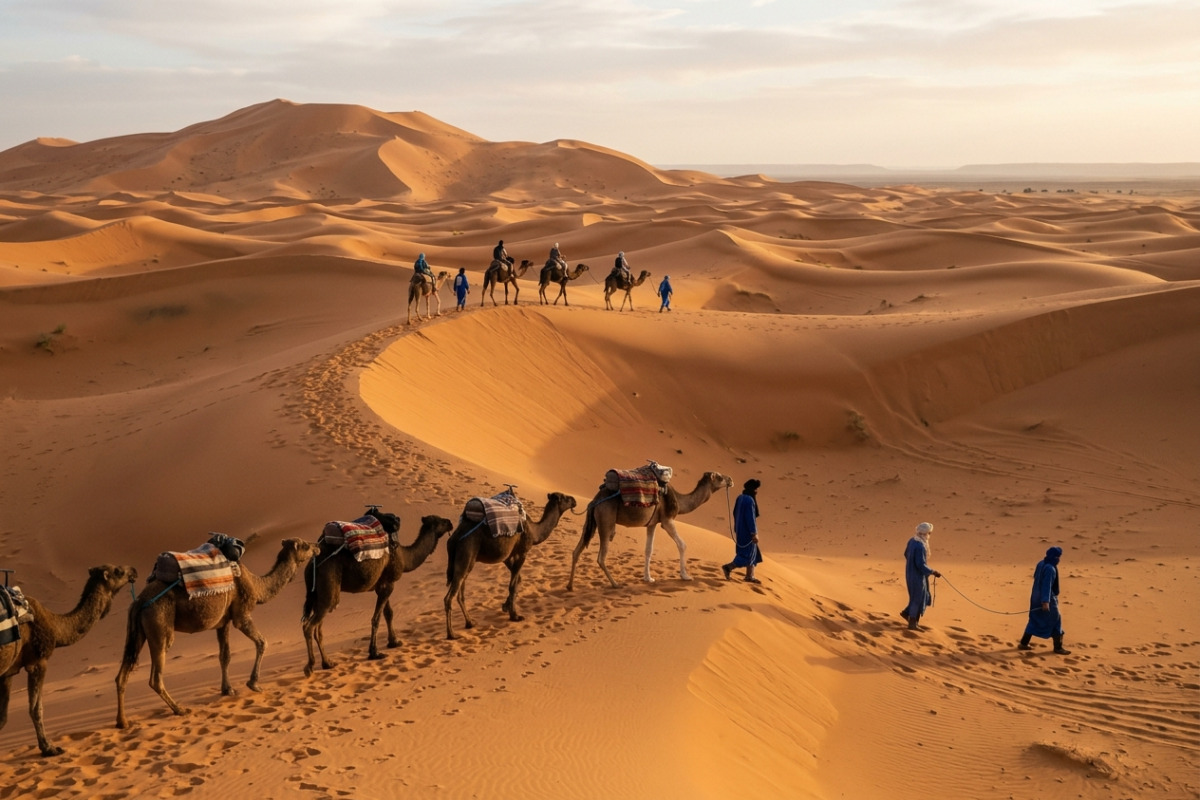
When the sun dips below the golden horizon of the dunes, painting the sky in hues of violet and burnt orange, a different kind of magic begins to stir within the desert camps of Morocco. While the landscape itself is a feast for the eyes, the aromas wafting from the kitchen tents promise a feast for the soul. Dining in the Sahara is not merely about sustenance; it is an immersion into centuries of Berber tradition, resourcefulness, and the profound hospitality that defines the region. The silence of the desert is gently broken by the rhythmic chopping of fresh herbs and the bubbling of clay pots, signaling that a culinary journey is about to commence.
For travelers venturing into these vast landscapes, the food served at desert camps often becomes one of the most cherished memories of the trip. It is cuisine born of the land—simple, hearty, and exploding with flavor. Unlike the hurried meals of modern city life, Sahara cuisine is slow. It respects the ingredients, allowing spices to marry over hours of gentle heat. Whether you are sitting on a woven rug under a canopy of stars or inside a candlelit tent, every bite tells a story of trade routes, oasis agriculture, and the nomadic way of life.
The Philosophy of Desert Gastronomy
To understand the food served in the Sahara, one must first understand the environment. Historically, nomadic tribes had to rely on non-perishable ingredients like dried fruits, nuts, grains, and spices, supplemented by fresh meat when available. Today, while logistics have improved, the core philosophy remains: respect for the ingredients and communal sharing. Meals are typically served family-style, encouraging conversation and connection among travelers.
The preparation of food in the desert is often a communal activity as well. In many luxury and traditional camps, you might witness the cooks burying bread in the sand or tending to charcoal fires with meticulous care. This connection between the earth, the fire, and the food creates a primal and satisfying dining experience that resonates deeply with visitors looking to Explore Morocco and its diverse regions. Pro Tip: Don't be afraid to ask questions about the cooking process; the chefs are often happy to share their knowledge.
The Iconic Tagine: The Heart of the Table
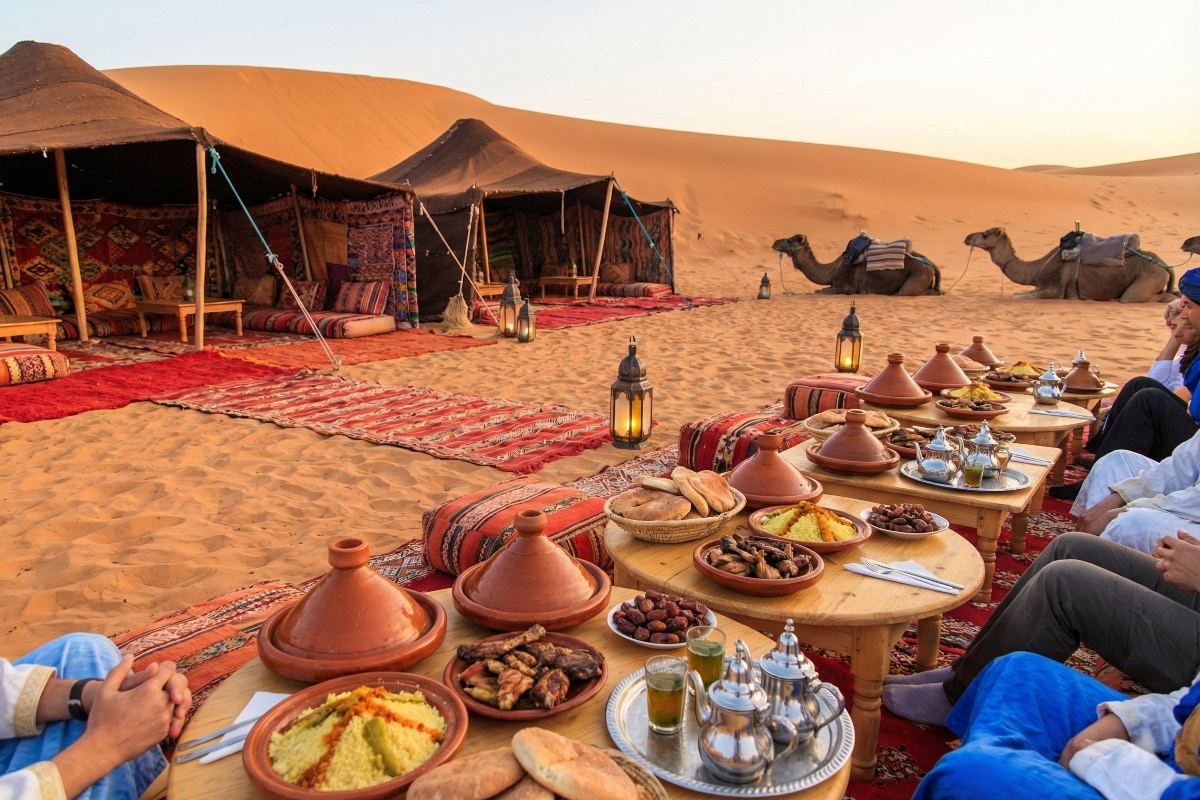
No discussion of Moroccan cuisine is complete without the tagine. The word refers to both the conical clay pot and the stew cooked inside it. In the desert, the tagine is king. The unique shape of the lid traps steam, which condenses and drips back down onto the ingredients, keeping the meat incredibly tender and the vegetables succulent without the need for excessive water—a precious resource in the Sahara.
Visitors can expect a variety of tagine preparations, each with a distinct flavor profile:
- Lamb with Prunes and Almonds: A classic combination of savory and sweet. The richness of the meat is balanced by the sweetness of dried prunes and the crunch of fried almonds, often seasoned with cinnamon and sesame seeds.
- Chicken with Preserved Lemons and Olives: A tangy, zesty dish where the fermented lemons cut through the richness of the chicken, creating a bright and aromatic flavor profile.
- Kefta (Meatball) Tagine: Minced meat balls cooked in a rich tomato sauce, often topped with eggs that are poached directly in the sauce just before serving.
- Berber Vegetable Tagine: A colorful display of seasonal vegetables—carrots, potatoes, zucchini, and turnips—arranged conically and slow-cooked with turmeric and ginger.
The Ritual of Mint Tea: 'Berber Whiskey'
Hospitality in the Sahara is synonymous with mint tea. Often jokingly referred to as "Berber Whiskey" due to its amber color and the fact that it is the primary social drink in a dry culture, mint tea is much more than a beverage. It is a ceremony. Upon arrival at a camp, or after a long camel trek, a glass of hot, sweet tea is the first thing offered to a guest.
The preparation involves Gunpowder green tea, a generous amount of fresh spearmint (or wormwood/sheba in winter), and a significant amount of sugar. The pouring method is crucial; the tea is poured from a height to create a frothy foam on the surface, which is said to keep the tea hot and prevent sand from entering the liquid. It is polite to accept at least two or three glasses. There is a local proverb regarding the three glasses served:
"The first glass is as bitter as life, the second is as strong as love, the third is as gentle as death."
Hidden Gems: Mella and Madfouna
While tagines are famous worldwide, the desert holds specific culinary secrets that are rarely found in standard restaurants. Two such delicacies are Mella (sand bread) and Madfouna.
Mella (Sand Bread)
Mella is a testament to nomadic ingenuity. Dough is kneaded and flattened, then placed directly onto a bed of hot sand and embers, covered with more hot sand and coals. It acts as a natural oven. Once baked, the bread is unearthed, the sand is dusted and scraped off, and the result is a warm, crusty bread with a distinct, earthy flavor. Watching this process is one of the most fascinating experiences available in the desert camps. Recipe Tip: To recreate a simplified version of Mella at home, bake flatbread on a pizza stone at high heat to achieve a similar crusty texture.
Madfouna (Berber Pizza)
Originating from the oasis towns like Rissani and Erfoud, Madfouna is often called "Berber Pizza," though it resembles a stuffed flatbread or pie more than a pizza. Two layers of dough encase a filling of minced meat, hard-boiled eggs, onions, almonds, and a heavy dose of spices and herbs. It is baked until golden and crispy, usually served cut into wedges. Consider it a hearty, satisfying meal perfect for sharing.
The Palette of the Sahara: Key Ingredients
The flavors of desert cuisine are complex, relying on a blend of spices and preserved ingredients. Understanding these components enhances the tasting experience.
| Ingredient | Flavor Profile | Common Usage |
| Ras el Hanout | A complex blend of up to 30 spices (cardamom, nutmeg, anise, etc.) | Used in tagines, rice dishes, and couscous for depth. |
| Preserved Lemons | Salty, sour, and intensely citrusy with a soft texture. | Essential in chicken tagines and salads. |
| Saffron | Floral, earthy, and metallic notes; imparts a yellow hue. | Used in premium dishes, rice, and tea. Sourced from Taliouine. |
| Cumin | Warm, earthy, and slightly bitter. | Often served on the table alongside salt; used on grilled meats and eggs. |
| Argan Oil | Nutty, toasted flavor. | Drizzled over breakfast breads, salads, or mixed into Amlou. |
| Dates | Sweet, caramel-like texture. | Eaten plain, stuffed, or used in savory lamb dishes. |
Breakfast in the Dunes
Waking up to the sunrise over the dunes is an ethereal experience, and the breakfast spread matches the occasion. Desert breakfasts are generally heavy on carbohydrates to provide energy for the day's explorations. You will typically find Khobz (round bread), Msemen (square, flaky pancakes), and Baghrir (spongy pancakes with a thousand holes).
These breads are accompanied by olive oil, honey, fresh goat cheese, and Amlou. Amlou is a delicious dip made from toasted almonds, argan oil, and honey—often likened to a Moroccan peanut butter. Freshly squeezed orange juice and coffee spiced with a hint of cinnamon or black pepper round out the meal, preparing travelers for a day of adventure. Traveler's Tip: Try dipping your Msemen in Amlou for a truly authentic and delicious breakfast experience.
The Atmosphere: Dining Under the Stars
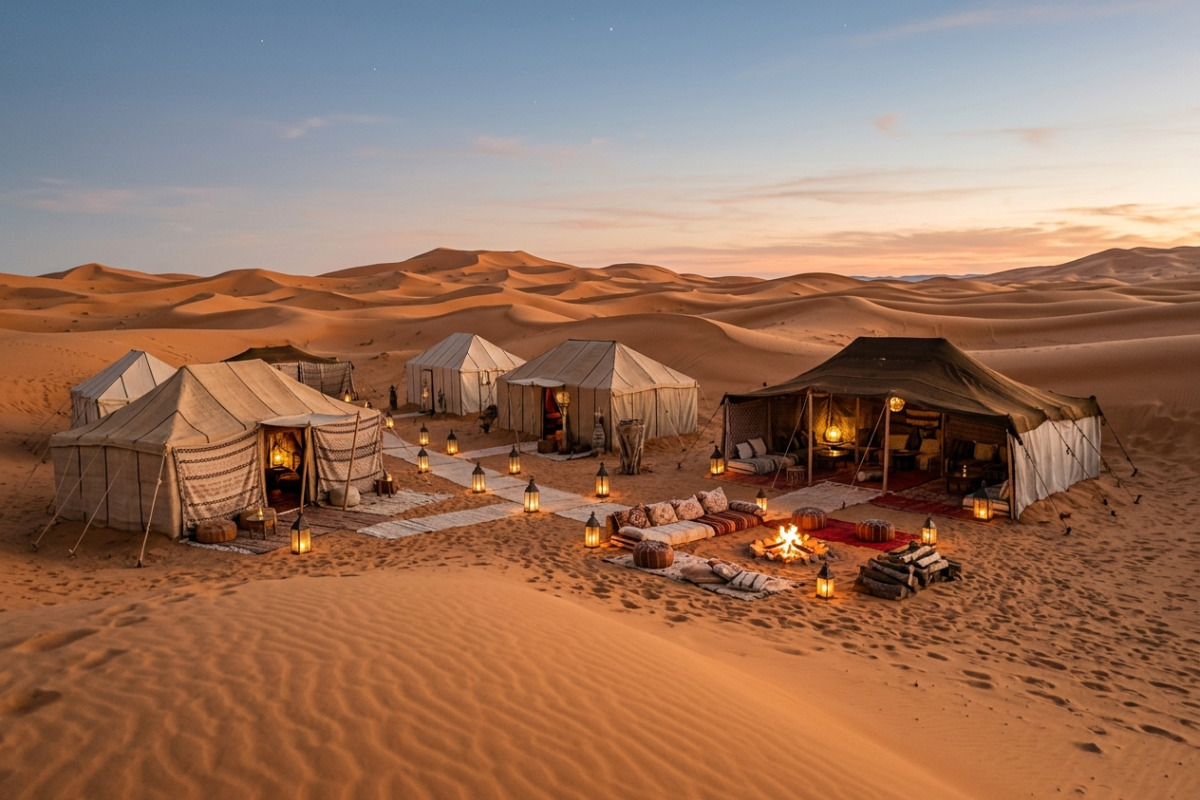
Finally, one cannot speak of Sahara cuisine without mentioning the setting. The ambiance is the final ingredient that elevates the meal. In most desert camps, dinner is served either in a large, decorated mess tent or outdoors on carpets laid over the sand. Lanterns cast dancing shadows, and a campfire usually crackles nearby.
After the meal, the evening often transitions into a musical gathering. Local staff, often of Gnawa or Berber descent, play traditional drums and castanets. Sipping the last glass of mint tea while listening to the rhythmic beats under the Milky Way creates a sensory memory that lasts a lifetime. It is a reminder that in the desert, food is not just fuel; it is a bridge between cultures and a celebration of life in one of the most beautiful places on Earth.