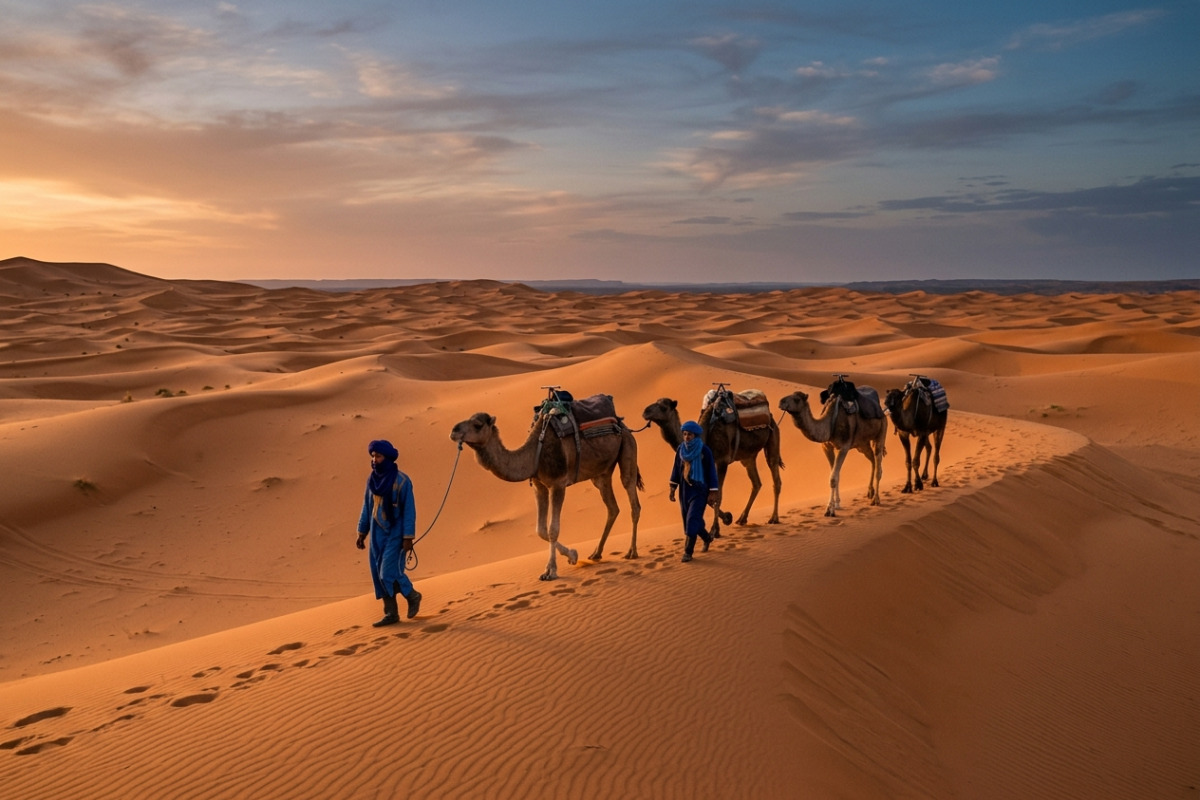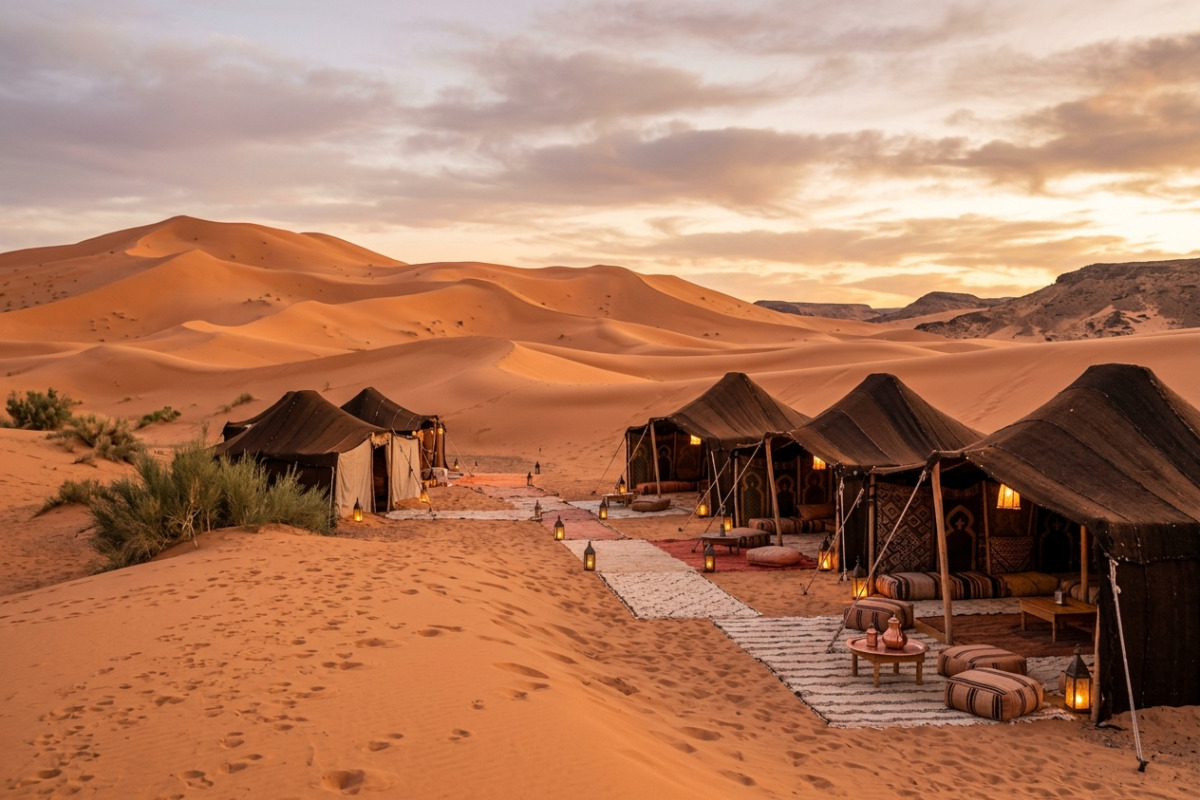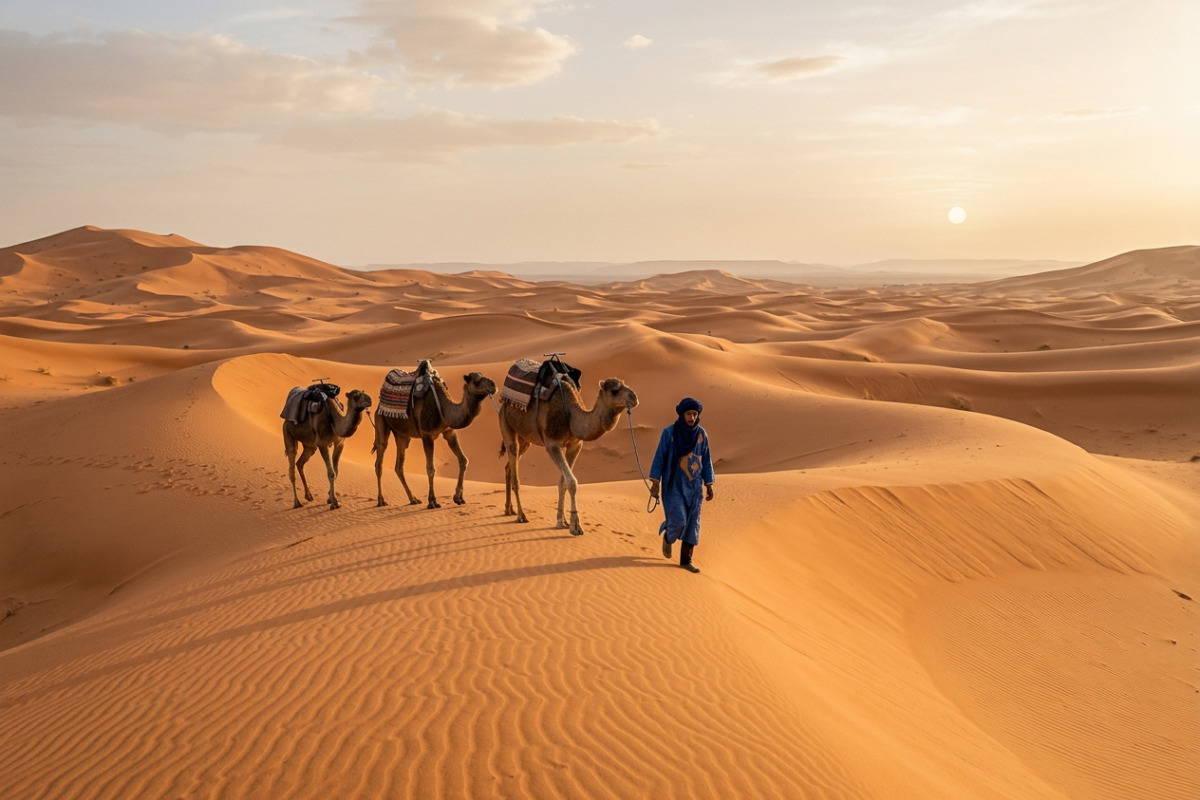
The Moroccan Sahara, often celebrated for its breathtaking landscapes and adventurous camel treks, is also a treasure trove of cultural stories waiting to be discovered. Beyond the stunning dunes and starry skies, the region is home to a diverse tapestry of traditions and practices that define its unique identity. This exploration of Saharan culture delves into the lesser-known narratives that enrich the experience of this remarkable desert.
Traditions Passed Down Through Generations
At the heart of Saharan life are the traditions that have been passed down through countless generations. These customs are not merely rituals; they are the lifeblood of the community, providing a sense of identity and continuity. From storytelling around the campfire to the intricate art of weaving, these practices reflect both the resilience and creativity of the Saharan people.
For instance, the art of carpet weaving is not just a craft; it embodies the history and stories of the Berber tribes. Each pattern and color tells a story, often depicting significant cultural symbols or events. Engaging with local artisans during your travels can provide insight into these stories, enhancing your understanding of the region’s rich heritage.
The Role of Music in Saharan Culture
Music plays an integral role in the cultural landscape of the Moroccan Sahara. Traditional music serves as a means of expression, bringing people together during celebrations and communal gatherings. The sound of the guembri, a three-stringed instrument, resonates throughout the desert, echoing the joys and struggles of the nomadic lifestyle.
Festivals such as the Festival of the Saharan Music celebrate this vibrant musical heritage, showcasing local talents and creating a space for cultural exchange. Visitors to the Sahara are encouraged to immerse themselves in these musical experiences, which can be transformative and deeply moving. Engaging with local musicians not only supports the preservation of these art forms but also allows for a deeper connection with the community.
Culinary Heritage: A Flavorful Journey
The culinary traditions of the Sahara are as diverse as its people. Each dish tells a story, reflecting the agricultural practices and local ingredients that define the region. Traditional meals, often shared among family and friends, foster a sense of community and connection.
One must-try dish is tagine, a slow-cooked stew that varies from region to region. Ingredients such as lamb, vegetables, and an array of spices come together to create a flavor experience that is uniquely Saharan. Participating in a cooking class or sharing a meal with local families can reveal the significance of these culinary practices and their role in Saharan culture.
Embracing Cultural Encounters
Traveling through the Moroccan Sahara offers abundant opportunities for cultural encounters that enrich your journey. Engaging with the local tribes not only enhances your understanding of their way of life but also fosters mutual respect and appreciation. Many visitors find that these interactions are the highlight of their trip.
Consider joining a guided tour that focuses on cultural exchange or participating in community-led initiatives that support local traditions. These experiences create lasting memories and allow you to contribute positively to the communities you visit.
Conclusion: Your Cultural Adventure Awaits
The Moroccan Sahara is more than just a beautiful desert landscape; it is a living canvas of stories, traditions, and culinary delights. As you plan your journey, remember to seek out these cultural experiences that will deepen your connection to the region. For a comprehensive guide to planning your adventure, explore our Sahara experiences and immerse yourself in the rich cultural heritage of this extraordinary destination.