Stepping into the Sahara Desert feels like entering a different world, one where time slows down and the landscape stretches into an infinite horizon of gold and ochre. For a photographer, whether amateur or professional, the Sahara offers a canvas unlike any other on Earth. The interplay of light and shadow across the dunes, the stark contrast between the deep blue sky and the orange sand, and the ethereal glow of desert camps at twilight create opportunities for breathtaking imagery. However, capturing the true essence of this environment requires more than just pointing and shooting; it demands an understanding of light, patience, and a respect for the rugged elements that define this majestic wilderness.
The magic of the Sahara isn't just in its vastness, but in the intimate details found within the luxury camps and the shifting sands that surround them. As you prepare for your journey, understanding how the desert behaves is crucial to coming home with a portfolio that truly reflects the emotion of the experience. From the soft, painting-like quality of the morning sun to the crystal-clear brilliance of the Milky Way at night, every hour offers a new perspective. This guide is designed to help you navigate the unique challenges of desert photography and unlock the secrets to capturing images that resonate with the soul of the Sahara.
Understanding the Dance of Desert Light
Lighting is the single most critical factor in desert photography, acting as the primary sculptor of the dunes. In the middle of the day, the sun in the Sahara can be incredibly harsh, flattening the landscape and washing out the rich colors that make the desert so iconic. To truly capture the texture and depth of the sand, you must become a devotee of the 'Golden Hour'—the brief window shortly after sunrise and just before sunset. During these times, the low angle of the sun casts long, dramatic shadows that accentuate the ripples in the sand, turning a flat image into a three-dimensional masterpiece of contrast and form.
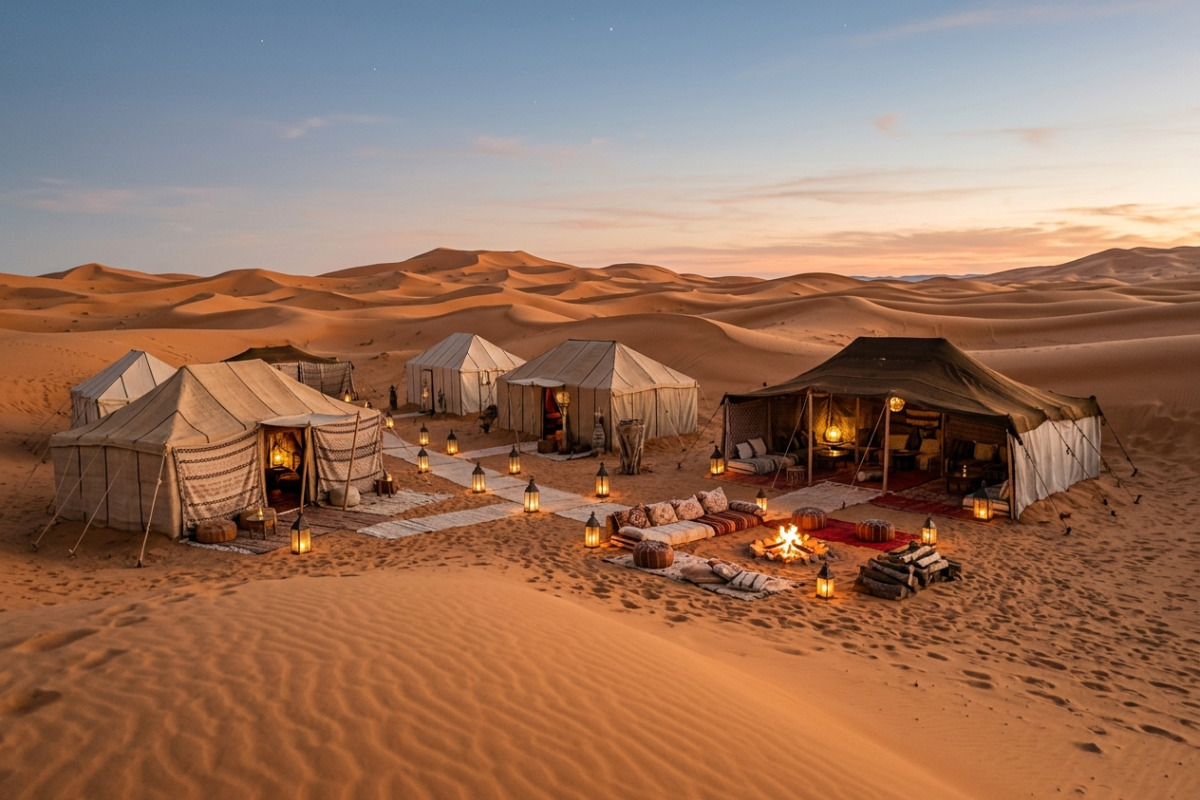
As the sun dips below the horizon, do not be in a haste to pack away your camera gear, for the show is far from over. The 'Blue Hour'—that magical twilight period before total darkness—offers a soft, cool light that contrasts beautifully with the warm, artificial lights of the desert camps. This is the perfect time to capture the silhouette of camels against a gradient sky or the glowing lanterns of a Berber tent. The transition from the fiery reds of sunset to the deep indigos of twilight happens quickly in the desert, so having your composition scouted beforehand is essential for success.
Composition Techniques for Endless Dunes
One of the biggest challenges photographers face in the Sahara is the sheer scale of the landscape, which can sometimes result in images that feel empty or lacking in focus. To combat this, utilize the technique of 'leading lines' by finding the sharp ridges of the dunes and using them to guide the viewer's eye through the frame. The S-curve of a wind-swept dune is a classic compositional tool that adds elegance and movement to a static image. Look for patterns in the sand ripples in the foreground to add depth and interest, ensuring that the viewer feels as though they can reach out and touch the texture of the desert floor.
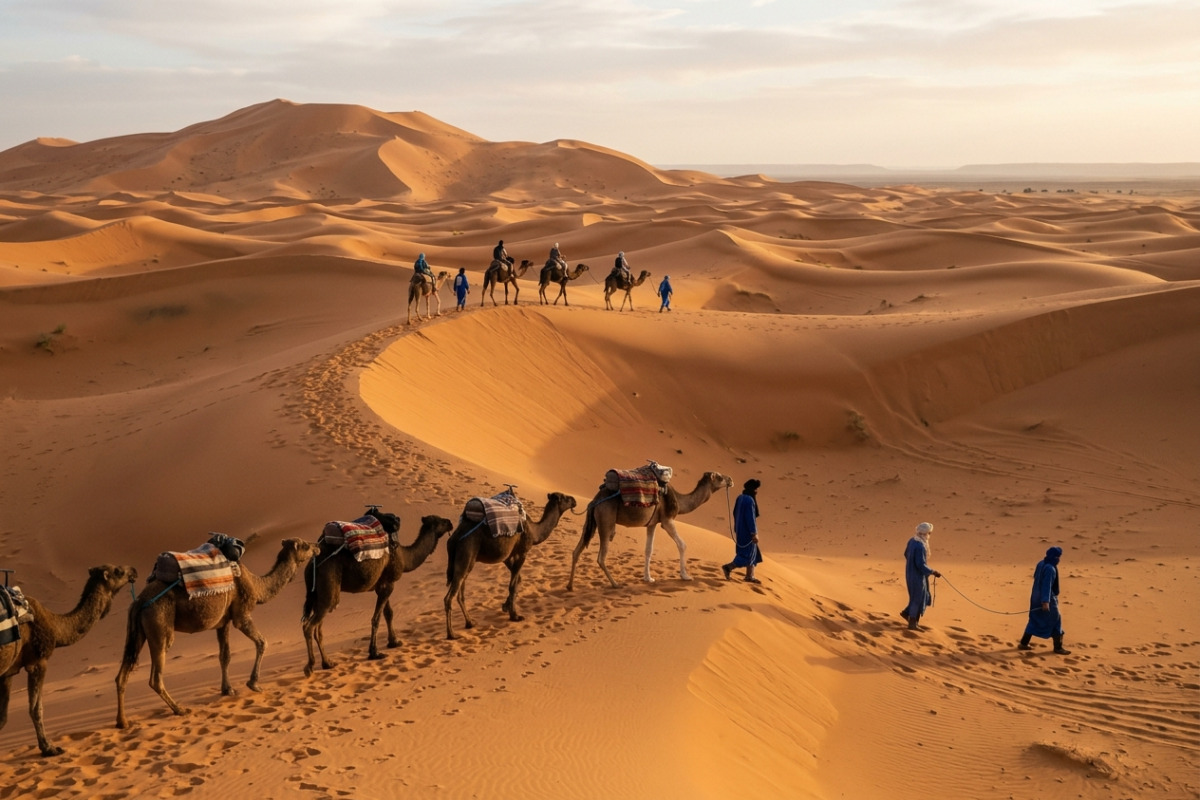
Another effective method to convey the grandeur of the Sahara is to incorporate a sense of scale into your photographs. Without a reference point, a massive dune can look like a small pile of sand; adding a human figure, a camel train, or a solitary tree instantly provides context and highlights the immensity of the surroundings. When you Explore Morocco and its diverse desert regions, look for these solitary elements that tell a story of isolation and resilience. Positioning a subject at the intersection of the rule of thirds grid can balance the negative space of the sky and sand, creating a harmonious and compelling composition. Pro Tip: Try shooting from a low angle to emphasize the height of the dunes and make your subject appear more imposing against the landscape. Alternatively, use a drone to capture unique aerial perspectives of the seemingly endless sand formations.
Mastering Night Photography and Starry Skies
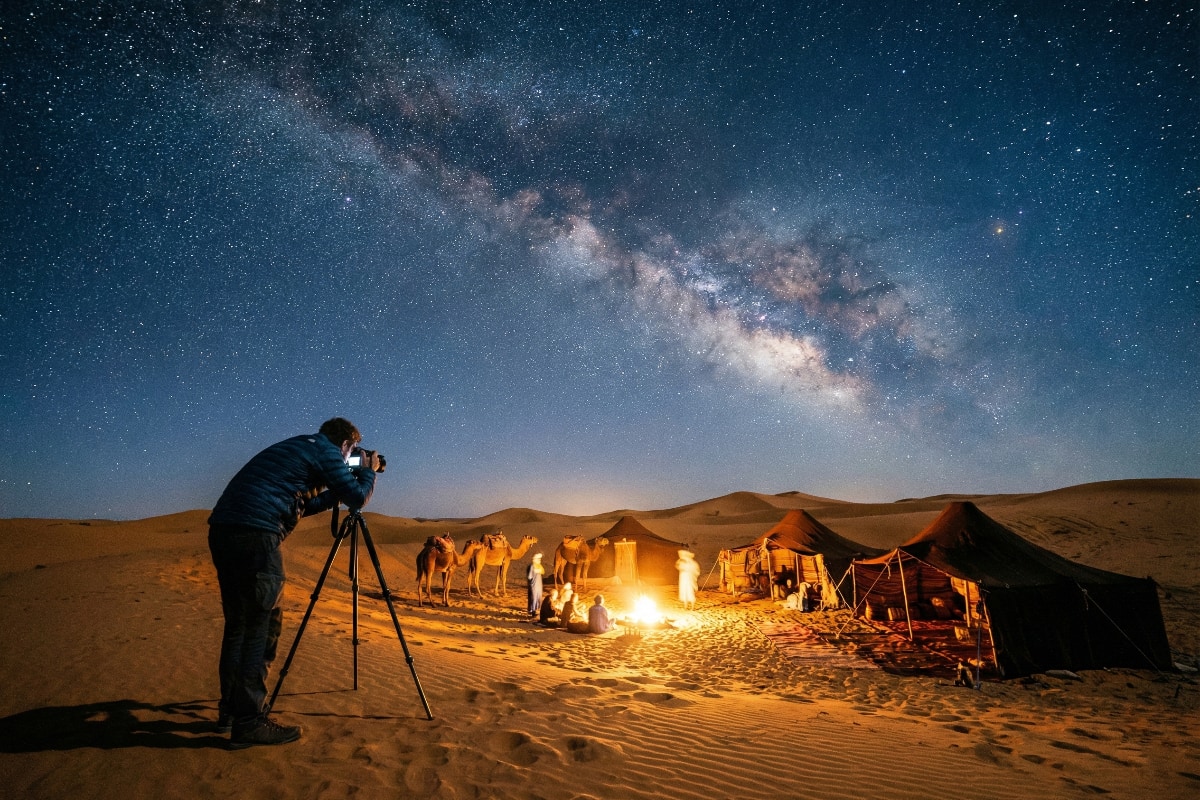
There are few places on Earth where the night sky is as clear and overwhelming as it is in the Sahara Desert. Far from the light pollution of modern cities, the stars appear to pop out of the darkness, making astrophotography a highlight of any desert trip. To capture the Milky Way, you will need a sturdy tripod, a wide-angle lens with a fast aperture (f/2.8 or lower), and a camera capable of handling high ISO settings. The key is to let in enough light to see the stars without keeping the shutter open so long that the earth's rotation causes them to blur into trails—usually, an exposure between 15 to 25 seconds is ideal depending on your focal length.
Incorporating the desert camp into your night shots adds a layer of narrative and warmth to the cold beauty of the cosmos. Try 'light painting' by using a flashlight to gently illuminate a tent or a dune in the foreground while the shutter is open for the sky. This technique requires experimentation, but the result is a stunning juxtaposition of the cozy, inviting camp against the infinite, ancient universe above. Be mindful of other guests and keep your lights low; often, the ambient glow from the campfires is enough to light the foreground naturally. For pinpoint stars, use the '500 rule' (500 divided by your focal length = maximum exposure time in seconds). Also, consider using a star tracker for longer exposures and even sharper star images. Remember to shoot in RAW format to retain maximum detail for post-processing.
Essential Gear and Protection Strategy
The Sahara is a hostile environment for delicate electronic equipment, with fine sand being the arch-enemy of cameras and lenses. It is imperative to avoid changing lenses while out in the open dunes; the wind can carry microscopic grains of sand into your sensor in an instant. If you must change lenses, do so inside a sealed tent or bag, and always turn your back to the wind. Carrying a simple cleaning kit with a rocket blower and a microfiber cloth is non-negotiable for keeping your front element clean throughout the day.
Choosing the right equipment before you depart is just as important as knowing how to use it. While a wide-angle lens is essential for landscapes and stars, a telephoto lens (such as a 70-200mm) is surprisingly useful in the desert. It allows you to isolate specific details, compress the distance between dunes to make them look more layered, and capture candid portraits from a distance without intruding on the moment. Below is a quick reference guide for packing your camera bag for a desert expedition:
| Item | Why It Is Essential | Pro Tip |
| Wide-Angle Lens | Capturing the vastness of landscapes and the Milky Way. | Look for f/2.8 aperture for night shots. |
| Telephoto Lens | Compressing dune layers and capturing distant subjects. | Great for abstract patterns in the sand. |
| Sturdy Tripod | Crucial for low-light, sunrise, and astrophotography. | Wrap legs in plastic to prevent sand damage. |
| Polarizing Filter | Deepens the blue of the sky and reduces glare on sand. | Don't over-polarize; check the sky gradient. |
| Lens Blower | Removes dust without touching the glass. | Never wipe sand; blow it off first. |
Capturing the Essence of Camp Life
While the landscapes are undeniable scene-stealers, the human element of a desert expedition is equally photogenic and rich with storytelling potential. The immersive experiences found in desert camps—from the preparation of traditional mint tea to the rhythmic drumming around the campfire—provide intimate subjects that contrast with the barren landscape. Focus on details: the intricate patterns of a Berber rug, the steam rising from a hot tagine, or the texture of the heavy fabric of a turban. These close-up shots provide a necessary visual break from the wide landscape images and help weave a complete narrative of your journey.
When photographing people, whether they are your travel companions or the local guides, always ask for permission and engage with them first. The best portraits come from a place of connection rather than observation. In the soft light of the camp, candid moments of laughter or quiet contemplation often yield the most powerful images. Remember that your photos should transport the viewer, making them feel the warmth of the fire and the silence of the desert night. By combining technical precision with emotional awareness, your Sahara portfolio will be a timeless collection of memories.