Stepping into the Sahara Desert is akin to walking onto a different planet, one where the landscape shifts with the wind and the silence is as profound as the horizon is distant. For photographers, this vast expanse of sand and stone offers a canvas that is both challenging and incredibly rewarding, presenting a play of light and shadow that changes minute by minute. Whether you are a seasoned professional with a bag full of prime lenses or an enthusiastic hobbyist looking to capture the memory of a lifetime, the desert demands a specific approach to truly do it justice. The sheer scale of the dunes, the intensity of the sun, and the richness of the local culture create a trifecta of photographic opportunities that are unrivaled anywhere else on Earth.
The allure of the desert lies not just in its emptiness, but in the intricate details that reveal themselves to the patient observer. From the ripple patterns formed by the wind on the face of a dune to the vibrant indigo distinctiveness of a nomad's tagelmust against the orange sand, every direction offers a new composition. As we move through January 2026, the winter air in the desert provides exceptional clarity, stripping away the heat haze of summer and allowing for crisp, high-definition images that stretch for miles. However, capturing the soul of the Sahara requires more than just pointing and shooting; it requires understanding the environment, respecting the elements, and mastering the light.
Chasing the Golden Light: Timing is Everything
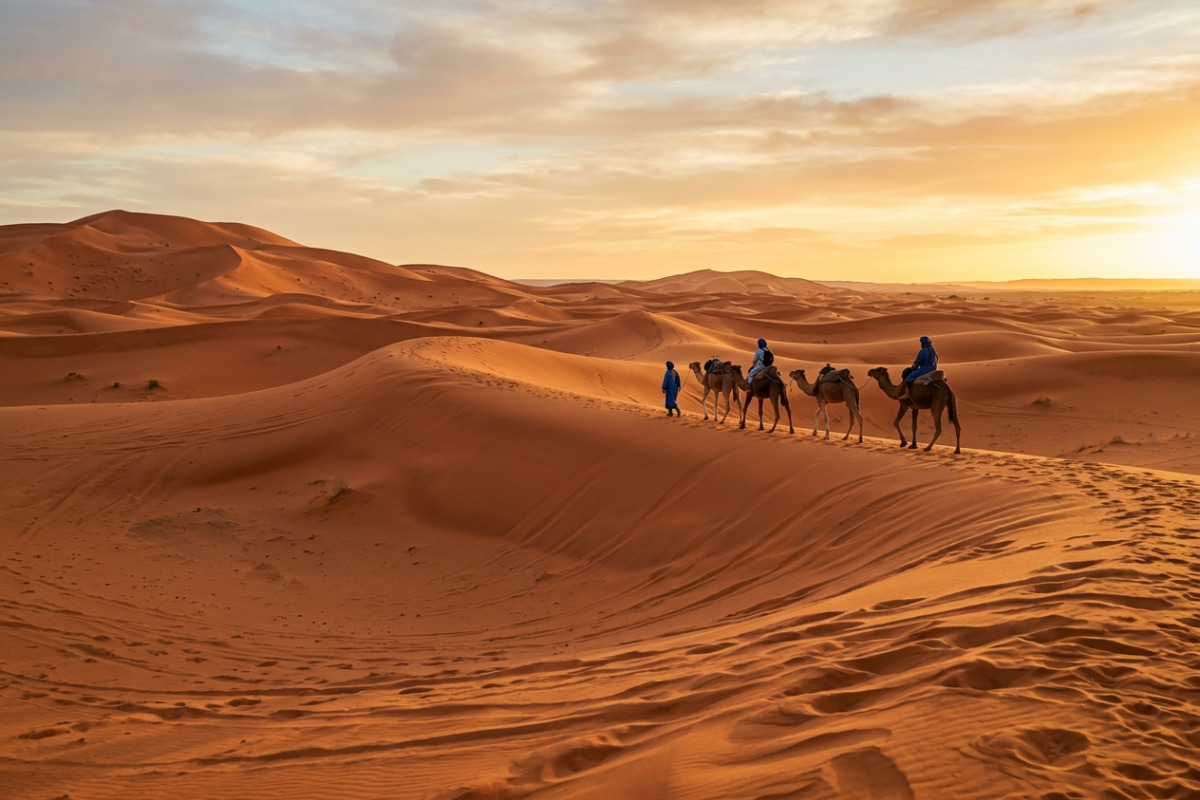
In landscape photography, light is the primary ingredient, and nowhere is this more true than in the Sahara. The midday sun in the desert is notoriously harsh, creating deep, unflattering shadows and washing out the vibrant colors of the sand, turning the majestic gold into a flat beige. To capture the dramatic contours and the velvety texture of the dunes, you must be willing to sacrifice sleep and embrace the edges of the day. The hour immediately following sunrise and the hour before sunset—known as the Golden Hour—bathes the landscape in a warm, low-angled light that accentuates every ridge and ripple, adding depth and three-dimensionality to your images.
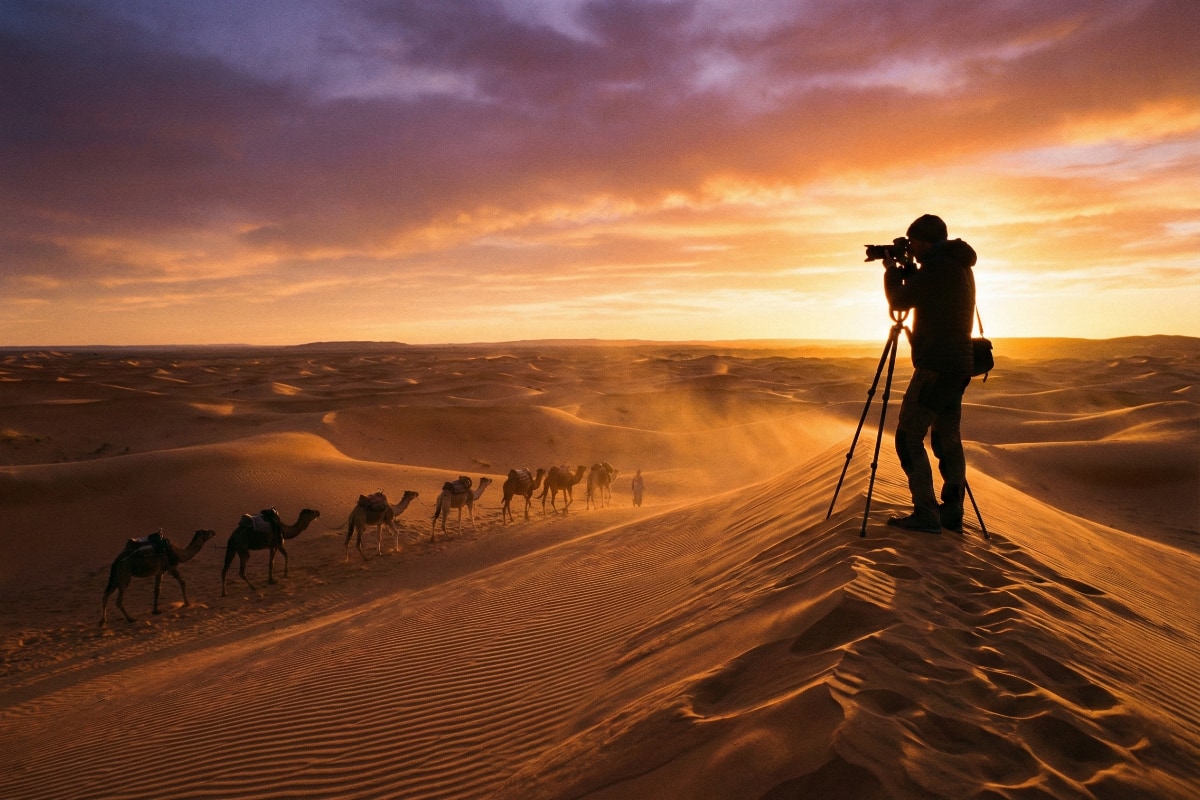
Beyond the Golden Hour lies the magical Blue Hour, the brief period of twilight before the sun breaks the horizon or just after it dips below. During this time, the sky takes on a deep, rich blue hue that contrasts beautifully with the cooling warm tones of the sand. This is the perfect time to set up a tripod and experiment with longer exposures, capturing the ethereal transition from day to night. Consider using a narrow aperture (f/8 to f/16) to maximize depth of field and ensure sharpness throughout the scene. It is during these quiet moments that the desert feels most alive, and the soft, diffused light allows for moody, atmospheric shots that convey the solitude and mystery of the region.
Iconic Locations and Composition Strategies
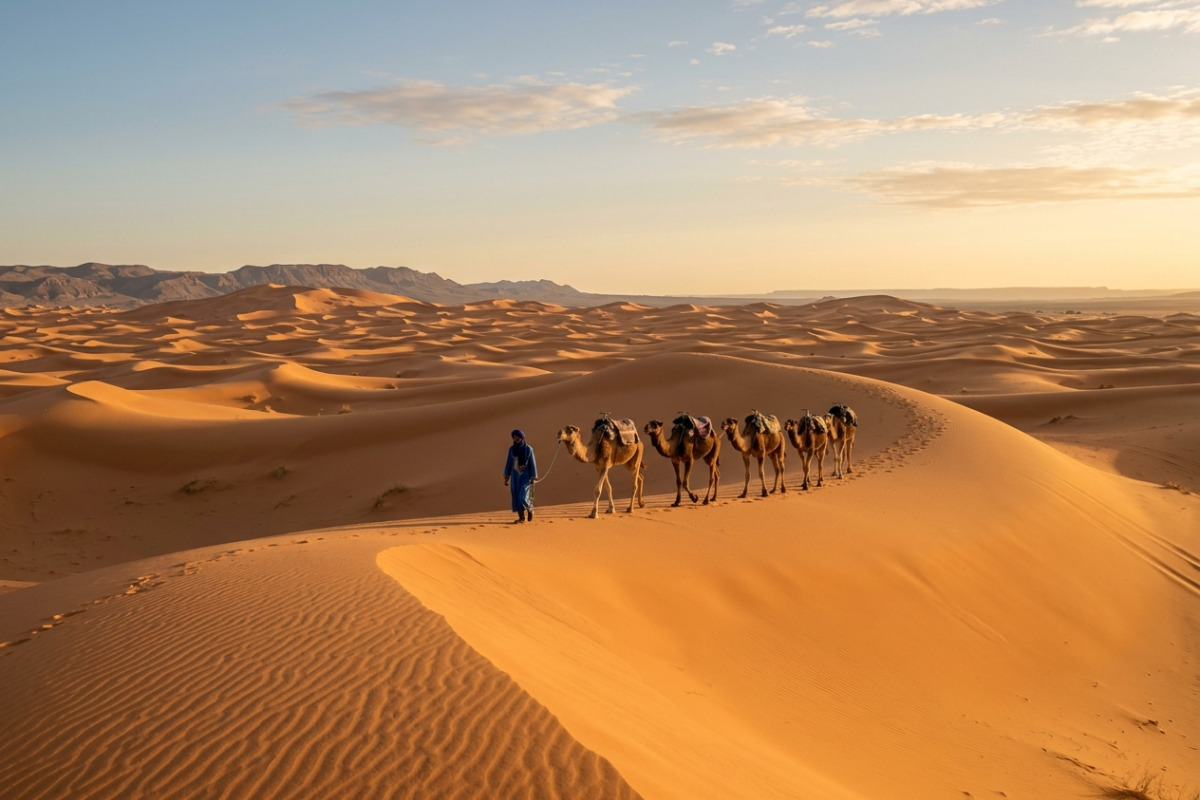
While the entire desert is photogenic, certain regions offer more dramatic landscapes than others. The towering dunes of Erg Chebbi near Merzouga are legendary among photographers for their accessibility and their impressive height, often reaching up to 150 meters. When you plan to Explore Morocco, prioritizing these vast dune fields allows you to experiment with scale and abstraction. A common mistake is trying to capture everything in one frame, which can often flatten the image; instead, look for leading lines created by the dune ridges to draw the viewer’s eye into the photo. Incorporating a point of interest, such as a solitary acacia tree, a passing camel caravan, or a walking figure, provides a necessary sense of scale against the overwhelming vastness.
Another compositional technique vital for desert photography is the use of layers. The Sahara is rarely a single flat plane; it is a series of receding ridges and valleys. By using a telephoto lens to compress the distance, you can stack these layers on top of one another, creating a graphic, almost abstract pattern of light and dark. Don't forget to look down at your feet as well; the wind creates fascinating geometric patterns in the sand that can serve as compelling foreground interest or abstract macro shots. The juxtaposition of textures—soft sand against jagged rock or dried mud—adds a tactile quality to your portfolio.
Essential Gear and Protecting Your Equipment
The desert environment is hostile to electronic equipment, with fine sand and heat posing significant risks to your camera gear. Sand grains can easily work their way into lens barrels, sensor chambers, and tripod legs, potentially causing expensive damage. It is crucial to minimize lens changes while outdoors; if you must change a lens, do so inside a vehicle or a tent, and turn your back to the wind. Carrying a comprehensive cleaning kit is non-negotiable, but prevention is always better than the cure. Using a high-quality UV filter or a clear protective filter on every lens creates a physical barrier against blowing sand and scratches.
Beyond protection, selecting the right tools will elevate your imagery. A polarizing filter is perhaps the most valuable accessory for desert photography, as it deepens the blue of the sky and increases the contrast between the dunes and the heavens. Below is a quick guide to the essential gear you should consider packing for your Sahara expedition:
| Gear Item | Why It Is Essential |
| Wide-Angle Lens (16-35mm) | Perfect for capturing the vastness of the landscape and emphasizing foreground textures like sand ripples. |
| Telephoto Lens (70-200mm) | Ideal for compressing dune layers, isolating subjects, and shooting abstract patterns from a distance. |
| Sturdy Tripod | Essential for low-light situations, sunrise/sunset shots, and astrophotography to ensure sharp images. |
| Circular Polarizer (CPL) | Cuts through glare, darkens blue skies, and enhances the natural saturation of the sand. |
| Air Blower & Microfiber Cloths | Critical for removing fine dust from lenses and sensors without scratching the glass. |
Capturing Culture and Human Connection
The Sahara is not just a barren landscape; it is home to the Amazigh (Berber) people, whose culture is as resilient as the environment they inhabit. Photographing people requires a different set of skills, primarily centered around respect and communication. It is essential to build a rapport before lifting your camera; a simple greeting in Tashelhit (a local Berber dialect) or sharing a cup of tea can go a long way. Learning a few basic phrases shows respect and willingness to connect. Many locals are private people, and taking photos without permission is considered rude and invasive. Always ask for permission before taking someone's picture, and be prepared to offer a small payment in return, especially if they are posing specifically for you. Explain your purpose and how the images will be used.
When photographing cultural moments, focus on the details that tell a story: the pouring of mint tea from high above, the intricate weaving of a rug, or the preparation of bread in the sand. Candid photography often yields the most powerful results, capturing the natural interactions and daily rhythms of desert life. If you are shooting portraits, pay attention to the lighting; open shade is your friend, as direct sunlight can cause harsh shadows on faces. Use a reflector to bounce light into shadows and create a more flattering image. Remember that your camera is a bridge to connection, not a barrier, and the memories of the interactions often outlast the images themselves. Be mindful of cultural sensitivities; certain religious practices or ceremonies may be off-limits to photography. When in doubt, ask a local guide for advice.
The Magic of the Night Sky
As the sun sets and the colors fade, the Sahara reveals its second act: a night sky of unparalleled clarity. Far from the light pollution of modern cities, the desert offers some of the best astrophotography opportunities in the world. The Milky Way stretches across the sky with visible structure and depth, appearing almost bright enough to touch. To capture this, you will need a fast, wide-angle lens (f/2.8 or wider) and a tripod that can withstand the desert breeze. Experimenting with light painting—using a flashlight to briefly illuminate a foreground element like a dune or a tree while the shutter is open—can add a surreal and artistic touch to your starscapes.
Astrophotography in the desert is a test of patience and technique. You will likely be shooting at high ISO settings (1600-3200) and exposure times ranging from 15 to 25 seconds. Use the "500 rule" (500 divided by your focal length) to determine the maximum exposure time before stars start to trail. It is important to check your focus manually by zooming in on a bright star in your live view, as autofocus will not work in the dark. Consider using a star tracker to compensate for the Earth's rotation and allow for longer exposures, resulting in sharper stars and more detailed Milky Way images. The silence of the desert night, under a canopy of a billion stars, provides a meditative experience that complements the technical process of photography. These images serve as a reminder of our small place in the universe, a feeling that the Sahara evokes effortlessly.
Final Thoughts for the Desert Photographer
Photography in the Sahara is a journey of discovery, pushing both your technical limits and your creative vision. It teaches you to look for beauty in simplicity, to be patient with the light, and to respect the raw power of nature. Whether you are capturing the grand sweep of the dunes or the intimate smile of a local guide, the images you create will be a testament to the enduring magic of this unique corner of the world. Pack your gear, prepare for the sand, and get ready to capture the timeless beauty of the Sahara.