Standing amidst the endless rolling dunes of the Sahara, the silence is so profound that you can almost hear the shifting of the sands. It is a landscape of stark beauty, ancient history, and incredible resilience. However, as we move through January 2026, the fragility of this ecosystem has never been more apparent. For the modern traveler, the call of the desert is no longer just about adventure; it is about stewardship. Visiting this majestic environment brings with it a responsibility to protect it for future generations, ensuring that the golden sands and the communities that call them home remain unspoiled.
Eco-friendly travel in the Sahara goes beyond simply refusing a plastic straw; it requires a fundamental shift in how we approach our journey. From the water we consume to the transport we choose, every decision leaves a mark on this delicate environment. The desert flora and fauna have spent millennia adapting to harsh conditions, yet they are surprisingly vulnerable to human interference. By adopting sustainable habits, we not only minimize our negative impact but also deepen our connection to the land, transforming a simple vacation into a meaningful exchange with nature.
Understanding the Fragile Desert Ecosystem
Many travelers mistakenly view the desert as a barren wasteland where nothing can be damaged because "it's just sand." This misconception is dangerous. The Sahara is a biodiverse habitat teeming with life, much of which is nocturnal or hidden beneath the surface. Small shrubs like the Acacia and Tamarisk hold the soil together, preventing massive erosion, while elusive creatures like the Fennec fox and various reptiles rely on undisturbed burrows for survival. When off-road vehicles veer off established tracks, they can destroy these habitats in seconds, causing damage that takes decades to heal.
Furthermore, the desert's water sources are its most precious and scarce resource. Oases and underground aquifers are being stressed by climate change and increased tourism demand. Understanding that your presence puts pressure on these resources is the first step toward responsible travel. It is vital to approach the desert with a mindset of conservation, recognizing that we are guests in a land that demands our respect and caution.
Principles of "Leave No Trace" in the Dunes
The "Leave No Trace" philosophy is the cornerstone of sustainable trekking, and it becomes even more critical in an arid environment where waste does not decompose quickly. In the dry heat of the Sahara, an orange peel can last for months, and plastic can last forever. Adhering to strict waste management protocols is non-negotiable for the eco-conscious traveler.
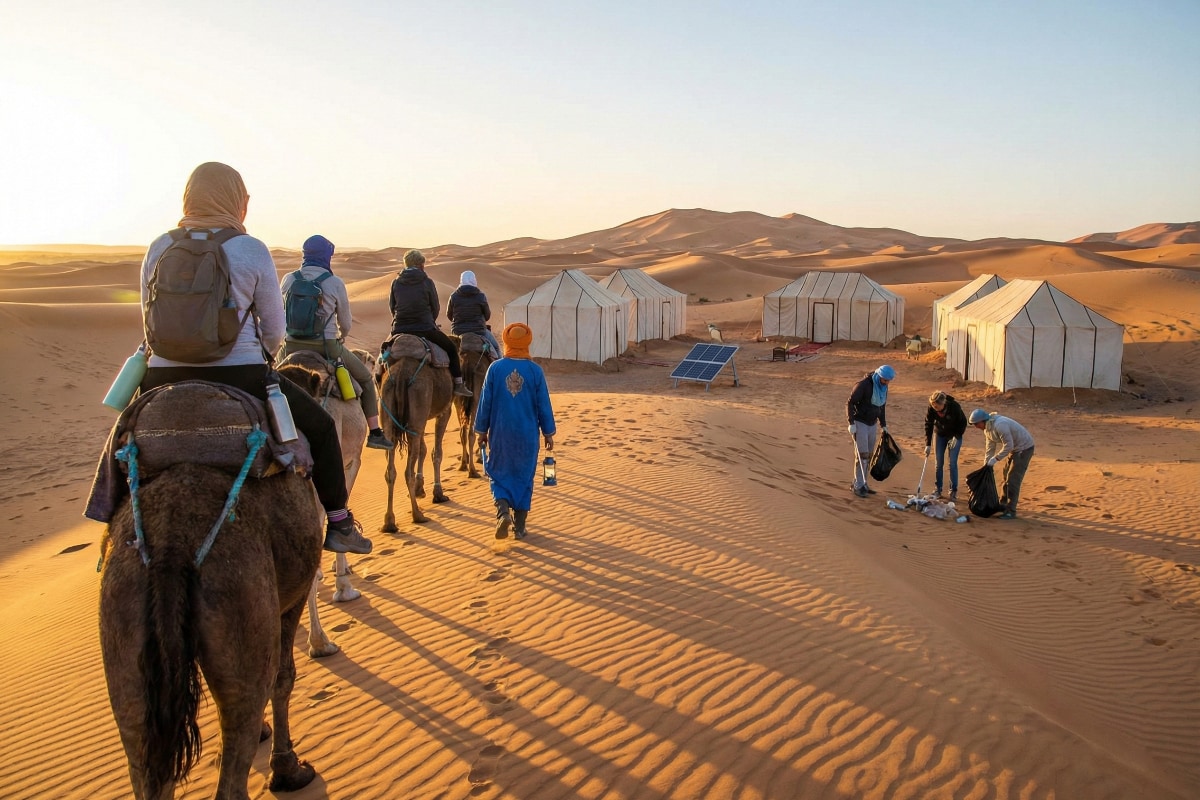
- Pack it in, Pack it out: Everything you bring into the desert must return with you. This includes organic waste, cigarette butts, and packaging. Carry a dedicated trash bag and dispose of waste only in designated urban centers where recycling facilities exist.
- Water Conservation: Treat water as gold. Take short showers (if available), turn off the tap while brushing teeth, and use biodegradable soaps that won't contaminate the groundwater if you are washing outdoors.
- Respect Wildlife: Observe animals from a distance. Do not feed them, as human food can be harmful to their health and alters their natural foraging behaviors.
- Stay on the Track: Whether walking or driving, stick to established paths to protect the soil crust and plant life.
Choosing Sustainable Accommodations
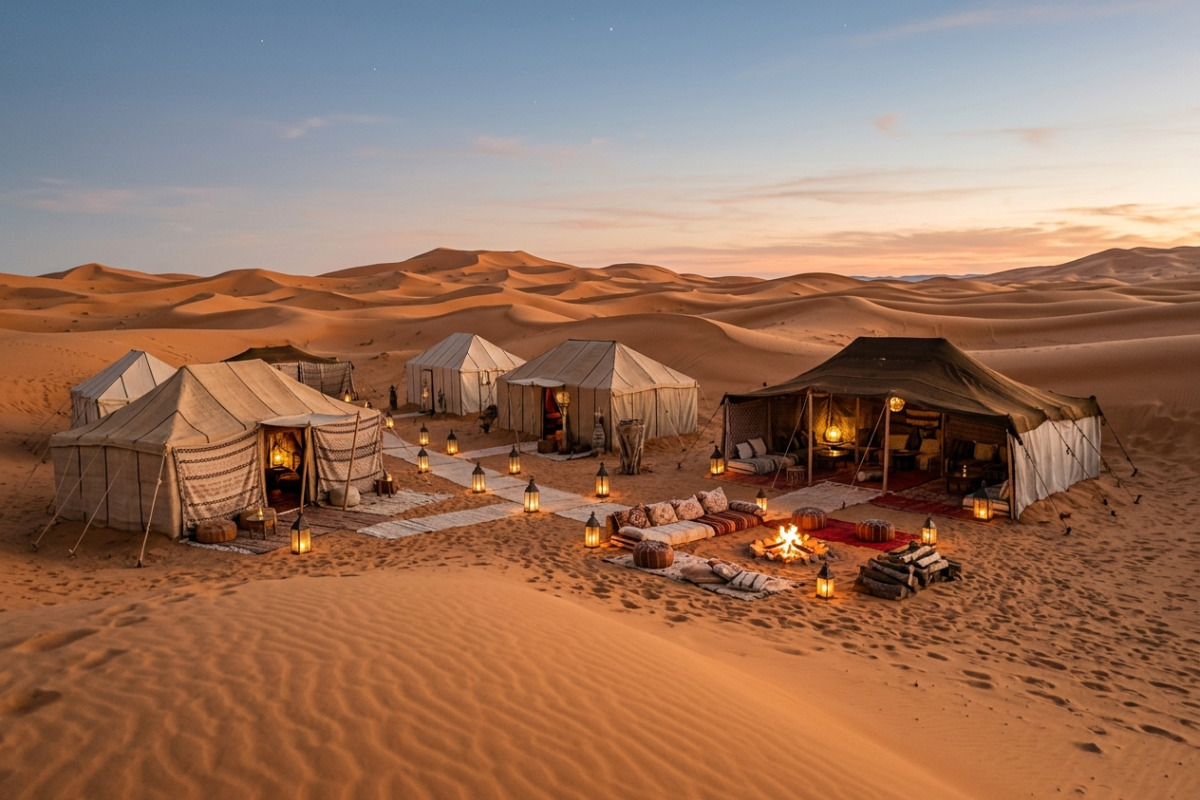
Where you choose to sleep matters immensely. In recent years, there has been a surge in "green" camps, but it is essential to distinguish between genuine sustainability and marketing fluff. True eco-friendly accommodations in the Sahara utilize solar energy for power, employ rigorous water recycling systems, and are constructed using traditional, semi-permanent materials that blend with the landscape rather than dominating it.
When you plan to Explore Morocco and its desert regions, look for camps that are owned and operated by local families. This ensures that your tourism dollars support the local economy directly. Ask questions before booking: Do they use solar panels? How do they manage sewage? Do they source food locally? A transparent operator will be proud to share their sustainability initiatives with you.
| Feature | Traditional Tourist Camp | Eco-Friendly Desert Camp |
| Energy Source | Diesel Generators (noisy, polluting) | Solar Panels & LED Lighting |
| Water Heating | Gas or Electric Boilers | Solar Water Heaters |
| Waste Management | Often burned or buried nearby | Separated, recycled, and transported out |
| Construction | Concrete or heavy permanent structures | Traditional tents, locally sourced materials |
Low-Impact Activities and Transportation
The thrill of racing over dunes in a 4x4 is a popular image, but it is one of the most environmentally damaging activities available. The noise pollution disturbs wildlife, and the tires tear up the fragile surface ecosystem. Instead, consider slower, more immersive ways to experience the magic of the Sahara. These alternatives not only reduce your carbon footprint but often provide a more authentic connection to the desert's rhythm.
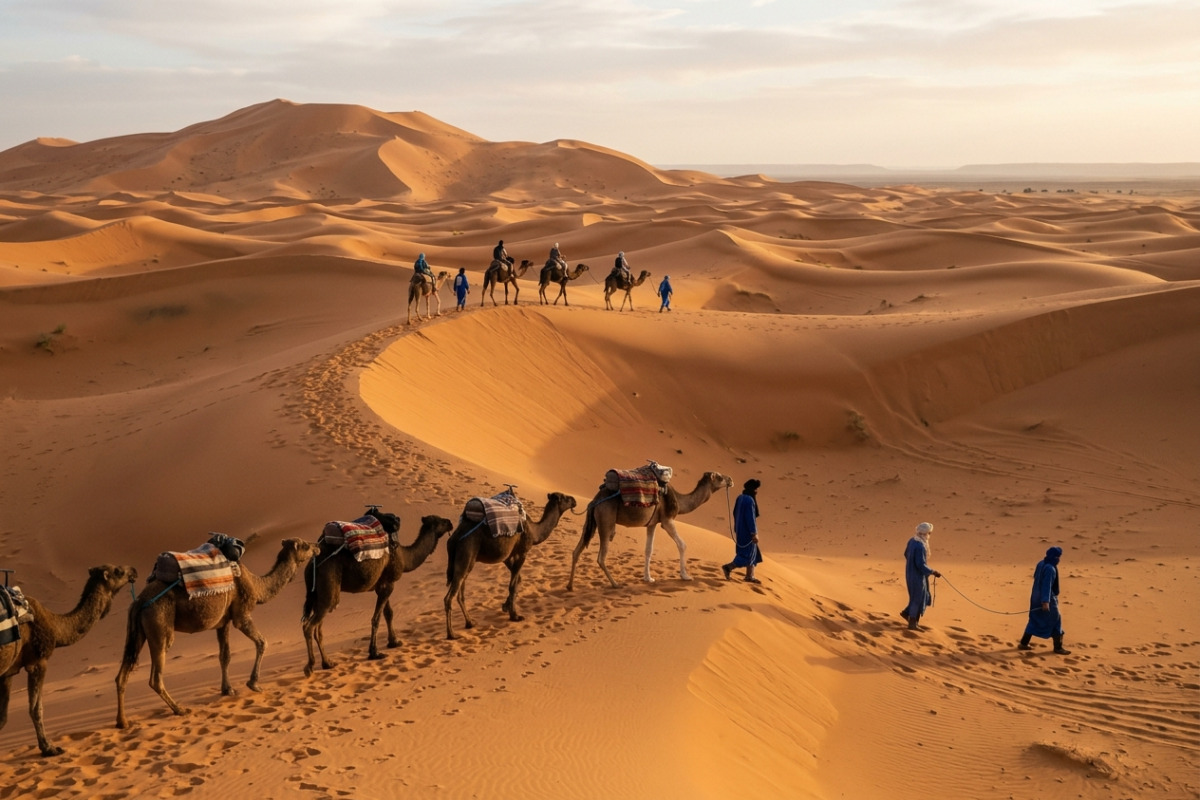
Camel trekking is the traditional mode of transport and offers a silent, rhythmic journey that allows you to absorb the landscape's vastness. For the more active traveler, hiking or walking tours led by local guides reveal small wonders—animal tracks, medicinal plants, and geological formations—that you would miss from a vehicle window. Beyond camel treks and hiking, consider options like cycling with fat bikes designed for sand, which offers a unique and active way to explore while minimizing environmental impact. Another emerging option is electric-powered off-road vehicles, which, while still relatively new, offer a potentially less polluting alternative to traditional gasoline-powered vehicles. When curating your experiences, prioritize activities that rely on human or animal power rather than combustion engines.
Social Sustainability and Cultural Respect
Eco-friendly travel is not just about the environment; it is also about people. The Sahara is home to Amazigh (Berber) and nomad communities with rich cultural heritages. Respecting their way of life is a crucial component of sustainable travel. Always ask for permission before taking photographs of people, especially women and children. Engage with locals with humility and an open mind, learning a few words of their language to show respect.
When interacting with local communities, be mindful of their traditions and customs. Dress modestly, especially when visiting religious sites or villages. Participate in cultural exchanges respectfully, such as learning traditional crafts or sharing a meal with a local family. Seek out opportunities to support community-based tourism initiatives, which directly benefit the local population and help preserve their cultural heritage. These initiatives might include staying in locally owned guesthouses, hiring local guides, or purchasing goods and services from community cooperatives. Remember, your interactions can have a significant impact, so strive to be a positive and respectful guest.
Support the local economy by purchasing authentic handicrafts directly from artisans. Rugs, pottery, and jewelry made in the region are beautiful souvenirs that sustain traditional skills. Avoid mass-produced, imported trinkets that offer no benefit to the local community. By valuing their culture and economy, you help preserve the human heritage of the Sahara alongside its natural beauty.
Packing for an Eco-Conscious Trip
Your preparation for the trip plays a significant role in your environmental impact. By packing the right gear, you can drastically reduce the amount of single-use waste you generate during your journey. The goal is to be self-sufficient and leave nothing behind.
- Reusable Water Bottle with Filter: This is the single most important item. It eliminates the need for hundreds of plastic bottles.
- Solar Power Bank: Harness the abundant desert sun to charge your cameras and phones, reducing reliance on the camp's limited energy supply.
- Biodegradable Toiletries: Shampoo, soap, and toothpaste should be natural and chemical-free to prevent soil and water contamination.
- Reusable Shopping Bag: Useful for carrying souvenirs or collecting any trash you might find along the way.
Conclusion: The Future of Desert Travel
As we embrace the travel landscape of 2026, the Sahara challenges us to be better travelers. It strips away the unnecessary and forces us to confront our relationship with nature. By choosing eco-friendly accommodations, respecting local cultures, and adhering to sustainable practices, we ensure that the desert remains a place of wonder and silence.
Let your footprints in the sand be temporary, washed away by the wind, but let the positive impact of your visit be lasting. The Sahara is a gift to the world; it is our collective duty to handle it with care, ensuring that its golden dunes continue to inspire awe for centuries to come.