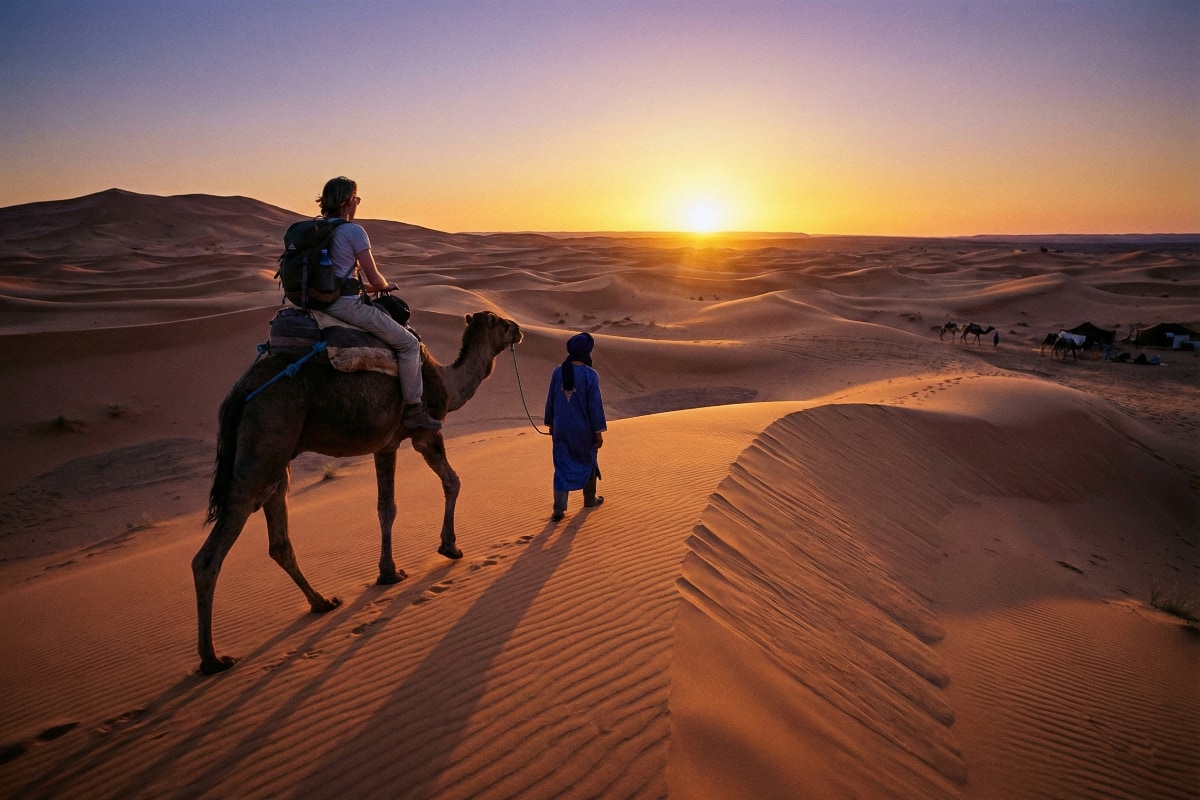
There is a profound silence in the Sahara that you simply cannot find anywhere else on Earth. As the sun begins its descent, painting the sky in hues of violet and burnt orange, the only sound you hear is the soft crunch of hooves on sand and the rhythmic breathing of your camel. For many travelers arriving in January 2026, a desert expedition remains the pinnacle of North African adventure. It is not merely a mode of transportation; it is a step back in time, allowing you to traverse the landscape exactly as Berber nomads have done for centuries. While the photos look effortless and serene, the reality of camel trekking involves a mix of physical endurance, cultural immersion, and awe-inspiring natural beauty.
Embarking on a camel trek is often the highlight of a trip to Morocco, but it can be intimidating for first-timers who are unsure of the logistics. The desert is a vast, unforgiving, yet incredibly rewarding environment that demands respect and preparation. Whether you are planning a short sunset ride or a multi-day expedition deep into the dunes, knowing what lies ahead will transform your anxiety into excitement. This guide aims to demystify the experience, offering practical advice on everything from saddle soreness to selecting ethical operators, ensuring your memories of the Sahara are nothing short of magical.
Understanding the Camel Trekking Experience
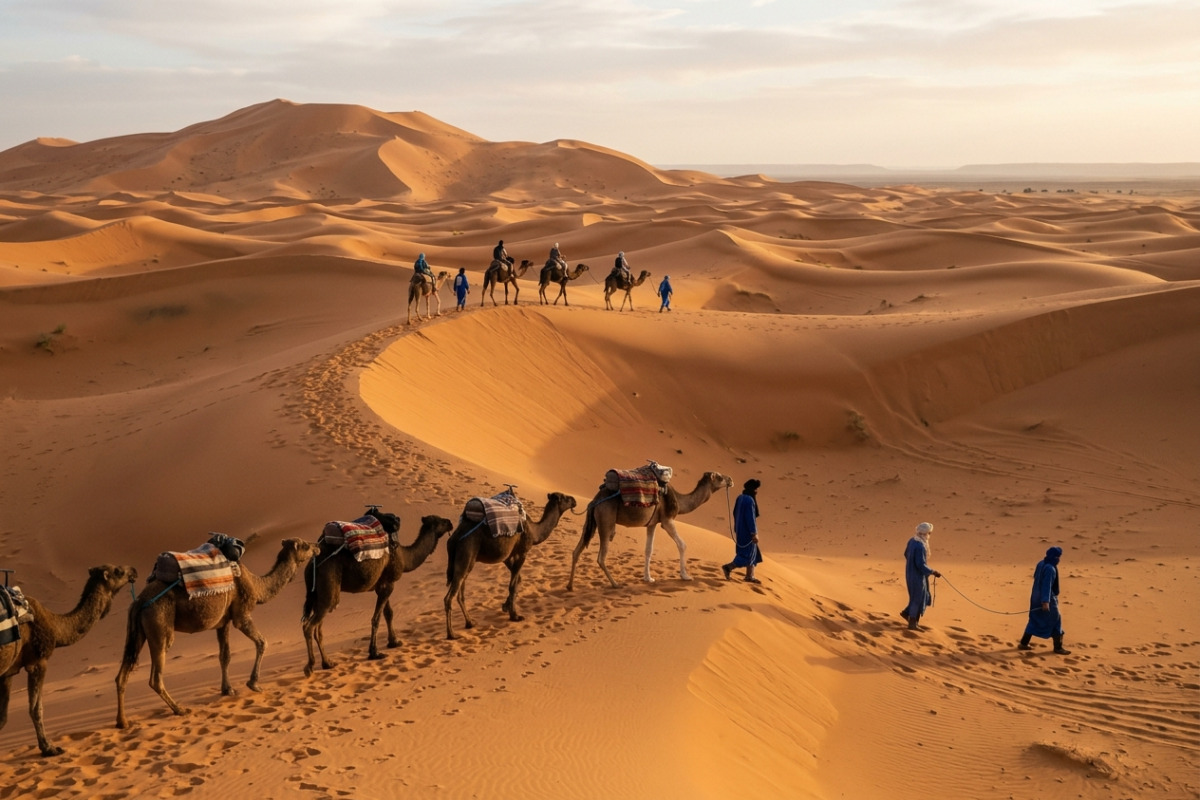
The first thing to realize is that riding a camel is quite different from riding a horse. Camels are significantly taller, and their gait is a unique, swaying motion that earns them the nickname "ships of the desert." When the camel stands up or kneels down, it happens in a jerky, three-part motion that requires you to hold on tight and lean back to maintain your balance. Once you are up, the view is commanding, offering a vantage point over the rolling dunes that is impossible to achieve on foot. The pace is slow and meditative, allowing you to absorb the minute details of the desert, from the patterns in the sand to the distant outline of the Atlas Mountains.
Physical comfort is a valid concern for beginners, especially on treks lasting more than an hour. The traditional saddles are padded with blankets, but the width of the camel and the constant swaying can strain your inner thighs and lower back. It is generally recommended to wear long, loose trousers to prevent chafing against the saddle or the camel's coarse fur. Most beginner treks are structured to include breaks where you can walk alongside your camel, stretching your legs and capturing photos of the caravan casting long shadows against the dunes.
Choosing Your Desert Destination
Morocco offers two primary gateways for Sahara trekking, each offering a distinct flavor of the desert. Choosing between them depends on how much time you have and the type of landscape you wish to see. You can Explore Morocco to see detailed breakdowns of these regions, but here is a quick overview for the aspiring trekker.
Erg Chebbi (Merzouga)
Erg Chebbi is famous for its towering, iconic orange dunes that can reach up to 150 meters in height. Located near the town of Merzouga, this area is more accessible and offers a wide range of amenities, from luxury camps to budget bivouacs. Because of its accessibility, you might encounter other groups, but the sheer height of the dunes allows you to feel isolated if you trek far enough. It is the perfect spot for those who want the classic dramatic dune experience without days of off-road travel to get there.
Erg Chigaga (Zagora/M'Hamid)
For those seeking a wilder, more remote atmosphere, Erg Chigaga is the answer. These dunes are more spread out and difficult to reach, requiring a 4x4 drive before you even meet your camels. The landscape here is a mix of dunes and hamada (stone desert), offering a raw and rugged beauty. If your goal is to disconnect completely and experience the solitude of the deep desert, this is often the preferred choice for adventurous souls.
Life at the Desert Camp
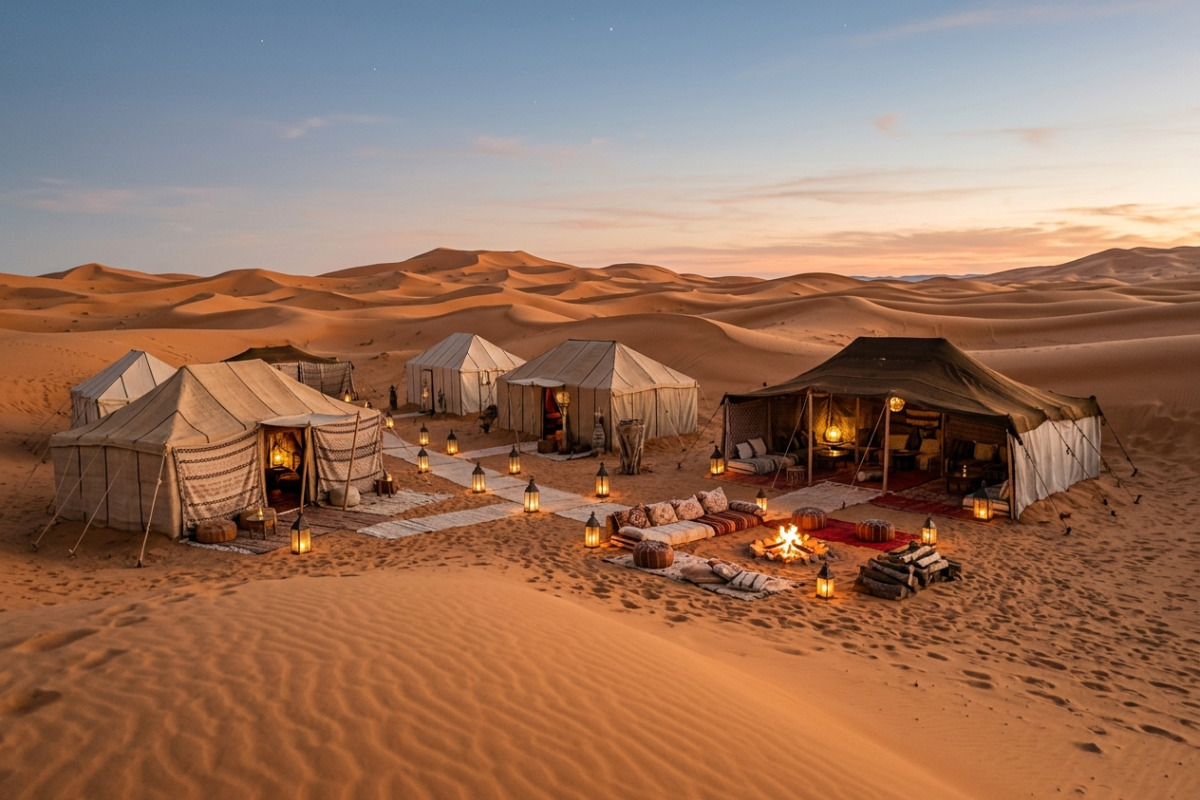
The destination of most camel treks is a desert camp nestled between the dunes. Upon arrival, the hospitality is immediate and warming. You will likely be greeted with traditional mint tea and Moroccan pastries, a ritual that signifies welcome and friendship. Accommodation varies wildly depending on your booking, ranging from simple wool tents with mattresses on the ground to glamping setups with ensuite bathrooms and electricity. Regardless of the luxury level, the evening entertainment is almost always a highlight. Guides often play traditional Gnaoua music around a campfire, encouraging guests to join in the drumming and singing under a blanket of stars so bright they look artificial.
Food in the desert is surprisingly elaborate given the remote location. Dinner usually consists of slow-cooked tagines (chicken, lamb, or vegetable) served with fresh bread and salads. If you have specific dietary requirements, it is crucial to communicate these in advance. Waking up in the camp is equally spectacular; watching the sunrise over the Sahara is a spiritual experience. The colors shift rapidly from cool blues to blazing golds, rewarding those who brave the early morning chill.
Selecting the Right Tour Operator
Not all desert tours are created equal, and choosing the right operator can make or break your experience. In 2026, traveler awareness regarding animal welfare and sustainable tourism has grown significantly. It is vital to book with operators who treat their camels well—look for healthy animals without open sores and handlers who treat them with gentleness. Furthermore, the quality of the guides matters; a knowledgeable guide can explain the history of the nomadic tribes, the geology of the desert, and the constellations above.
To help you decide between different types of tours, consider the following comparison of typical offerings:
| Feature | Group Standard Tour | Private Luxury Tour |
| Privacy | Shared travel and camp with strangers | Private transport and often private camp areas |
| Flexibility | Fixed schedule and departure times | Customizable stops and pace |
| Accommodation | Basic tents, shared bathrooms | Spacious tents, private showers, real beds |
| Meals | Set menu, communal dining | Custom menu, private dining options |
| Price Point | Budget-friendly | Higher investment |
When researching, check if the operator provides detailed itineraries and transparent inclusions. You can find various options that cater to different comfort levels by looking at curated experiences designed for both novices and seasoned travelers.
Essential Packing List for the Trek
Packing for the Sahara requires a balance between preparing for scorching heat and freezing cold. The temperature fluctuation in the desert is extreme; while days can be pleasant or hot, nights in January can drop to near freezing. Overpacking is a burden, as you usually only take a small backpack with you on the camel while your main luggage stays at a hotel or in the transport vehicle.
- The Chech (Turban): A long scarf is essential for protecting your head and face from the sun and blowing sand. Your guide will happily show you how to tie it properly.
- Layered Clothing: Bring a thermal base layer, a fleece, and a windbreaker for the evening and early morning.
- Appropriate Footwear: Sandals are great for the camp, but closed-toe sneakers or hiking boots are better for the camel ride and walking on hot sand.
- Sun Protection: High SPF sunscreen, sunglasses, and lip balm are non-negotiable, even in winter.
- Power Bank: There are no outlets in the dunes (unless you are in a luxury camp), and the cold drains phone batteries quickly.
- Wet Wipes and Sanitizer: Water is precious in the desert and often reserved for drinking rather than washing.
Cultural Etiquette and Final Tips
Respecting the local culture enhances the authenticity of your journey. The guides and camel handlers are usually of Berber (Amazigh) descent and are incredibly proud of their heritage. Taking the time to learn a few words in their language, such as "Azul" (Hello) or "Tanmmirt" (Thank you), goes a long way. When taking photos of people, always ask for permission first. While they are accustomed to tourists, it is a matter of basic human respect. Tipping is also customary in Morocco; a small gratuity for your camel handler and the camp staff is a kind gesture that supports the local economy.
Camel trekking in the Sahara is more than just a tourist activity; it is a lesson in patience and an opportunity to witness nature in its most raw form. Whether you are watching the Milky Way stretch across the night sky or laughing as your camel awkwardly stands up, these moments create stories that last a lifetime. By preparing physically and mentally, and by choosing the right partners for your journey, you ensure that your adventure into the sands is safe, ethical, and unforgettable.