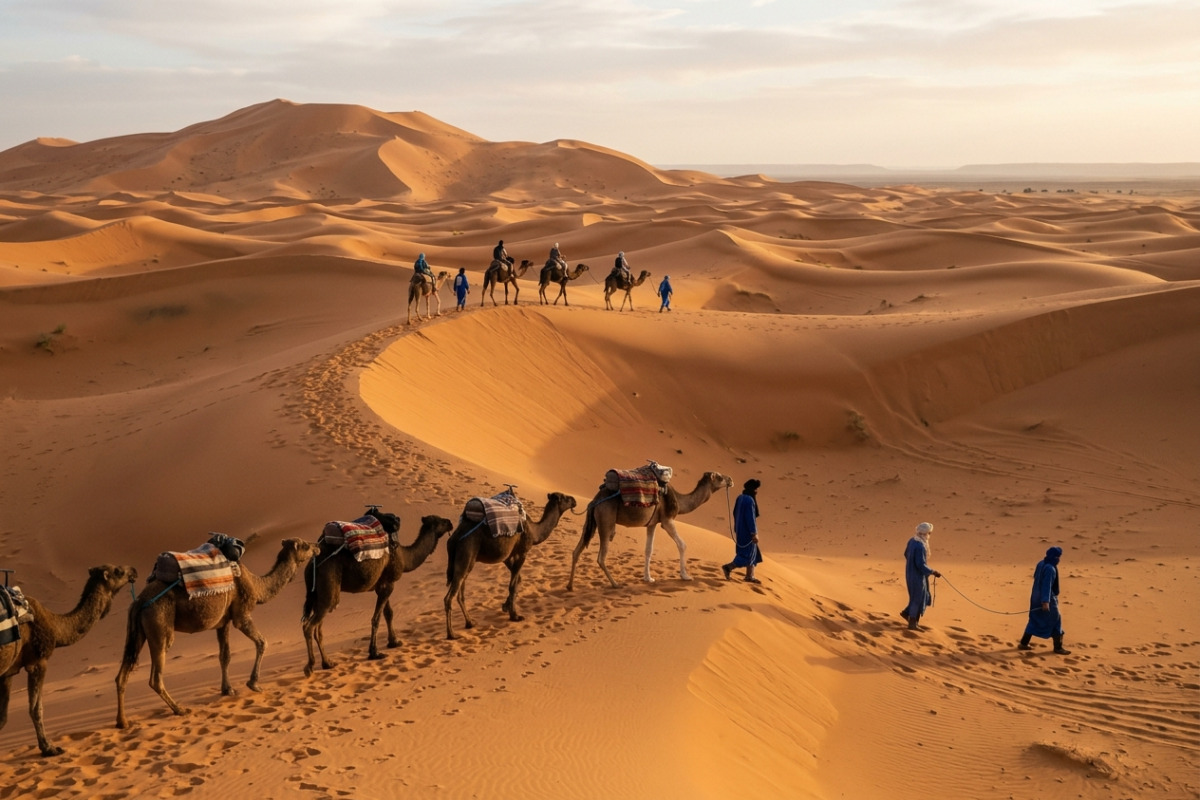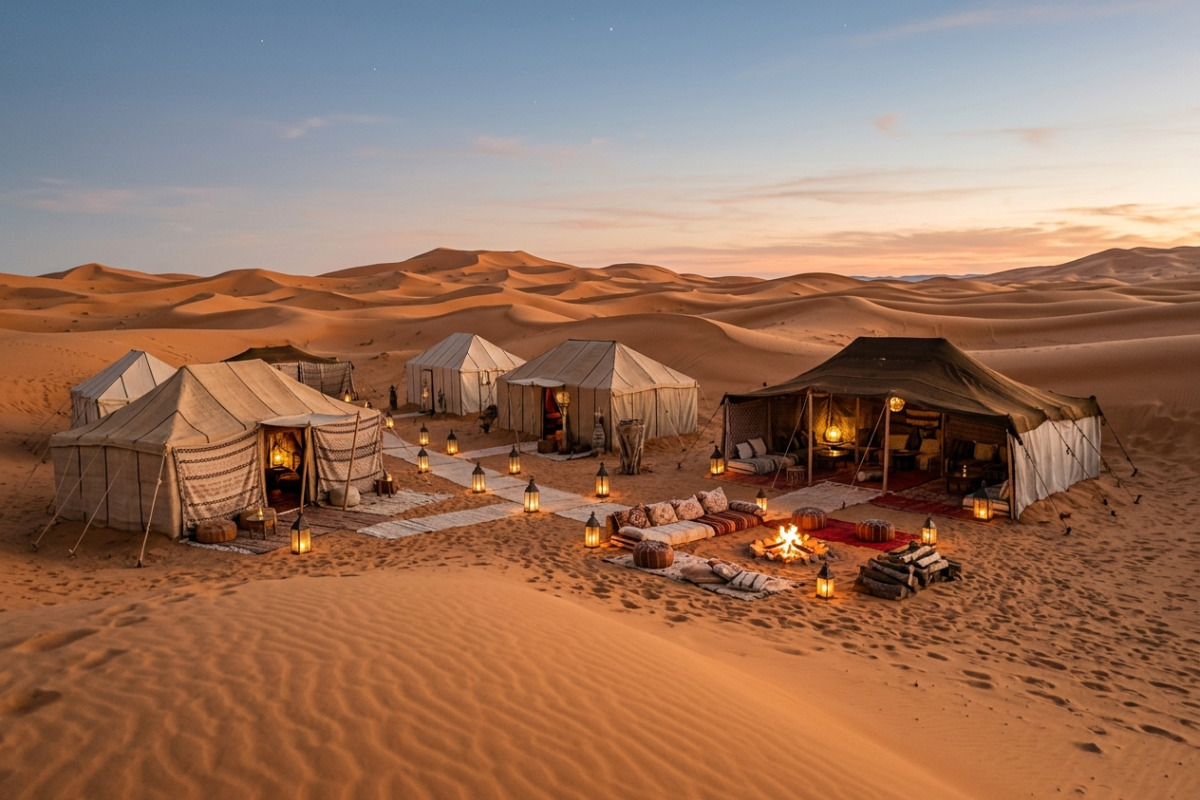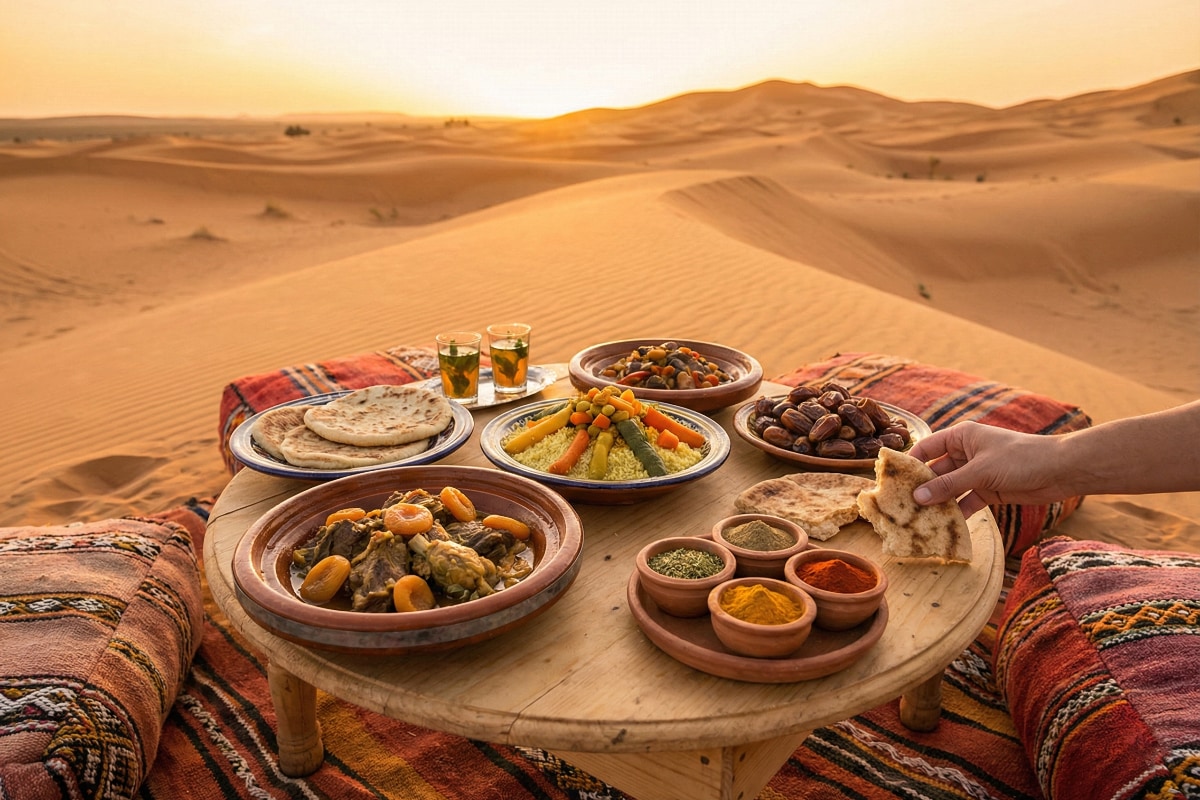
When travelers imagine the Sahara, they often picture endless undulations of golden sand, star-filled skies, and the rhythmic sway of camel caravans. However, for the intrepid epicurean, the Great Desert offers a surprisingly rich and resilient culinary landscape. Saharan cuisine is a testament to human ingenuity, born from the necessity of survival in a harsh environment and refined over centuries by the mingling of Berber, Tuareg, Arab, and African cultures. To eat here is to understand the land itself—where every ingredient is precious, and every meal is a celebration of life and hospitality. As we navigate the culinary map of 2026, the traditions of the desert remain as vibrant and essential as ever.
A Culinary Tapestry Woven Through Time
The story of Saharan cuisine is as old as the desert itself. For millennia, nomadic tribes have traversed these lands, adapting their diets and cooking methods to the available resources. The exchange of goods and ideas along ancient trade routes, like the trans-Saharan caravan routes, has significantly shaped the region's culinary identity. Spices from the East, grains from the North, and ingredients from sub-Saharan Africa have all left their mark, creating a unique fusion of flavors. This rich history is reflected in the dishes themselves, each bite telling a story of resilience, adaptation, and cultural exchange.
The Pantry of the Desert: Essential Ingredients
The foundation of Saharan cooking is built upon non-perishable staples and ingredients that can withstand the extreme heat and arid conditions. Unlike the lush markets of the Mediterranean coast, the desert pantry relies on high-energy foods that sustain nomads during long treks. The cuisine is characterized by a balance of sweet and savory, often utilizing dried fruits to complement slow-cooked meats. Understanding these core components is the first step in appreciating the complexity of the flavors you will encounter.
Water is scarce, so milk—specifically camel and goat milk—often takes its place as a primary liquid for cooking and hydration. Grains are equally vital, with barley, millet, and wheat forming the base of nearly every meal. Below is a breakdown of the most significant ingredients that define the Saharan palate:
| Ingredient | Role in Cuisine | Typical Preparation |
| Dates | Energy Source & Sweetener | Eaten raw, stuffed with butter, or cooked into tagines. |
| Camel Milk | Hydration & Nutrition | Drunk fresh or fermented into Zrig (yogurt drink). |
| Millet/Barley | Carbohydrate Base | Ground into flour for bread or rolled into couscous. |
| Dried Goat/Camel Meat | Protein | Preserved as Tidkit, then rehydrated in stews. |
Iconic Dishes You Must Experience
Saharan food is rarely fast food; it is slow food in its purest form. Meals are communal affairs, eaten from a single large platter, fostering a sense of unity among travelers and hosts. The flavors are earthy, robust, and comforting, designed to warm you during the surprisingly chilly desert nights and energize you for the heat of the day.
Taguella: The Bread of the Sand
No culinary guide to the Sahara is complete without mentioning Taguella, the staple bread of the Tuareg people. This is not bread baked in an oven, but rather a thick, disk-shaped dough made from millet or wheat flour, buried directly beneath the hot sand and embers of a campfire. The sand acts as a natural oven, distributing heat evenly to create a dense, hearty loaf with a crisp, charred crust. Once baked, the sand is brushed off, and the bread is broken into small pieces. It is traditionally served mixed with a meat sauce or simply soaked in clarified butter and accompanied by goat milk. Watching the preparation of Taguella under the open sky is as nourishing to the soul as the bread is to the body.
Camel Meat Delicacies
While beef is rare in the deep desert, camel meat is a prized source of protein. It is leaner than beef, with a texture that can be surprisingly tender when slow-cooked. One of the most famous preparations involves cooking the meat in a clay pot (tangia) or a heavy iron pot over a wood fire until it falls apart. In Mauritania and Southern Morocco, you might encounter camel hump fat, which is considered a delicacy and is often melted down to be used as a rich dipping sauce or a cooking medium. For a lighter option, look for grilled camel skewers, heavily seasoned with cumin and coriander, offering a smoky, gamey flavor profile that is unique to the region.
The Variations of Desert Couscous
Couscous in the Sahara differs significantly from the versions found in northern cities like Algiers or Casablanca. Here, the grains are often larger, sometimes made from barley or corn rather than semolina. The vegetable component is more sparse due to availability, relying heavily on root vegetables like carrots, turnips, and pumpkin that store well. The dish is frequently topped with dried meat (guedid) or dates and caramelized onions, creating a savory-sweet masterpiece. In the oases of Tunisia and Algeria, a version called Merguez couscous introduces spicy lamb sausages, adding a fiery kick that contrasts with the sweetness of the grain.
Eetch: A Nomadic Stew
Eetch is a hearty stew popular amongst the Tuareg people. It's a slow-cooked dish typically featuring goat or camel meat, along with whatever vegetables are available, such as potatoes, carrots, and onions. The stew is heavily spiced with cumin, coriander, and chili peppers, providing warmth and sustenance in the harsh desert environment. Eetch is often cooked in a large pot over an open fire and shared communally.
Asida: A Simple Comfort
Asida is a simple but satisfying porridge made from flour (usually millet or barley) and water. It's often sweetened with dates or honey and sometimes flavored with butter or argan oil. Asida is a staple food for many Saharan communities, especially during times of scarcity. Its simplicity and nutritional value make it a reliable source of energy and comfort.
The Sacred Ritual of Tea
In the Sahara, tea is not merely a beverage; it is a ceremonial act of friendship, a negotiation tool, and a pastime that dictates the rhythm of the day. The preparation of Atay (green tea with mint) is an art form performed by the head of the household or the guide. It involves a theatrical pouring technique from a height to create a thick, frothy foam (the "turban") on the surface of the glass. The tea is brewed strong and sweet, boiled over charcoal embers.
According to local proverb and tradition, the tea is served in three rounds, each with a distinct flavor profile symbolizing the stages of life:
- The First Glass: Bitter as life. This round is strong, potent, and wakes up the senses.
- The Second Glass: Strong as love. More sugar and mint are added, balancing the bitterness with sweetness.
- The Third Glass: Sweet as death. This final glass is light, very sweet, and signals the conclusion of the ceremony.
Regional Gastronomic Highlights
While the Sahara shares a common culinary language, regional dialects exist based on the specific geography and cultural influences of each area. Traveling across borders reveals subtle but delightful shifts in flavor.
Moroccan Sahara (Merzouga & Zagora)
In the gateway towns of the Moroccan Sahara, the influence of imperial cuisine meets desert simplicity. Here, you must try Madfouna, often referred to as "Berber Pizza." It is a stuffed flatbread filled with minced meat, hard-boiled eggs, almonds, onions, and aromatic spices, then baked in a mud oven or hot sand. It represents a perfect portable meal for travelers and is bursting with savory complexity.
The Oases of Egypt (Siwa)
Far to the east, the Siwa Oasis in Egypt offers a distinct culinary experience. The isolation of Siwa has preserved its unique Berber language and food culture. The dates here are legendary, often cited as the best in the world. Visitors should seek out dishes made with Siwan olive oil and the local salt, which is harvested from the salt lakes. A local specialty is duck or chicken roasted with dates and olives, a dish that perfectly encapsulates the sweet and savory heritage of the oasis.
Tunisian South (Douz & Tozeur)
In the Tunisian expanse of the Sahara, the heat of the chili pepper becomes more prominent. Chakhchoukha is a favorite here—a dish of torn flatbread soaked in a rich, spicy tomato and lamb stew. It is hearty, fiery, and deeply satisfying after a day of desert exploration. The region is also famous for Deglet Nour dates, which are translucent and honey-sweet, often served simply with a glass of fermented milk to break the fast or welcome guests.
Dining Etiquette for the Traveler
To truly enjoy Saharan cuisine, one must respect the customs that surround it. Food is almost always shared, and refusing an offer of food or tea can be seen as a rejection of hospitality. When dining in a traditional setting, usually seated on carpets on the ground, remember to eat with your right hand only. Use the bread as a utensil to scoop up stews and sauces. Pace yourself; the hospitality is generous, and your host will likely encourage you to eat more than you initially planned. Embracing these traditions will not only fill your stomach but also open the hearts of the people you meet along the dunes.